 POST-GAME
UCLA BRUINS + WISCONSIN BADGERS
Two shutouts. Opposite sides of the silence
UCLA’s defense protects eight-and-zero. Iowa dismantles Wisconsin’s road-win case. The zeros require very different conversations.
Listen to Repinkee Sports on Apple Podcasts UCLA27
 Nevada0
 Wisconsin0
 Iowa30
Two shutouts can produce remarkably little agreement around breakfast. UCLA beat Nevada 27–0 and reached eight wins without a loss. Wisconsin lost 30–0 at Iowa and left the Heartland Trophy exactly where it had been. One audience can admire a clean scoreboard. The other would appreciate a brief explanation of how its team managed to contribute none of it.
The more useful comparison lies beneath the zeros. UCLA’s defense created control while its offense worked unevenly toward it. Wisconsin never established enough offensive continuity to interrupt Iowa’s control. Those are different problems, with different urgency, even if both coaching staffs have a substantial Monday appointment with the film.
The pregame questions have receipts
Saturday’s article picked UCLA 34–13 and Wisconsin 20–17. It asked whether the Bruins could connect their running and passing plans, whether the Badgers could avoid damaging early downs, and whether either team would undermine itself through the ordinary exchanges of possession. Those were sensible questions. The answers did not arrive in matching envelopes.
UCLA protected the football and its defense exceeded the forecast. Its running game did not overwhelm Nevada in the way the preview’s favorable outlook suggested it could. Wisconsin’s forecast failed much more comprehensively: the narrow road-win case depended on offensive movement and disciplined possession that the Badgers did not deliver.
A forecast is most valuable when it can be taken apart afterward. The UCLA pick recognized a clear favorite, but expected more offensive production and more Nevada scoring. The Wisconsin pick overestimated how much the previous defensive success would translate to a different opponent. Neither review is improved by quietly replacing Saturday’s reasoning with a story that makes Sunday look inevitable.
UCLA’s defense changed the terms before the offense settled
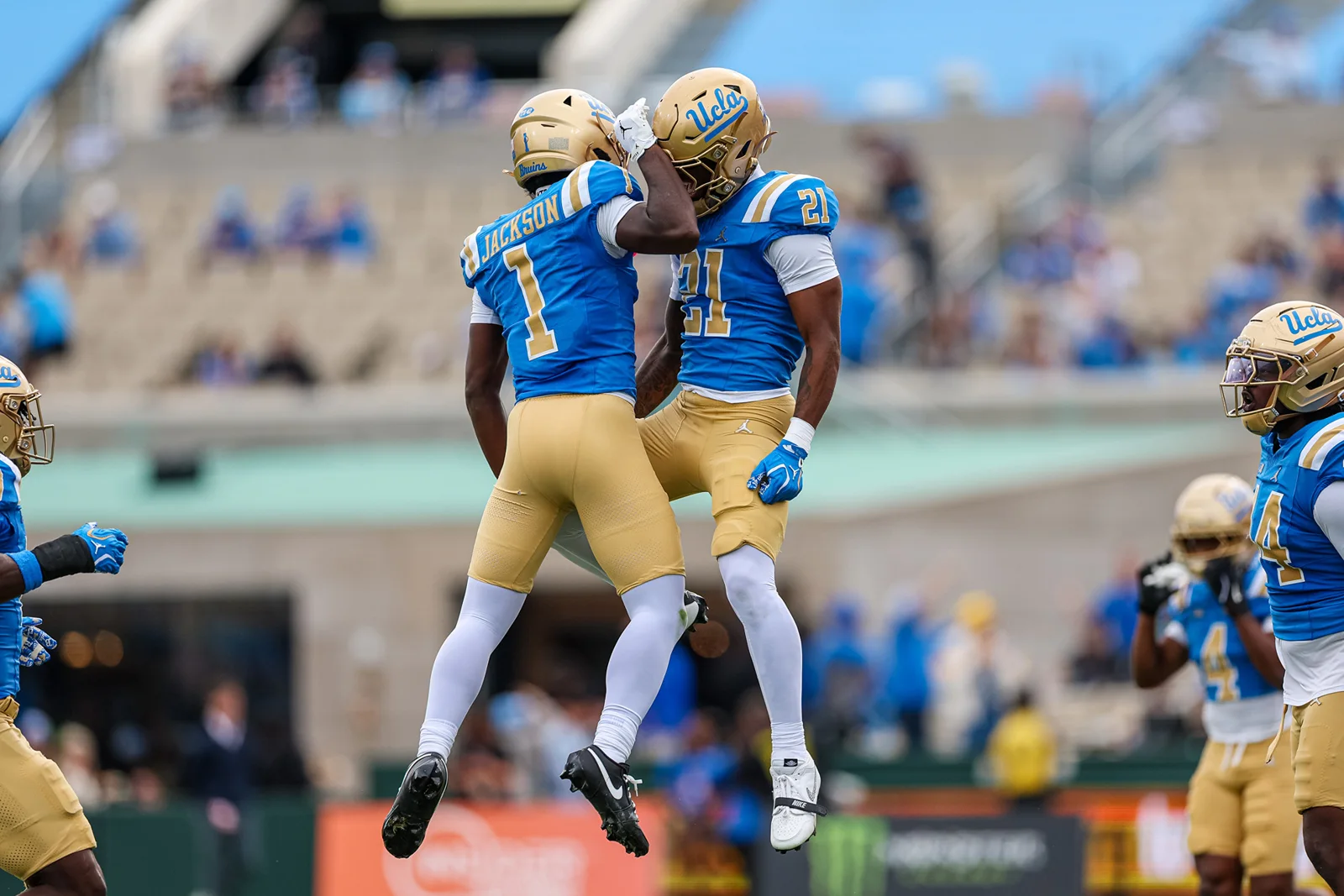
Jackson’s interception on Nevada’s first snap began a run of three consecutive Wolf Pack possessions ending in interceptions. Jalen Woods took the second. Derrick Barksdale returned the third for a touchdown. UCLA was ten points ahead before its offense had produced a touchdown of its own.
Those takeaways did more than shorten the visiting playbook. They removed the comfortable opening Nevada needed to test its plan. A short field became a field goal, a threatening drive ended without points, and the defense then handled the scoring itself. The Bruins did not require the same kind of offensive answer each time.
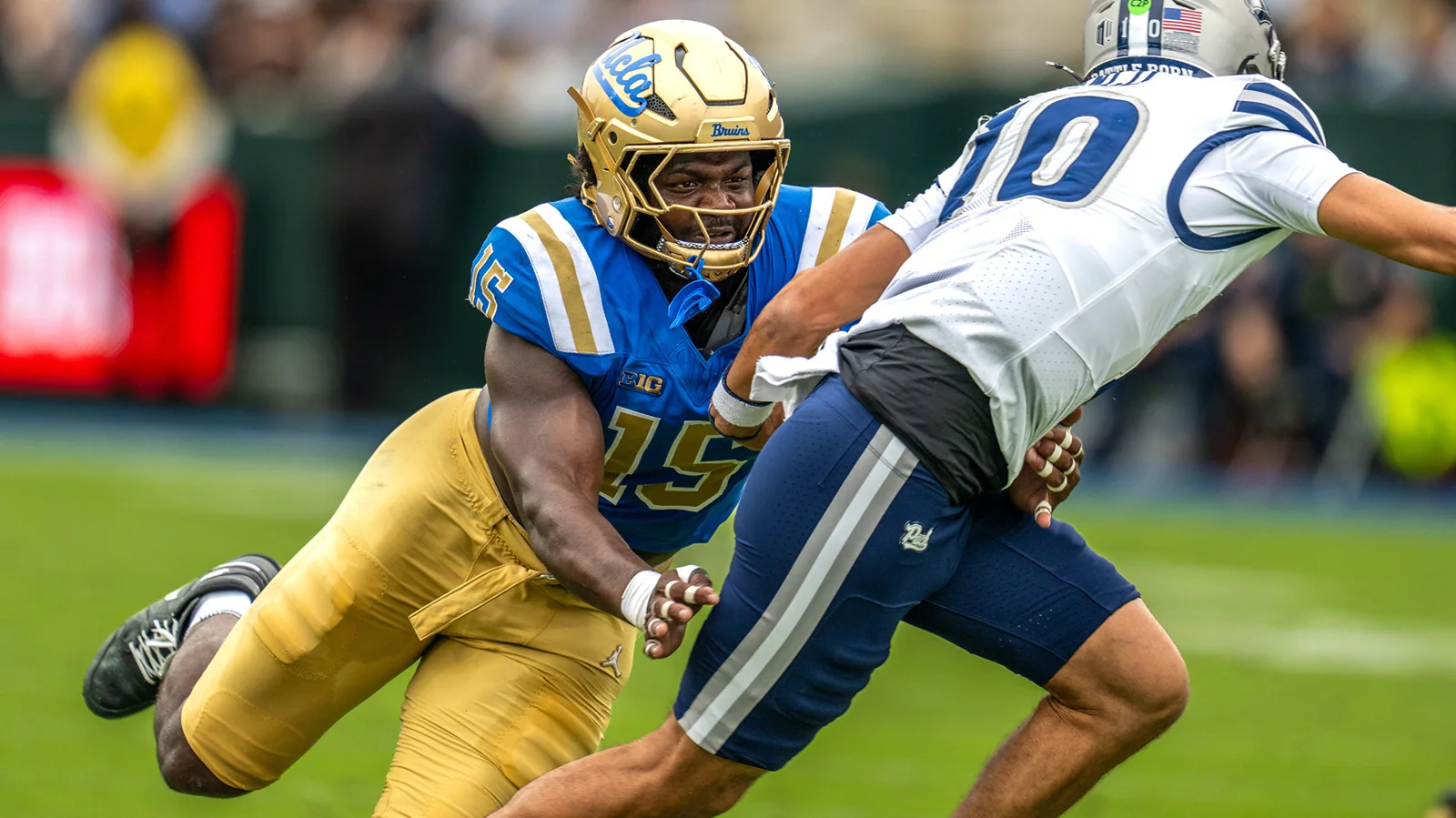
West and Aiden Gobaira each recorded one and a half sacks. Gobaira added three tackles for loss; West led the team with nine tackles. Their work helps explain why the interceptions belonged to a larger defensive performance. Possessions that survived the opening exchange still had to move through a front capable of creating the next difficult down.
My player of the game is Barksdale, because the interception return provided a touchdown while the offense was still developing its contribution. That is an editorial choice rather than an official award. There is a strong case for either of the defensive linemen, and the larger achievement belongs to the unit.
Nevada supplied resistance worth acknowledging
A 27-point margin can tempt a recap into describing an easy afternoon everywhere. Nevada’s defense deserves a more accurate account. UCLA finished with 125 rushing yards, substantially below its entering average, and the Wolf Pack broke up seven passes. The visitor did not simply stand aside while the unbeaten team completed its paperwork.
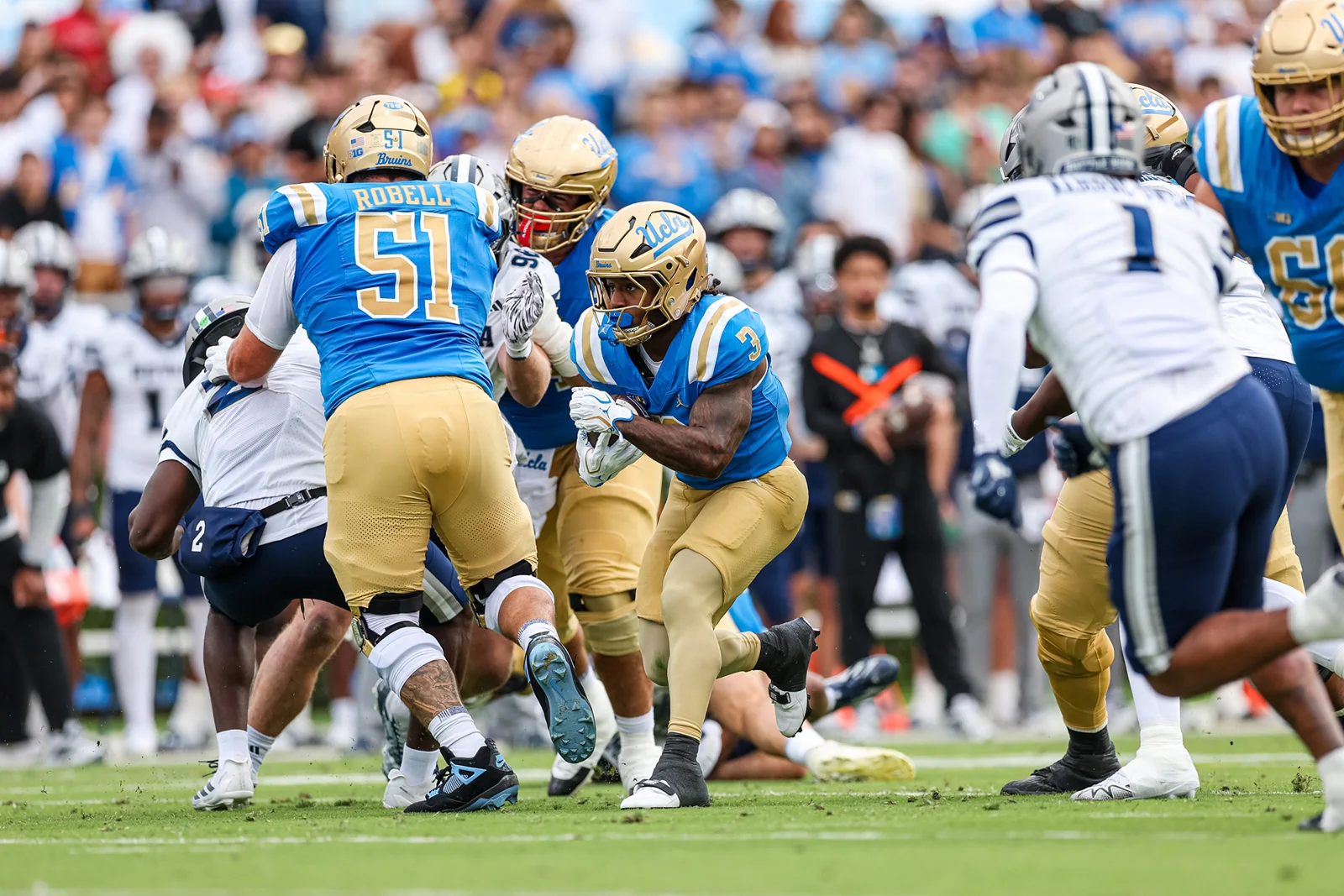
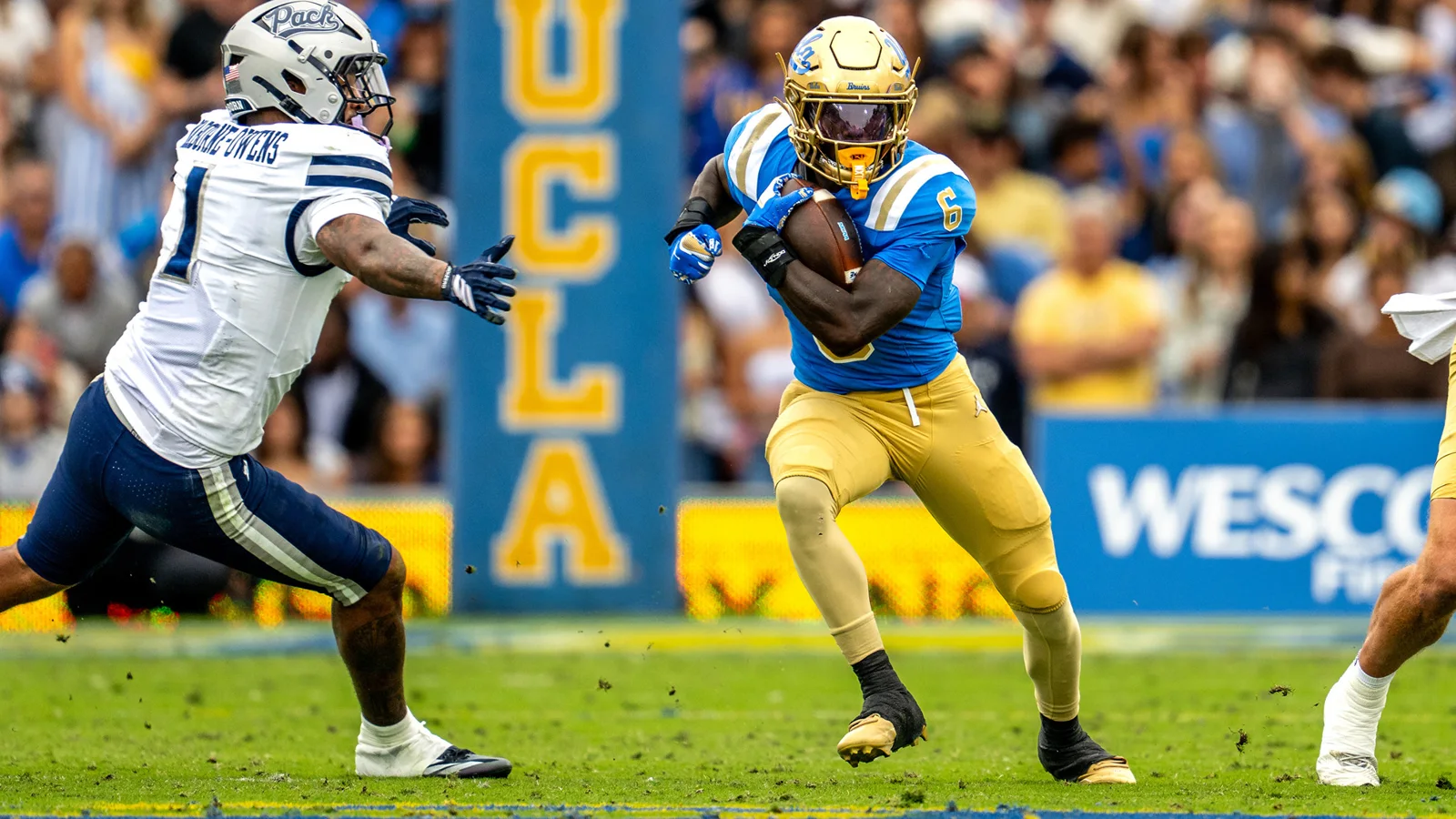
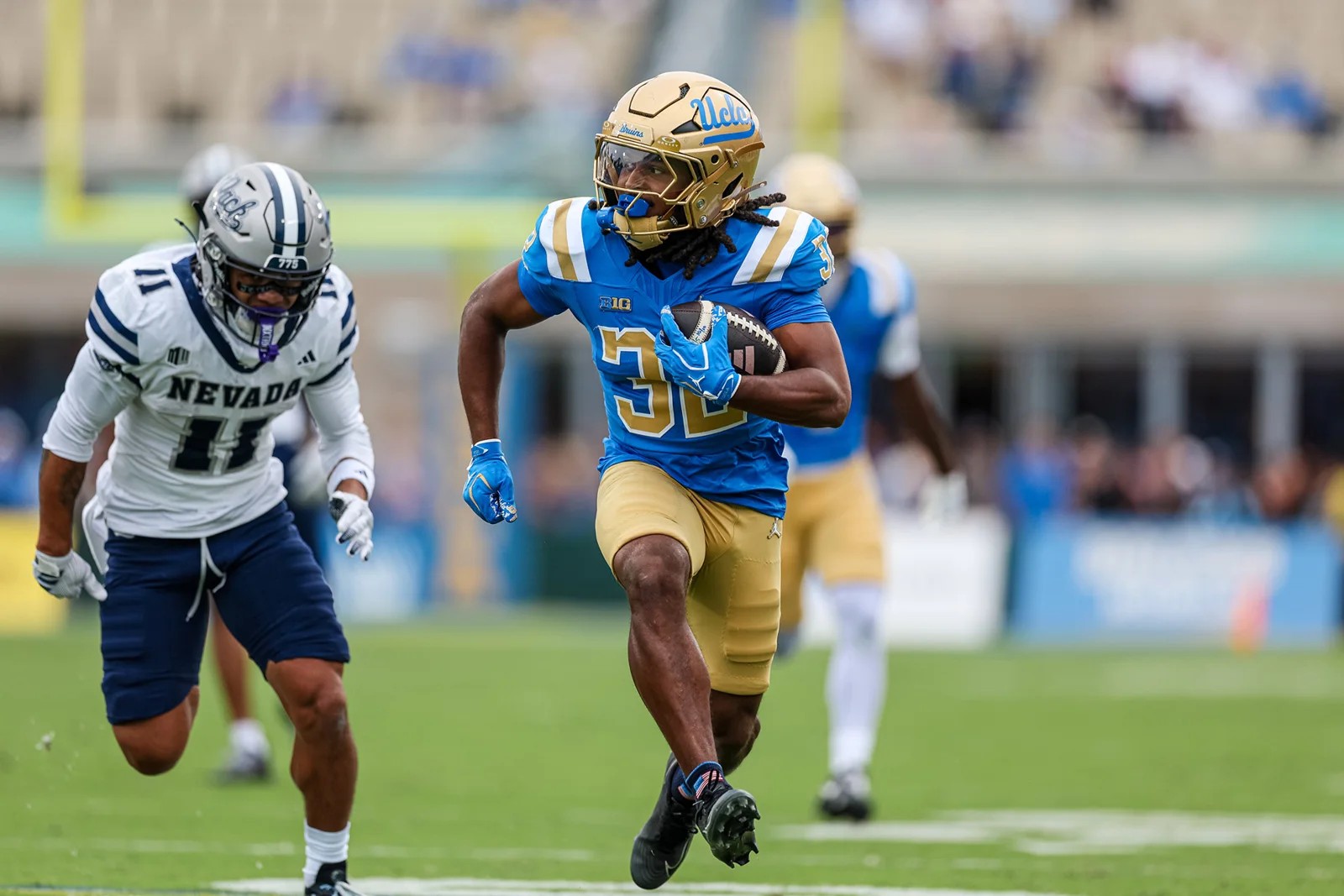
Knight was available and led the Bruins on the ground. That resolves Saturday morning’s participation uncertainty; it does not make his anticipated workload an established fact in retrospect. His touchdown was a reception. The scoring streak continued, while the rushing-touchdown streak ended. Those are different descriptions of the same productive moment.
The offensive turning point was less about a sudden explosion than an ability to finish. Dieffenbach’s late second-quarter touchdown run completed a full-field possession. The drive opening the second half consumed more than seven minutes and ended with his touchdown pass to Knight. UCLA finally supplied offense that could stand beside what its defense had already built.
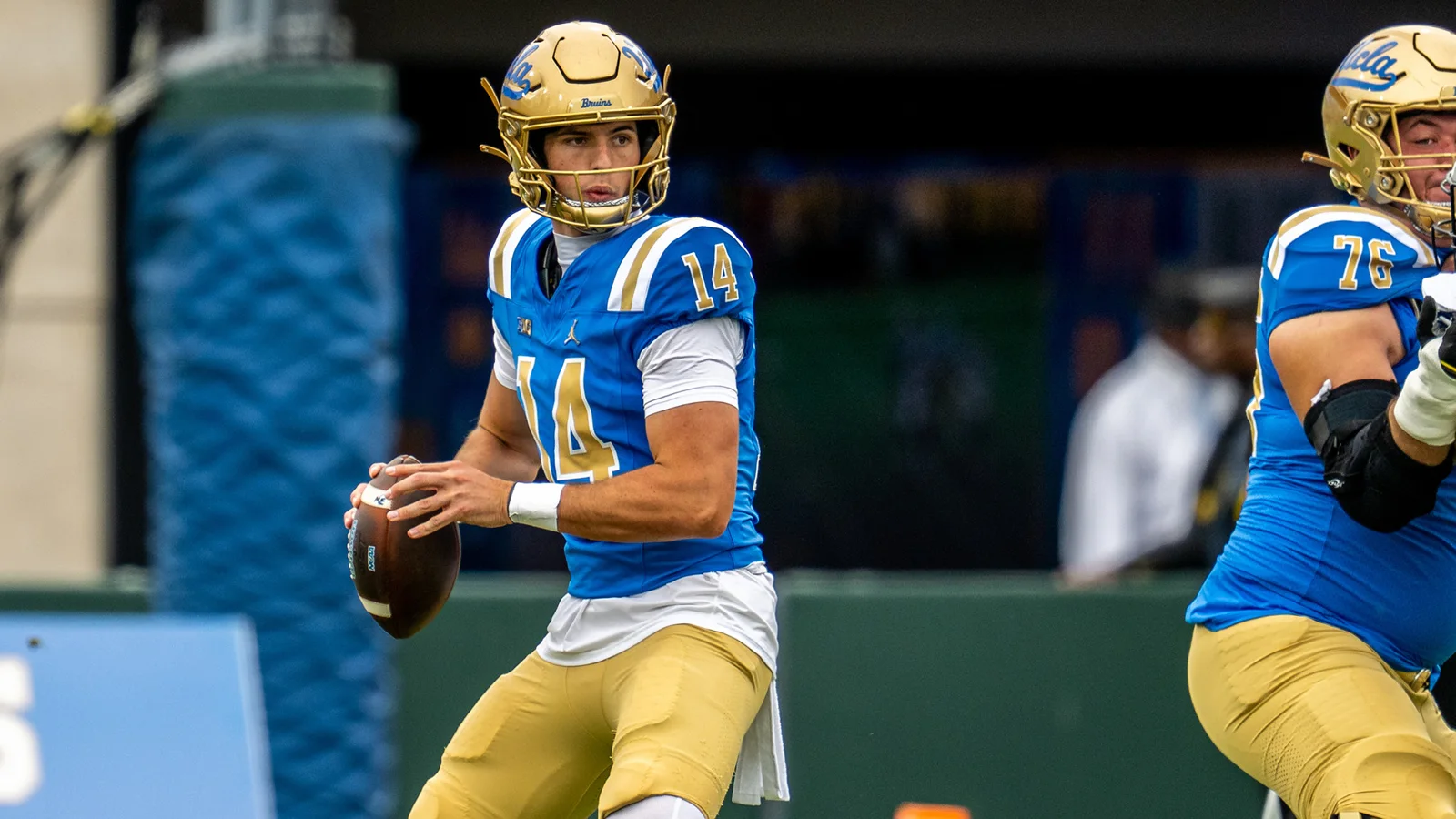
His final passing line, 16 completions in 30 attempts for 178 yards, supports a measured evaluation. The quarterback contributed both passing and rushing touchdowns without an interception. The completion rate also leaves room for improvement. A comfortable score should not require pretending the unused opportunities were invisible.
Chesney’s immediate comments reflected that balance. He appreciated the shutout and unbeaten record while identifying offensive connections UCLA should have made earlier. He also described his quarterback becoming more comfortable against Nevada’s coverage changes. That is useful context, rather than evidence that every missed throw had the same cause.
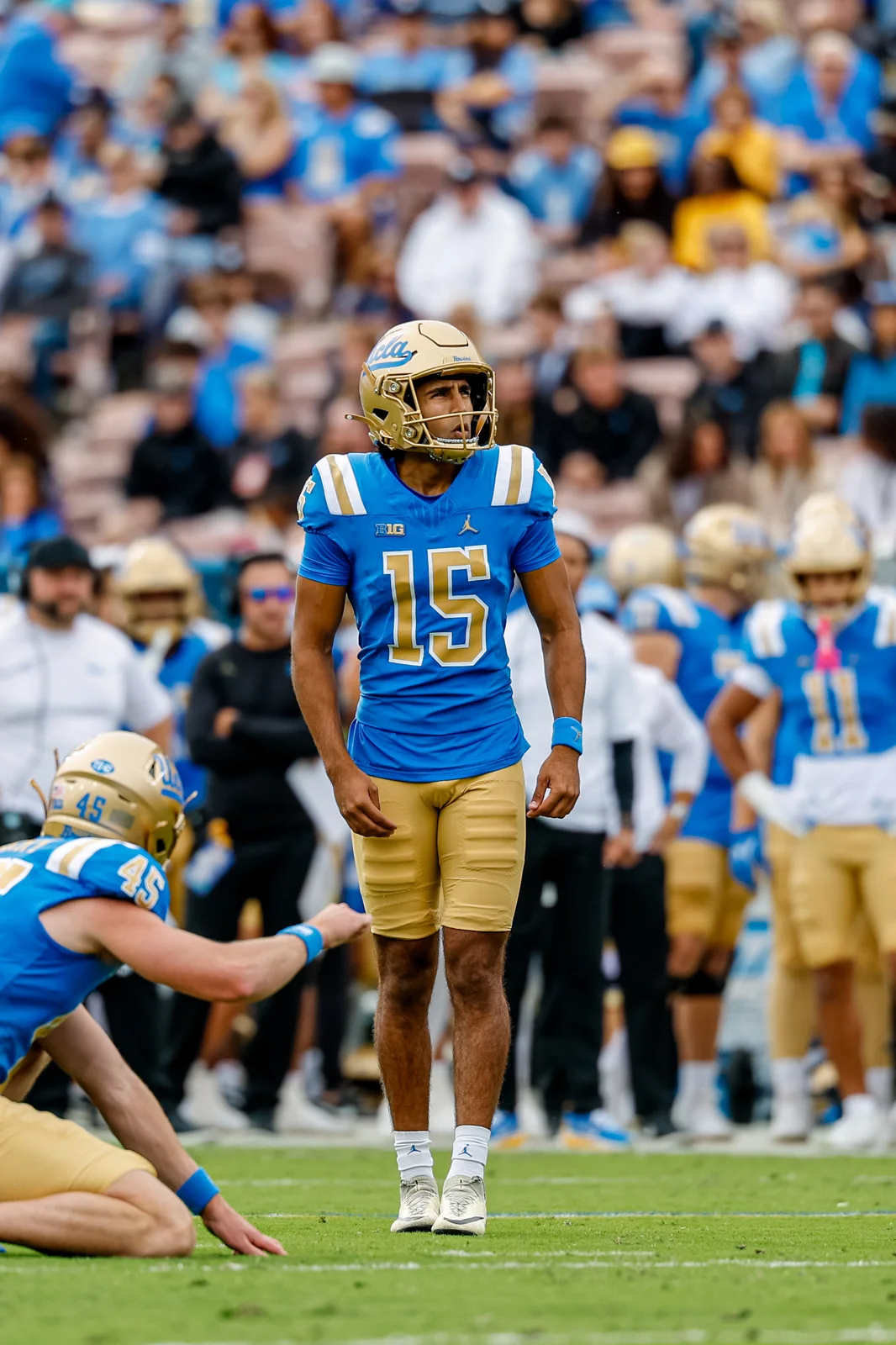
The possession improvement was concrete: UCLA had no turnovers. Four penalties for 33 yards are still work to review, but they did not reproduce the expensive complications from the previous week. The Bruins gave their defense’s work a chance to remain an advantage.
Brian Rowe Jr.’s status remains a separate question. Chesney had no immediate update after the receiver took a hit near the sideline. No diagnosis or return timetable is established here. The next availability reporting should supply the next fact.
Wisconsin’s opportunity ended at the goal line
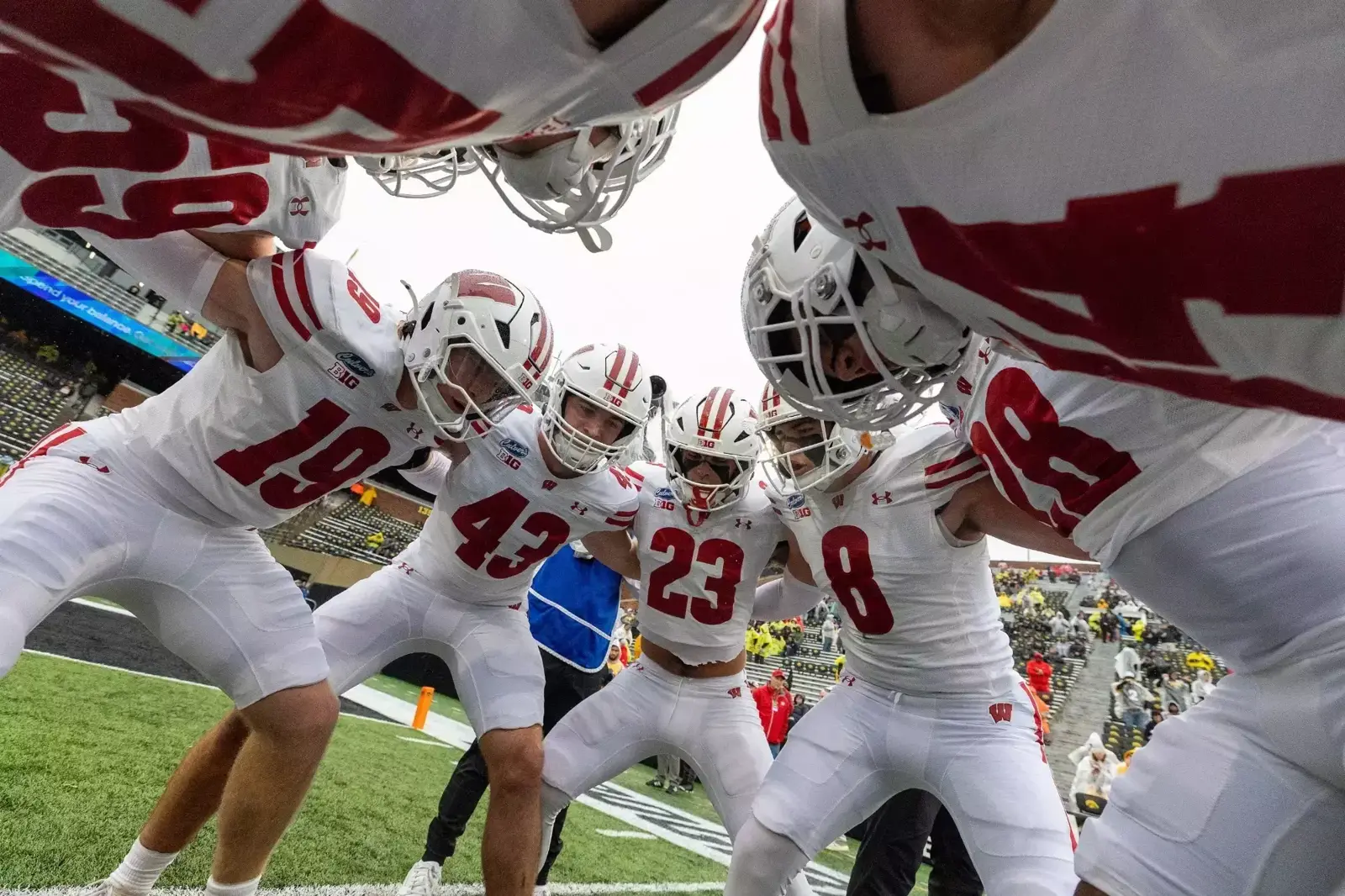
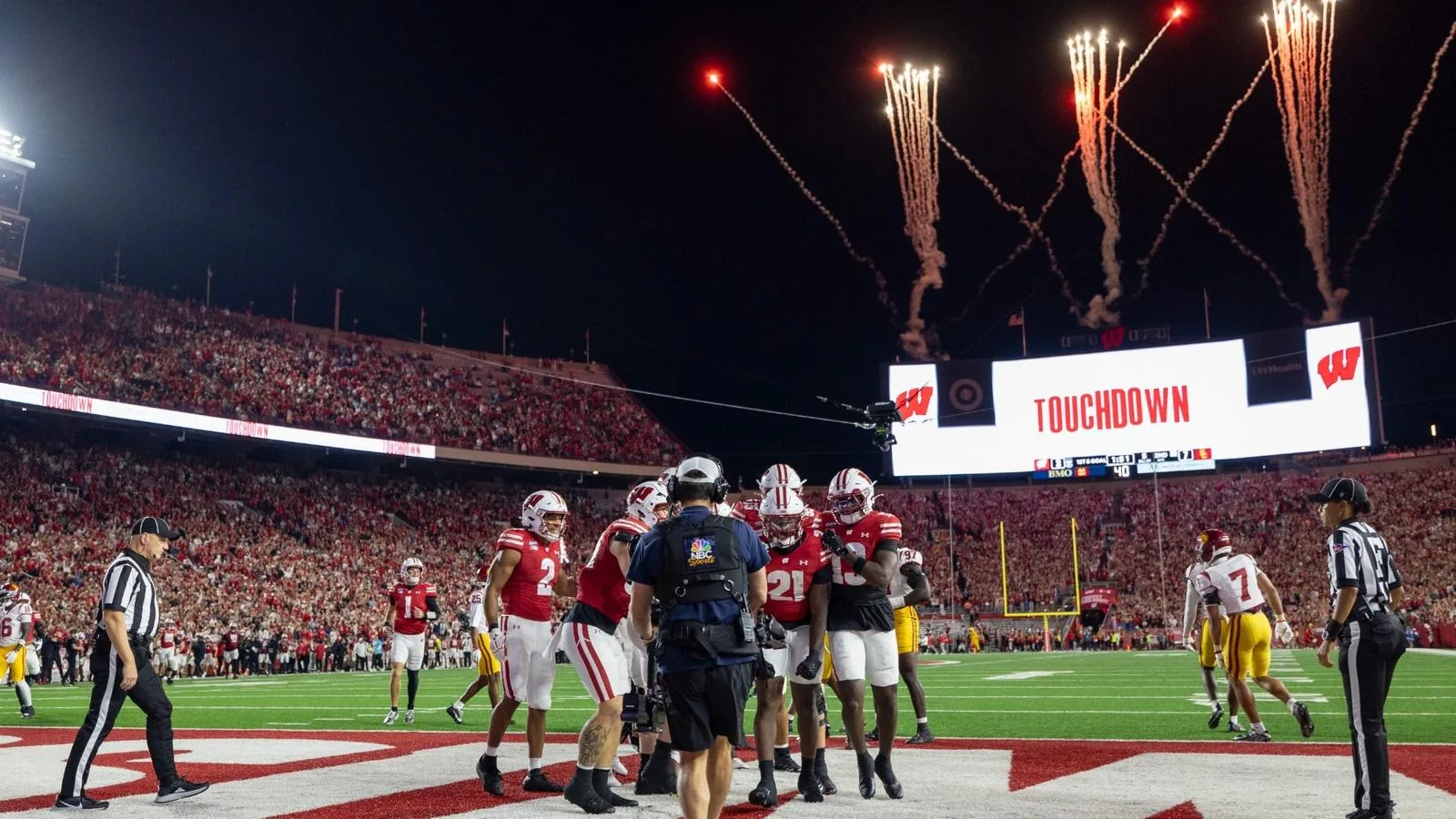
The Badgers’ most important possession reached the doorstep without opening it. Trailing 10–0, Wisconsin moved inside the Iowa ten after a long completion to Jaylon Domingeaux. It reached the one, then failed on fourth down. Iowa answered with a 98-yard touchdown drive.
The leverage in that sequence was enormous. Wisconsin could have finished a sustained drive and forced Iowa to protect a smaller lead. Instead, the Hawkeyes demonstrated that being backed against their own goal line was not enough to interrupt their offense. The visitors received neither points nor the field-position pressure they might have expected.
The decision to pursue a touchdown can be discussed without confusing it with the execution that followed. An aggressive choice does not block a defender. A reasonable opportunity still requires a successful play. The goal-line failure belongs in the review alongside everything that brought Wisconsin there.
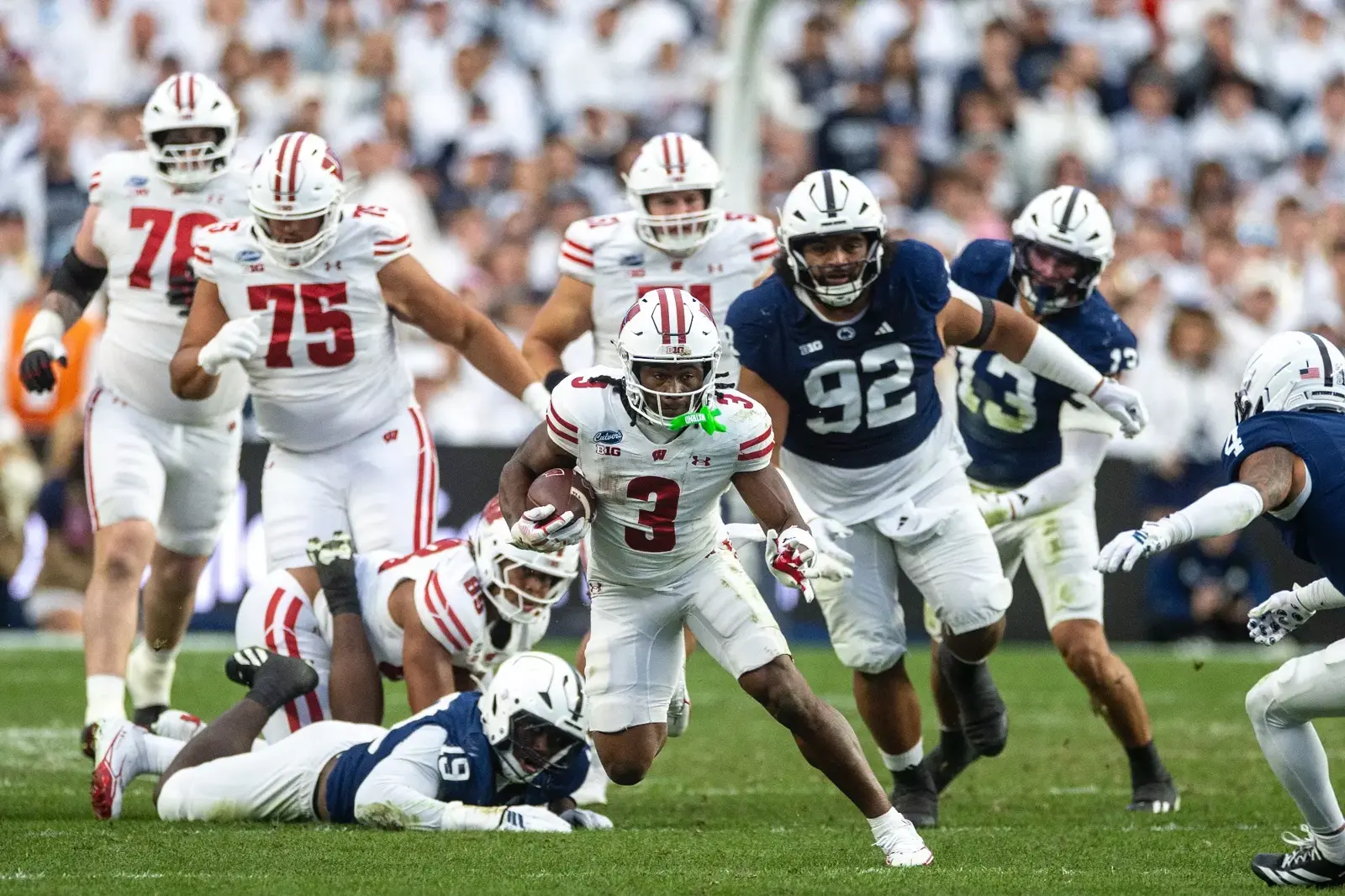
After Iowa’s touchdown, another lost Wisconsin possession helped the Hawkeyes add points before halftime. The difference had grown from an opening deficit into a 20–0 halftime problem. This was not a game decided by a single unlucky bounce. The damaging moments reinforced one another.
Changing the quarterback did not change the whole offense
Joseph’s five completions in fourteen attempts were insufficient. Hopkins entered late in the third quarter and produced some passing yardage, but the Badgers remained scoreless. The change belongs in the account. Treating it as a complete explanation would spare too much of the surrounding offense from examination.
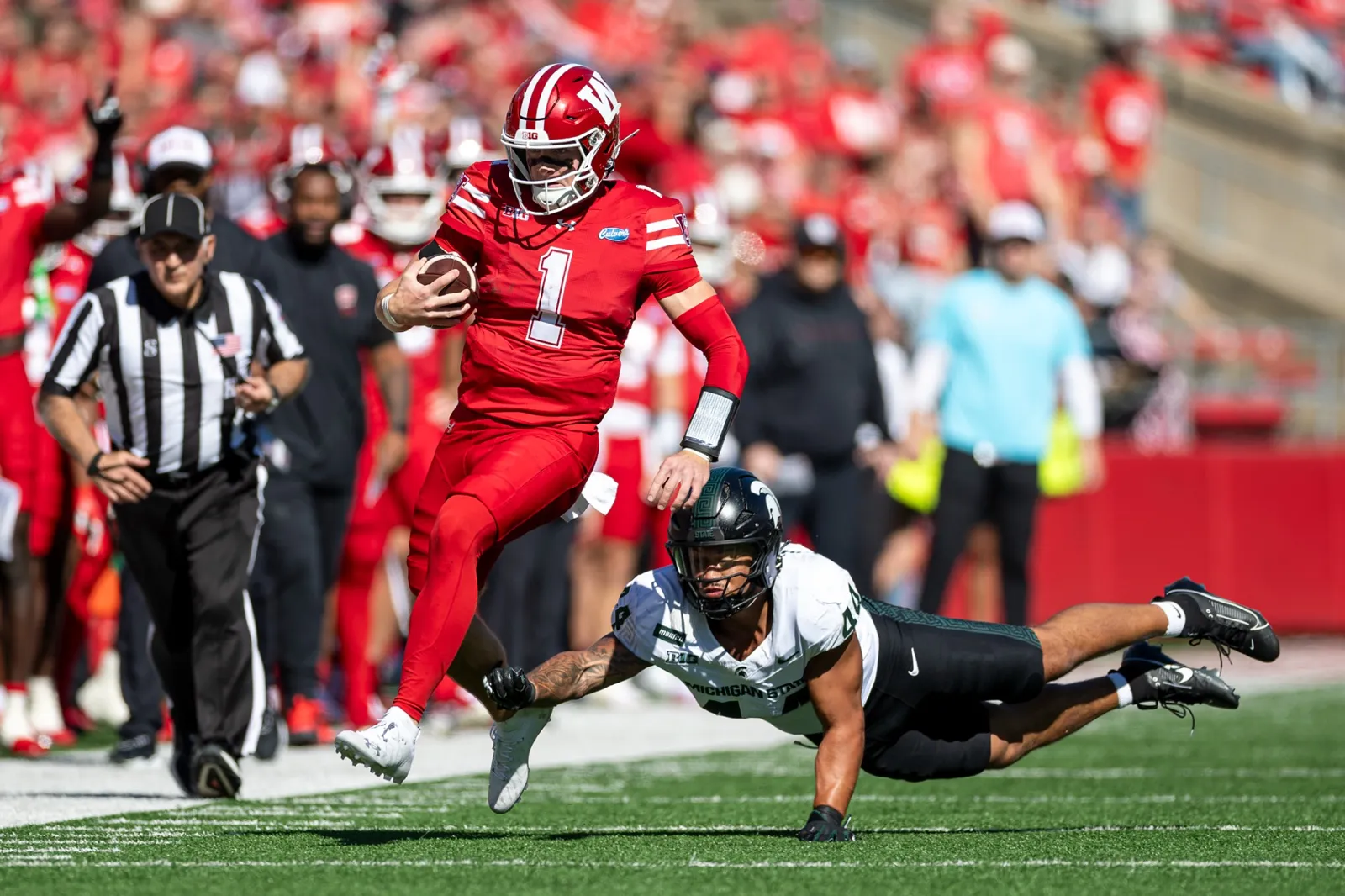
The rushing total was 52 yards. That is the clearest answer to the preview’s hope that the backfield and Joseph’s legs could keep Iowa defending several possibilities. Without reliable gains, the next play becomes easier for a defense to anticipate. The quarterback then has less room to solve the problem, and his mistakes become more costly.
Domingeaux’s six catches for 86 yards were a useful contribution inside the broader failure. Credit that work without asking it to disguise the outcome. An offense can contain a productive individual performance and still fail collectively to create enough scoring opportunities.
Iowa also deserves direct credit. Hank Brown completed 20 of 24 passes for 222 yards and two touchdowns. The Hawkeyes sustained possessions, converted opportunities and protected a lead they kept extending. Wisconsin’s defense had its own unsuccessful assignment; this was more than an offense leaving it on the field.
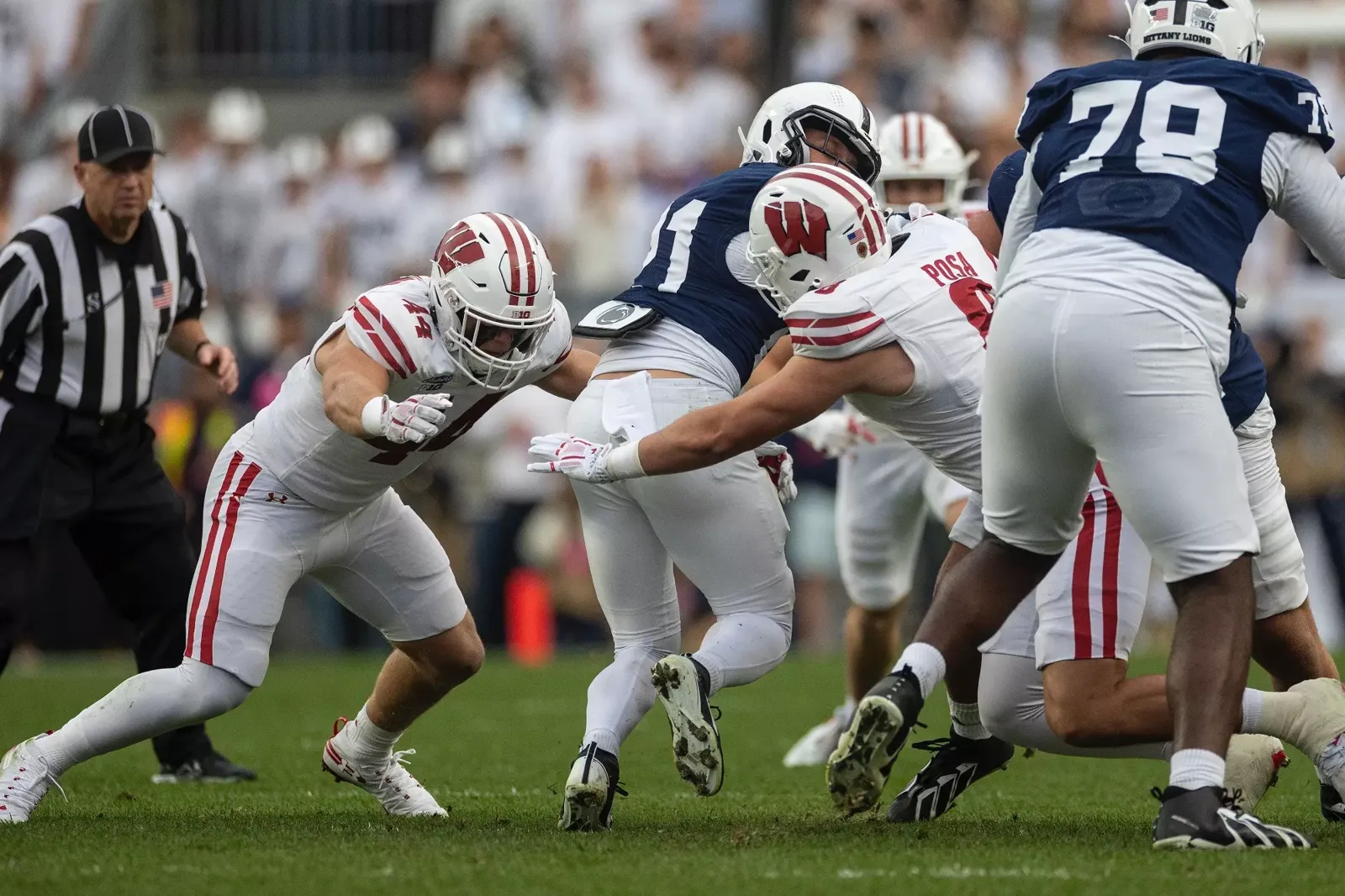
Catalano’s sixteen tackles show the amount of work he completed. They do not establish defensive control. The distinction matters whenever a busy defender’s individual total threatens to become a substitute for examining how often the opponent extended its possession.
Reported postgame comments from Fickell described inadequate preparation in the performance and a failure across all three phases. That assessment places responsibility more broadly than one quarterback or one fourth down. The response now needs to be equally specific: better situations, successful execution and fewer possessions surrendered.
The comparison that explains the two zeros
The turnover numbers do not explain every snap, but they identify the different conditions each offense worked inside. UCLA could keep refining its contribution while the defense removed Nevada possessions. Wisconsin needed to overcome its own lost opportunities while Iowa kept finding useful answers.
Third downs sharpen the contrast. Nevada converted five of sixteen. Iowa converted eight of fifteen. The difference was not merely whether a defense produced a memorable play; it was how often the opponent earned another set of downs. The same measure, applied to the same afternoon, helps keep the review honest.
The next review should also resist grading the two teams by the same emotional standard. UCLA earned a comfortable win while leaving offensive corrections available. Wisconsin failed to score in a rivalry game it had hoped would demonstrate progress. Asking the Bruins to improve does not diminish their achievement. Asking the Badgers for a substantial response does not require deciding that every encouraging performance this season was imaginary. The evidence is uneven because the performances have been uneven.
November begins with different kinds of work
UCLA is 8–0 and remains 5–0 in conference play after the nonconference victory. Wisconsin is 5–3 and 3–2. Iowa retains the trophy and reaches 6–2. The Bruins’ unbeaten position supports major postseason ambition, but no berth is clinched here. Wisconsin’s immediate target is a sixth win.
Both return to action November 7. UCLA visits Minnesota at 9 a.m. Pacific on FOX. Wisconsin hosts Rutgers at 1:15 p.m. Pacific according to its current schedule. These are Pacific standard times, following Sunday’s clock change.
UCLA can enjoy the defense and ask for a more complete offensive afternoon. Wisconsin needs a response that makes improvement visible before the result is known. One zero rewards the work already completed; the other insists on a much harder conversation. Neither team benefits from confusing appreciation with satisfaction.