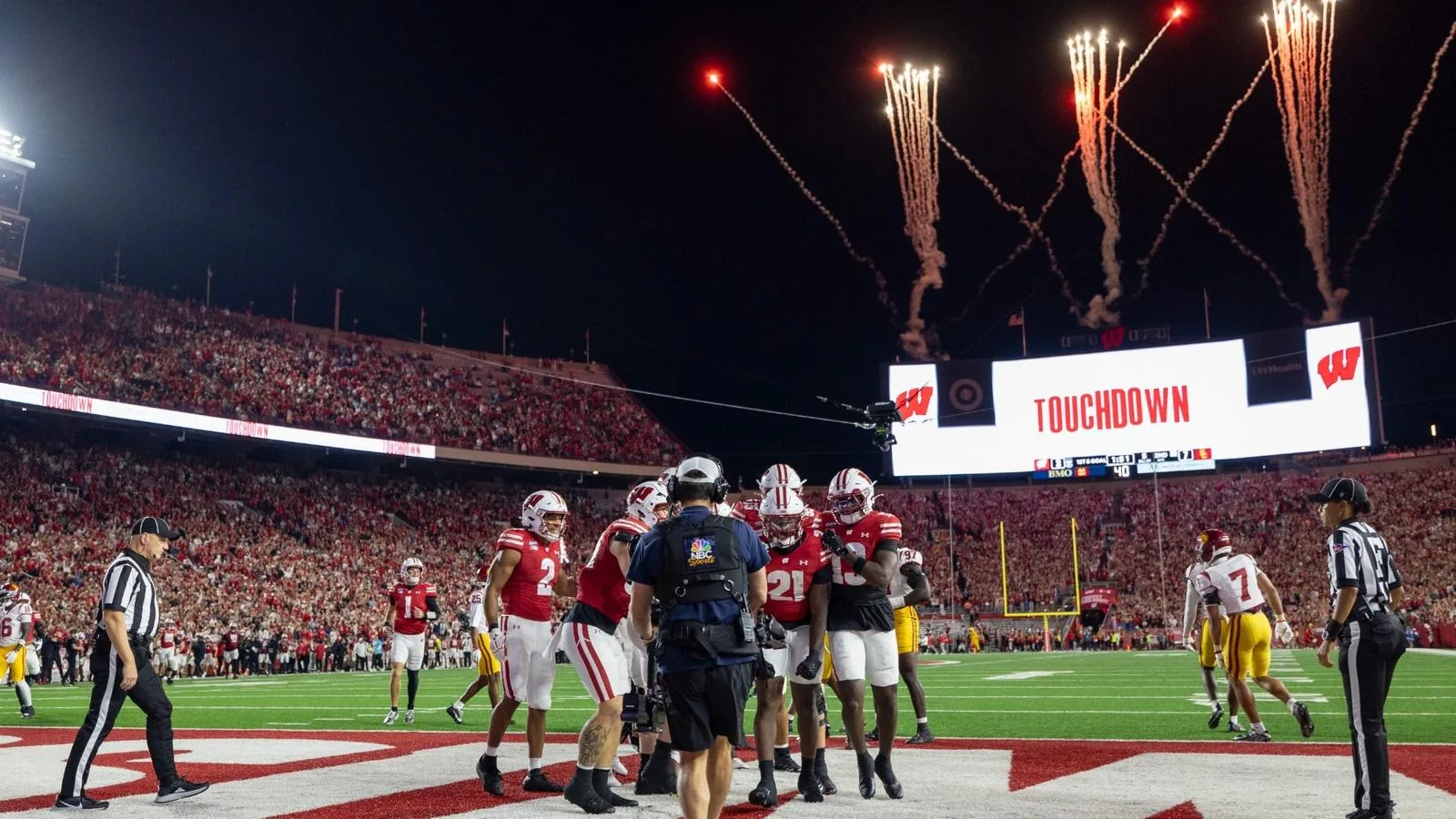
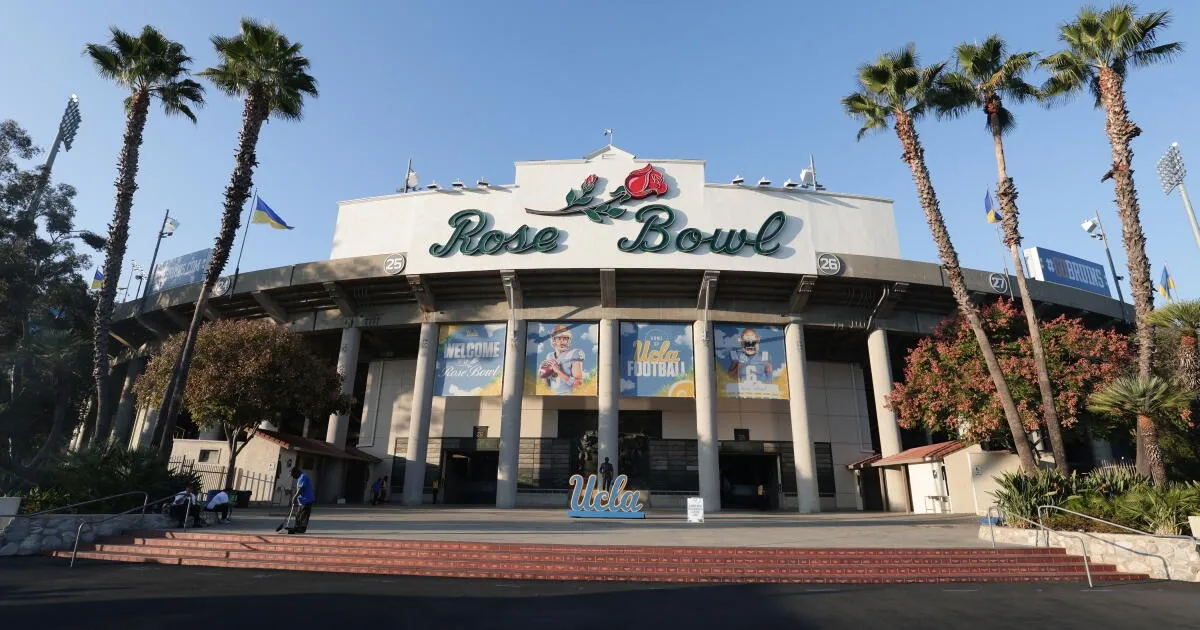
 PRE-GAME
UCLA BRUINS + WISCONSIN BADGERS
One trophy to reclaim. One zero to protect
Wisconsin takes its progress to Kinnick. UCLA asks its unbeaten season to keep paying attention. Halloween has two very different tests.
Listen to Repinkee Sports on Apple Podcasts UCLA7–0
 Nevada3–4
1:15 PM PT / 3:15 PM CT · Big Ten Network
Rose Bowl · Pasadena
 Wisconsin5–2
 Iowa5–2
9:10 AM PT / 11:10 AM CT · FOX
Kinnick Stadium · Iowa City
Halloween offers two kinds of football anxiety. Wisconsin needs to prove that an excellent home performance travels. UCLA needs to keep an ordinary-looking assignment from becoming the game everybody remembers for the wrong reason. One team wants the Heartland Trophy back; the other would prefer its unbeaten record to remain a football story rather than a seasonal cautionary tale.
The Badgers visit Iowa in FOX’s 9 a.m. Pacific window, with the Hawkeyes listing a 9:10 kickoff. Nevada visits the Rose Bowl at 1:15 p.m. Pacific on Big Ten Network. Both times are PDT. The clock change belongs to Sunday; today already has enough moving parts.
Three things worth watching before the scoreboard gets persuasive
First, watch the distance on Wisconsin’s second downs. A modest first-down gain keeps Colton Joseph’s running threat connected to the passing game. An immediate loss lets Iowa narrow the assignment. The quality of the next situation will explain more than an early total-yardage graphic.
Second, watch where Nevada’s linebackers have to stand. UCLA should use formations and motion to make the Wolf Pack declare who is responsible for the run and who can help in coverage. A defense that can handle both jobs without moving has received an unusually generous invitation.
Third, watch the exchanges that happen outside the highlight reel: punts fielded securely, kick coverage finished, and possessions that begin without a penalty. These are two different matchups with a shared opportunity for a team to make its own afternoon unnecessarily expensive.
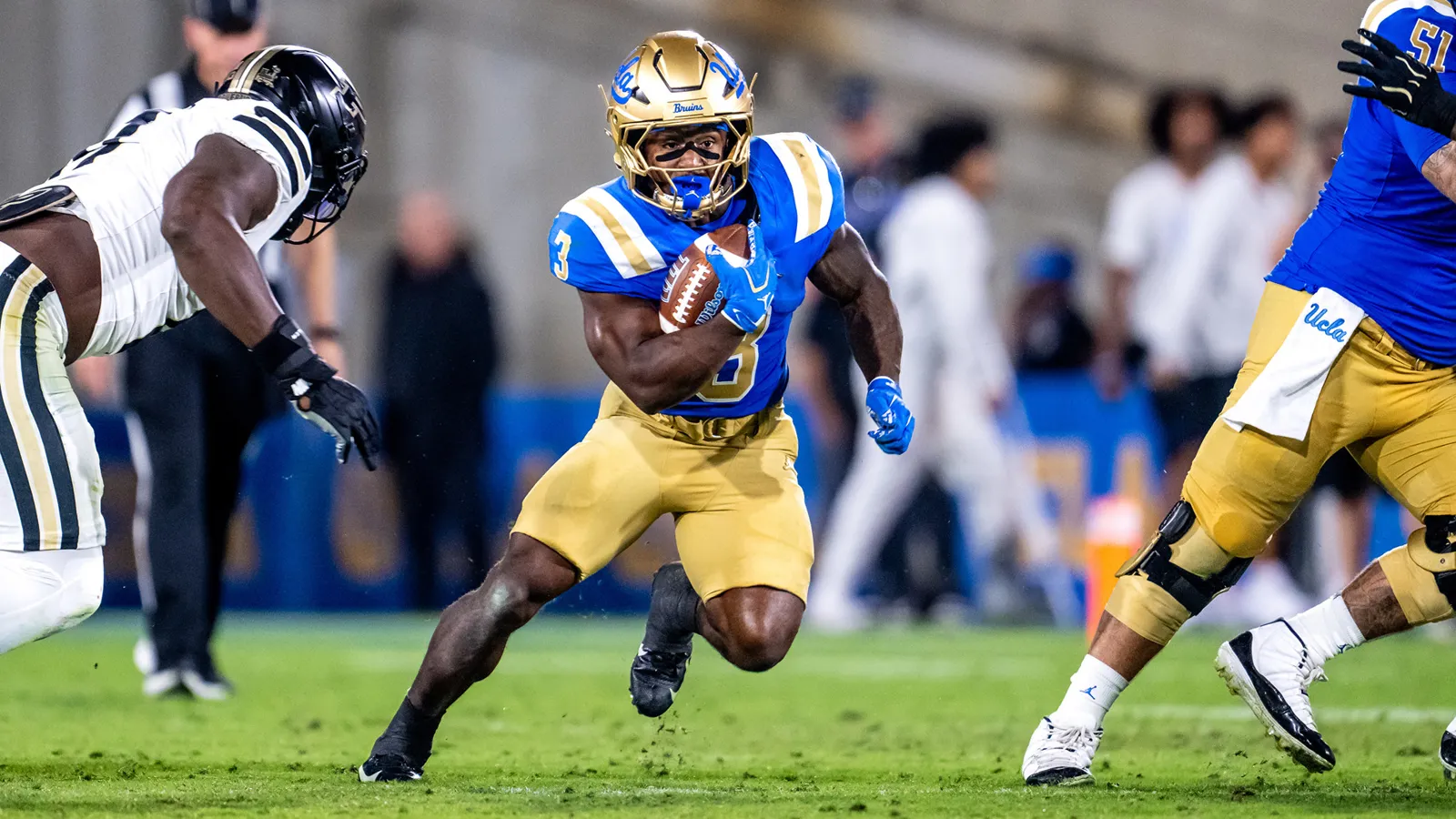
A useful test is whether the Bruins can run the same broad idea from more than one formation. When a defense has to communicate before the snap, the offense may learn where the extra run defender is coming from. That information should improve the next decision. Motion without a purpose merely gives the television camera something to follow while everybody waits.
UCLA’s advantage needs a practical expression
The Bruins enter 7–0 and No. 7 in the AP poll. Nevada is 3–4. Those records describe the season so far; they cannot block the next play. The most useful expression of UCLA’s advantage would be repeated possessions that ask its opponent to defend several possibilities without giving the football away.
Wayne Knight, Anthony Woods and Jaivian Thomas give the offense room to distribute work. That is valuable even before considering availability. A different runner can change the angle of a cut or the tempo of a possession without requiring the entire offense to become something else. The benefit is depth that produces useful plays, rather than a rotation maintained for appearances.
Knight was expected to play according to Friday’s Los Angeles Times preview. That remains an expectation ahead of final confirmation. The practical approach is to build around the available backs and judge the offense by its decisions, rather than turn one player’s anticipated participation into an assumed workload.
A productive running game should also help Ty Dieffenbach see a less crowded problem when he throws. If Nevada brings help toward the line, the Bruins need a route into the space that defender has left. If the secondary stays patient, there is no obligation to throw into its preferred arrangement just because a passing highlight would look attractive.
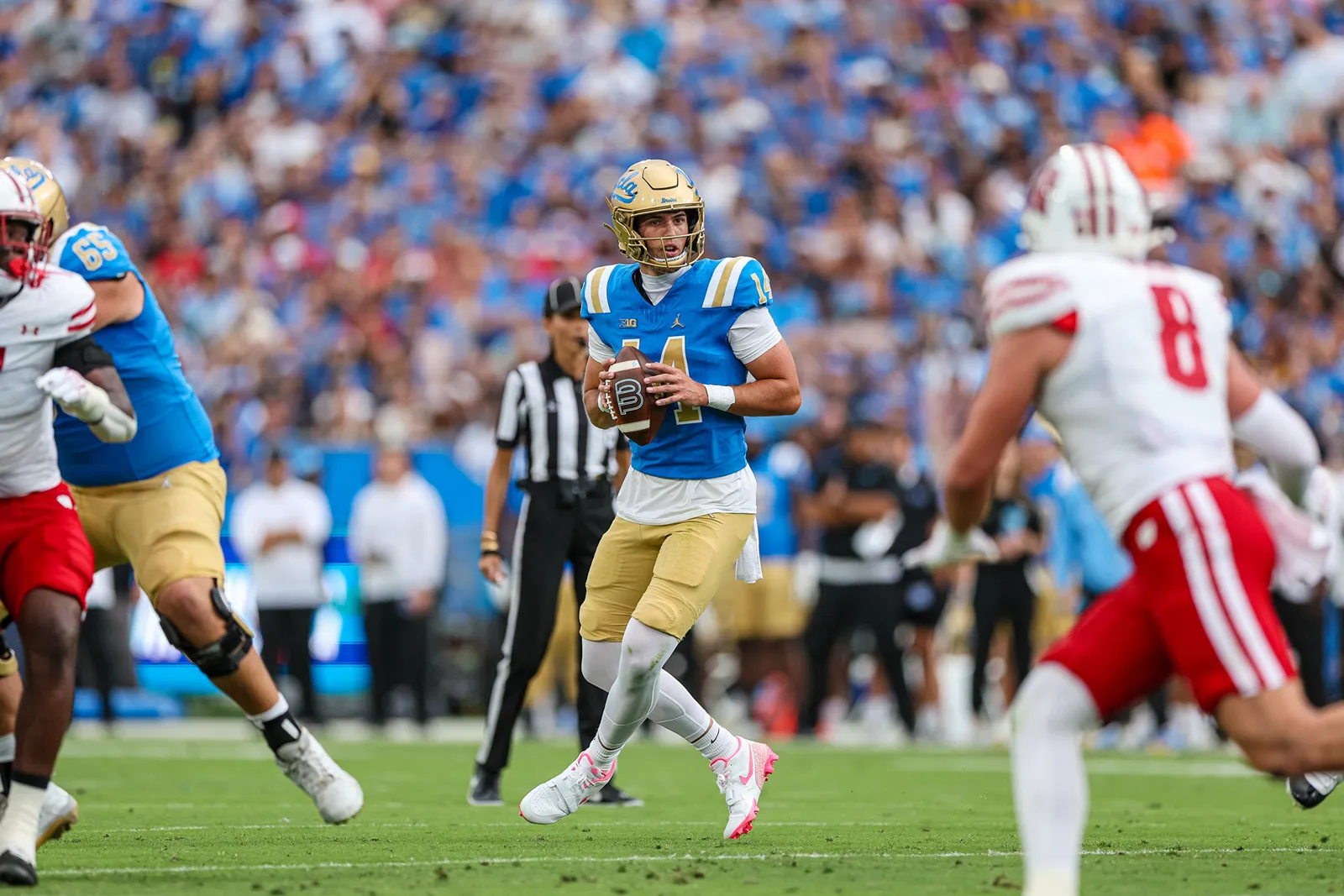
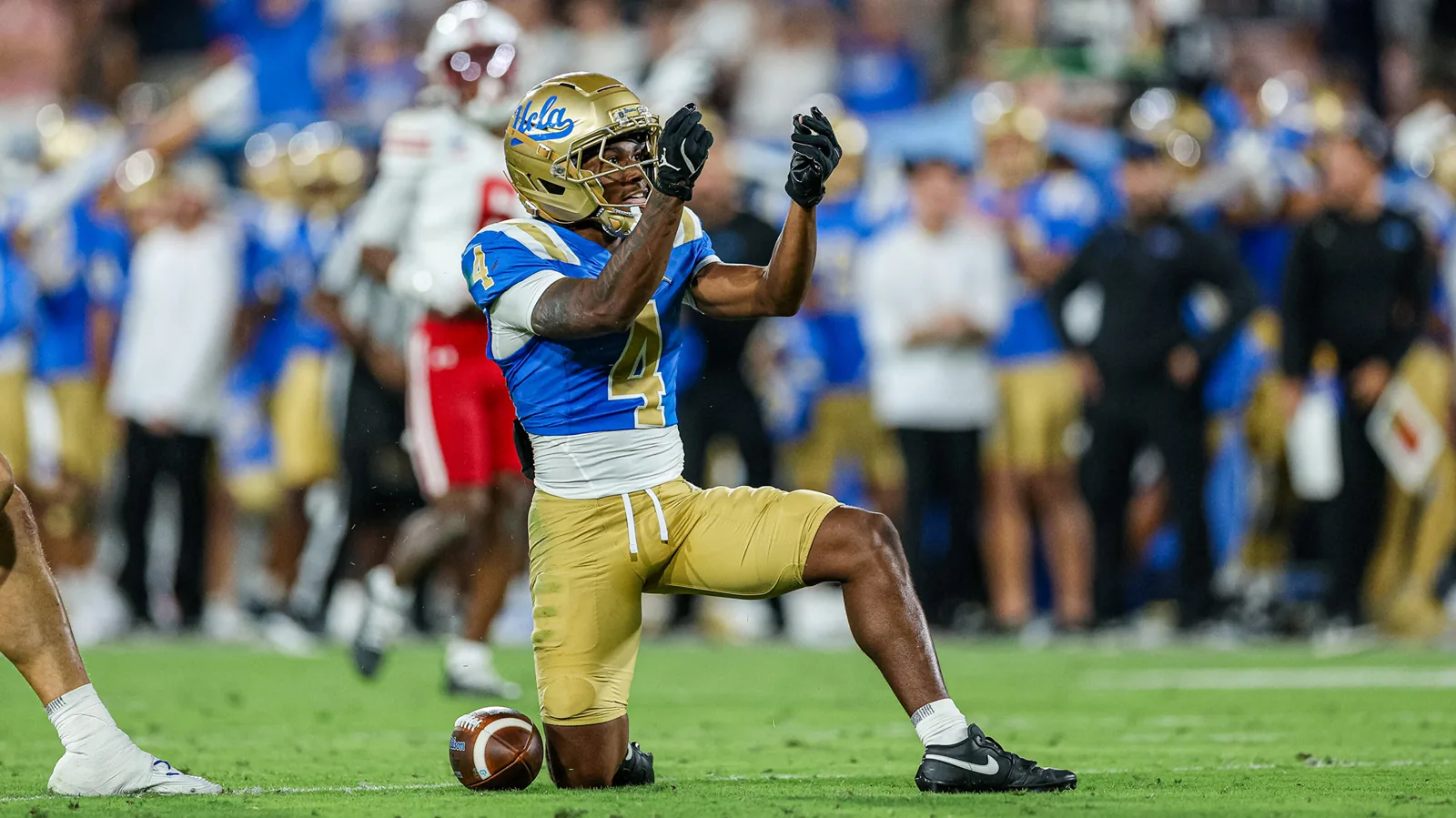
Morgan’s routes and Brian Rowe Jr.’s ability to create a useful target matter beyond the catch itself. A receiver can help a quarterback by arriving where the design expects him, on time, with enough separation to make the decision clear. That sounds unremarkable until the quarterback has to wait and the protection begins charging overtime.
Nevada deserves respect in that exchange. Its weekly report identifies an effective pass defense and active defensive backs, including Larry Turner-Gooden and Bryson Snelling. The Bruins should test what is actually available rather than assume their ranking has already negotiated favorable coverage.
The visitor needs leverage, not permission
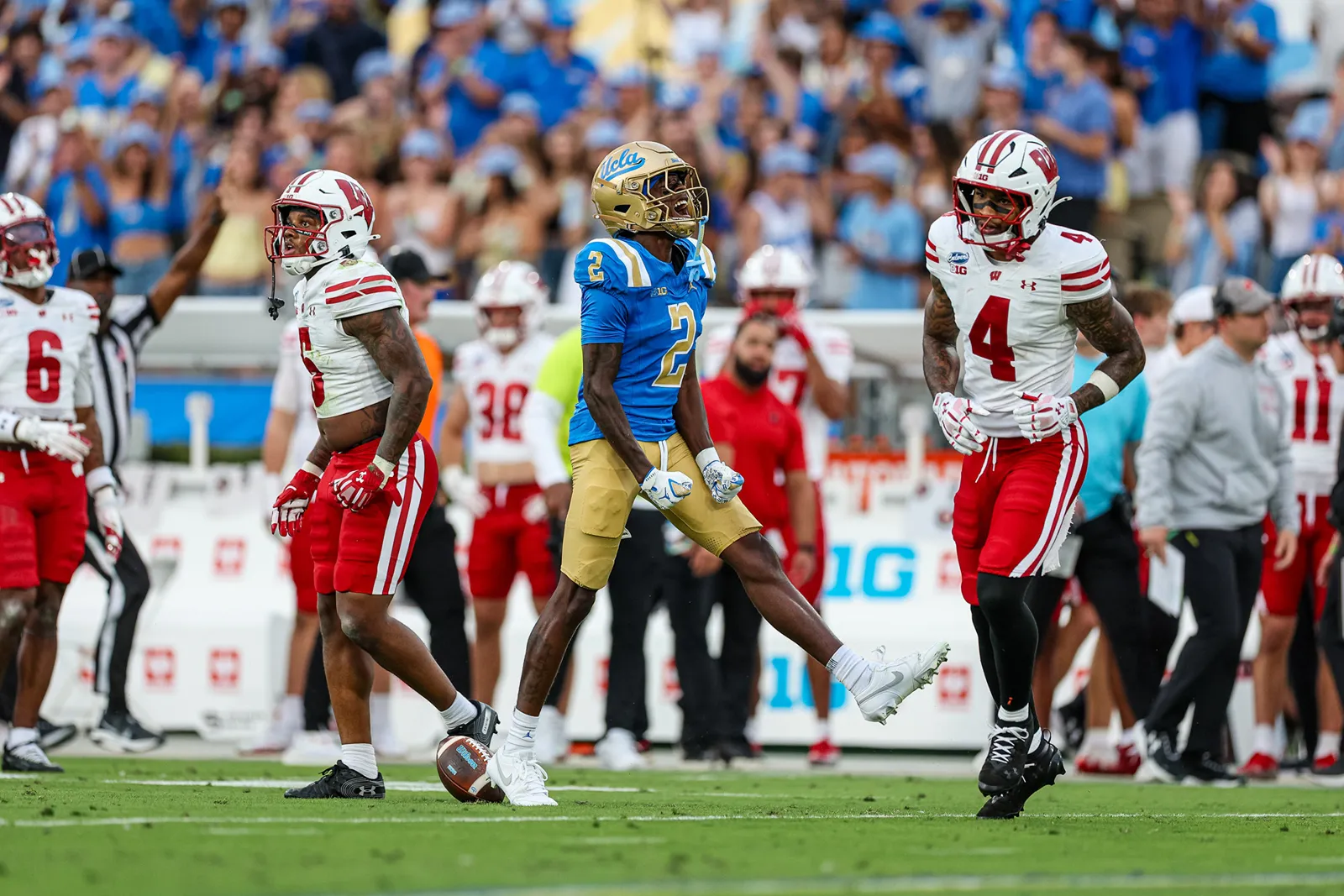
Nevada’s linebacker EJ Smith and returner Ky Woods are especially relevant to the kind of game an underdog needs. Smith can help make a possession inconvenient before it gains momentum. Woods can change the distance Nevada’s offense has to cover. Neither contribution requires the Wolf Pack to be better at every part of the game.
For UCLA, that means the blocking and coverage details deserve the same attention as the offensive headline. An unblocked linebacker can turn a promising run into a difficult down. A poorly covered kick can undo the field-position value of a scoring drive. Comfortable margins are assembled from work like this, long before they become comfortable.
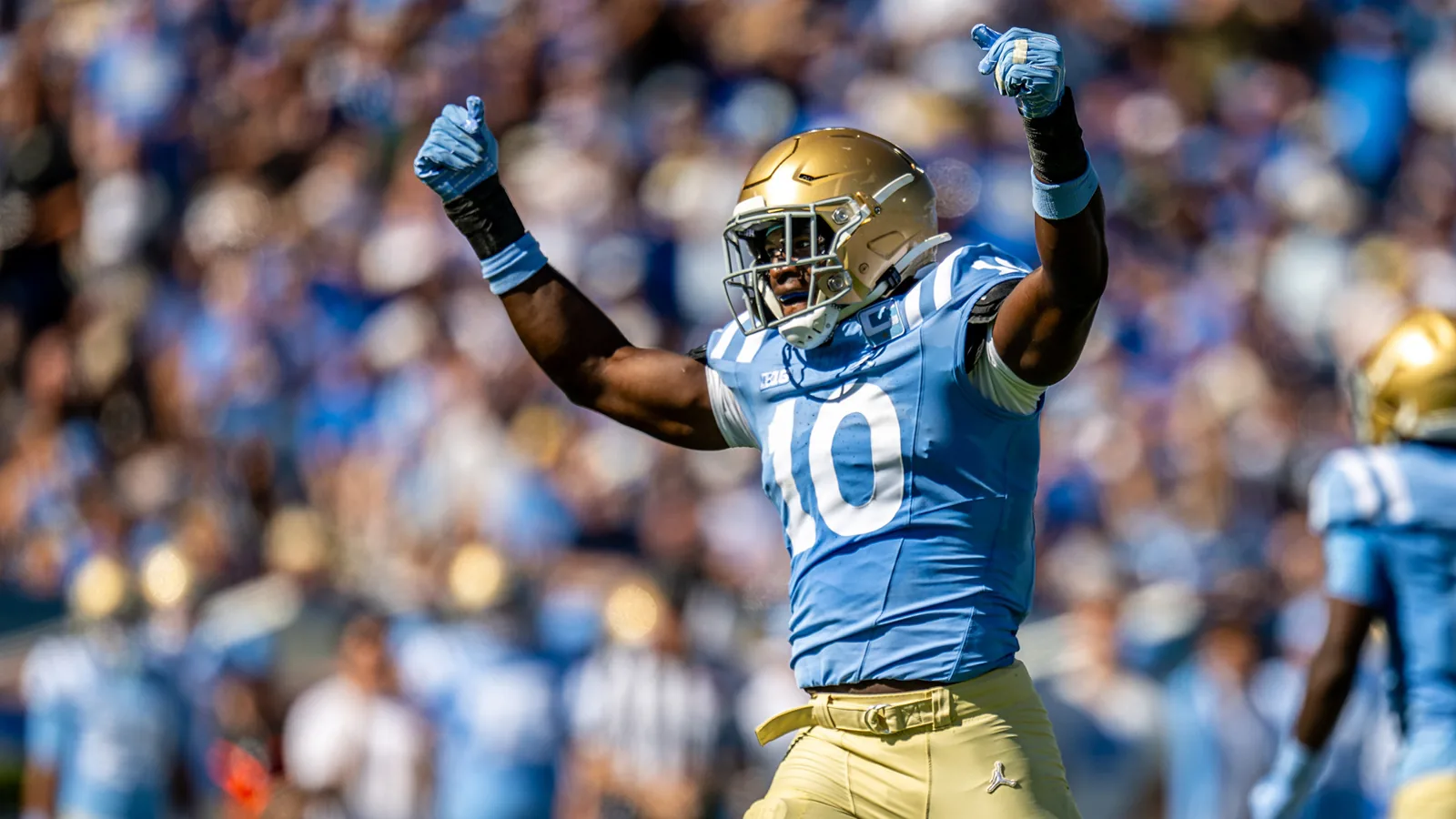
The Bruins’ defense should make Nevada earn its possessions through sustained execution. Omosigho and Jalen Woods can influence that without treating every snap as a personal invitation to chase a takeaway. Maintain the front, tackle the available runner and keep coverage responsibilities intact when the original play changes shape.
The final UCLA game-day availability report was not verified at the research cutoff. Iamaleava remains sidelined and Dieffenbach is the working quarterback context; other participation should be checked again when the final report becomes available. Nevada’s final lineup likewise should not be inferred from a quiet injury page.
Steve’s prediction: UCLA 34, Nevada 13. The reason is the Bruins’ combination of running depth and defensive quality. The reversal condition is clear: giveaways and return damage that hand Nevada repeated short fields. That would change the amount of offense the visitor needs, and therefore change the game.
Kinnick asks a different question
Wisconsin is 5–2, with a 3–1 conference record and the No. 25 AP ranking. Iowa is 5–2 and 2–2 in the league, receiving AP votes and ranked No. 24 by the coaches. Keep the polls straight: there are enough legitimate reasons for fans to disagree without assigning a team a ranking from the wrong list.
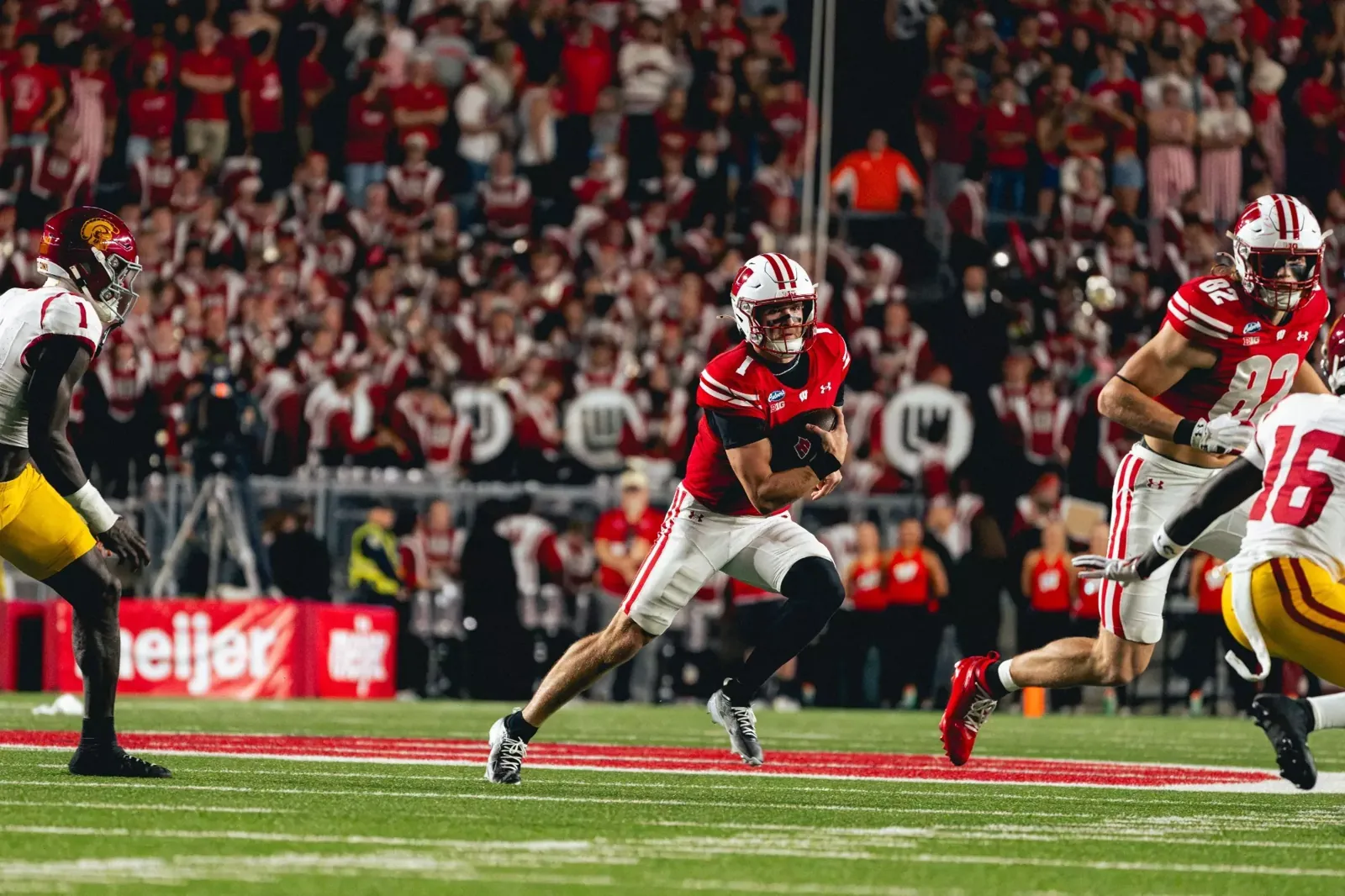
The hundredth meeting offers a chance to change the recent direction of this rivalry. The trophy has stayed with Iowa through four consecutive wins. Wisconsin cannot reverse that history with a pregame speech. It can reverse the practical habits that tend to give the Hawkeyes control: difficult early downs, lost possessions and too little sustained offense.
Joseph’s mobility helps only if the surrounding plan makes it a choice. If every escape comes after the first idea fails, the defense can increasingly treat him as the offense’s remaining destination. Designed movement, timely throws and useful work from the backs would make Iowa defend the whole call.
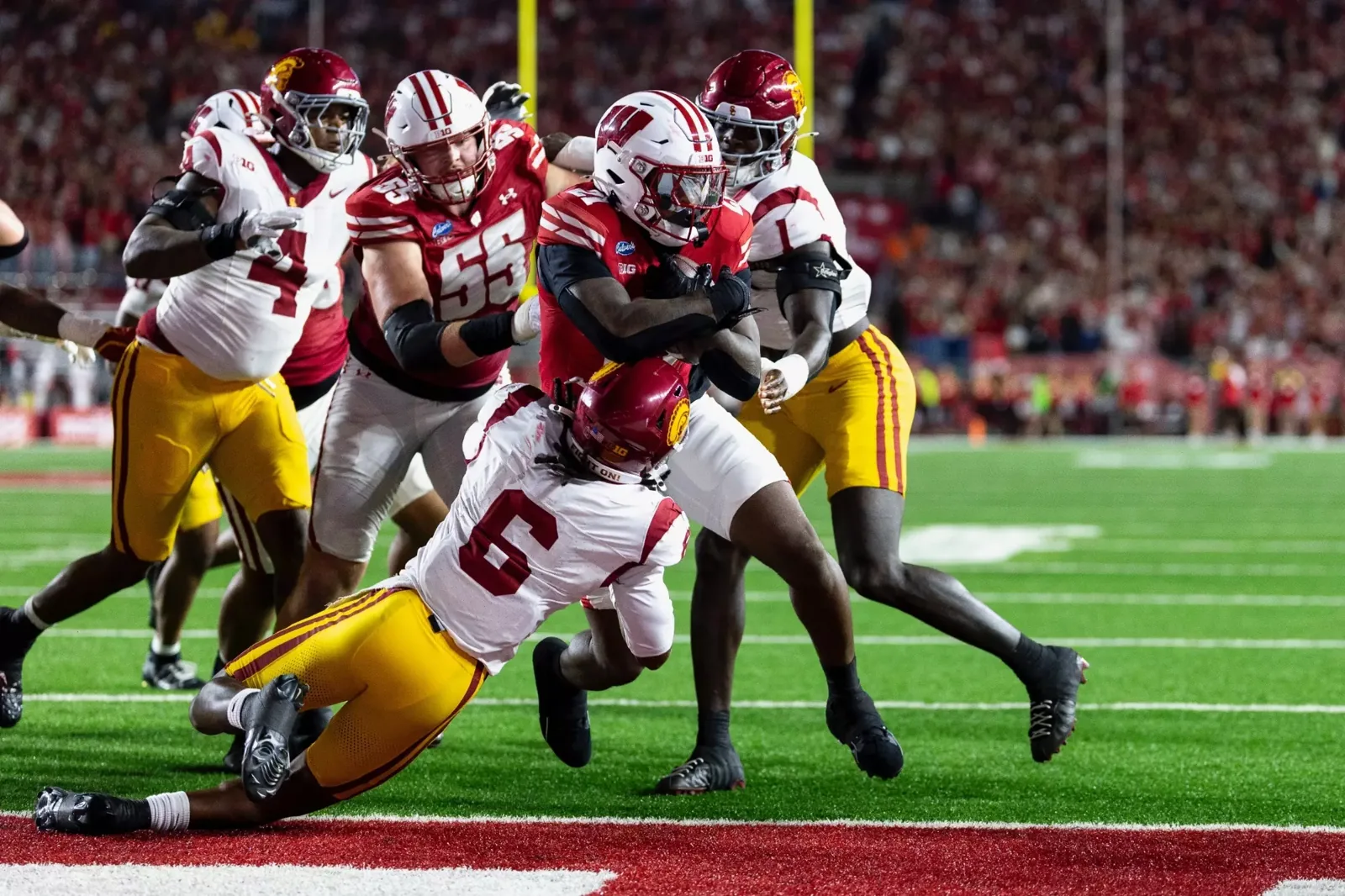
Abu Sama and Bryan Jackson give Wisconsin options. The task is to identify where the blocking creates an available gain and take it. Against a disciplined front, trying to improve every ordinary carry into something spectacular can leave an offense paying interest on the yards it refused.
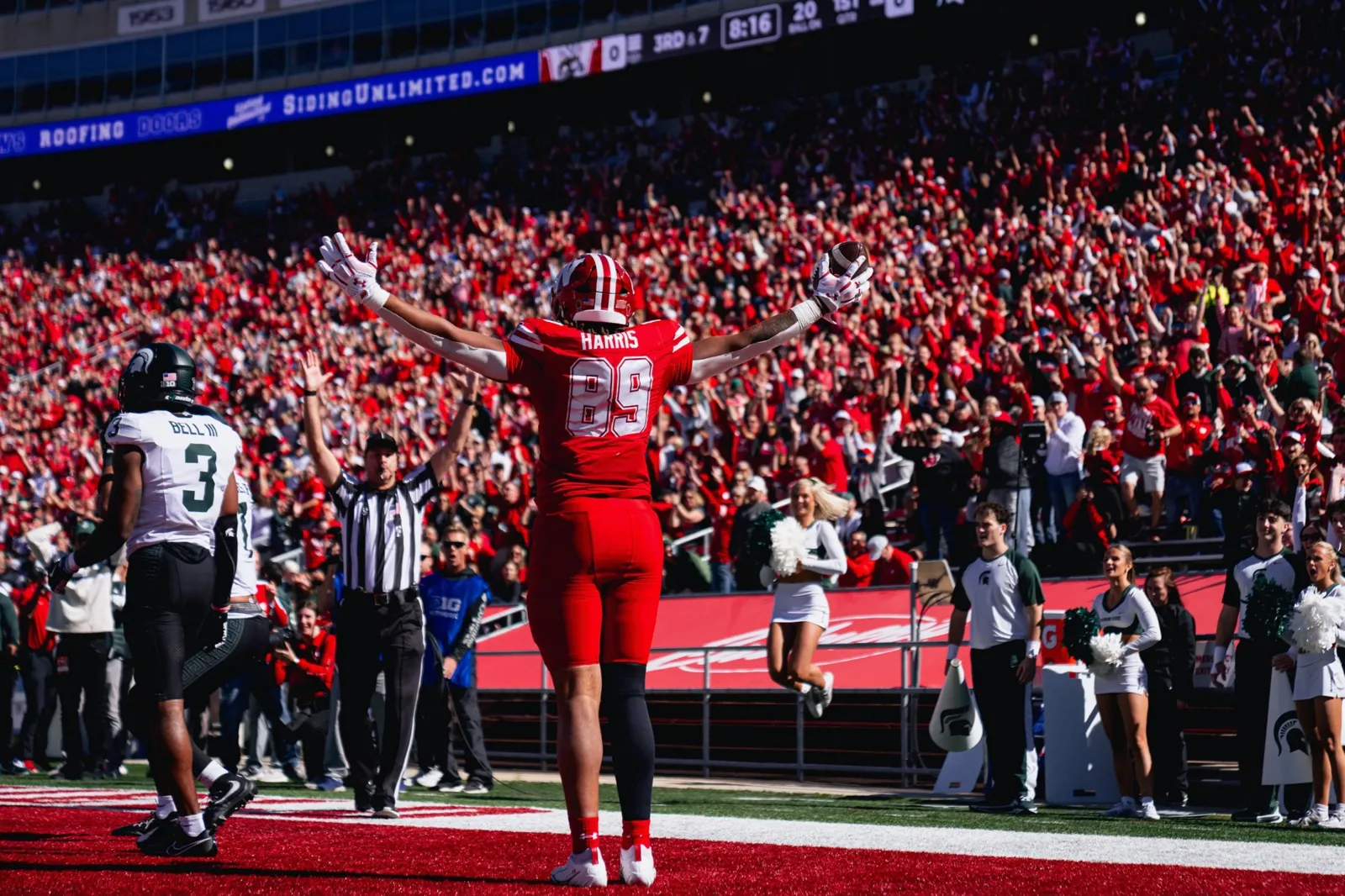
Harris and Henry matter as receiving answers when Iowa’s attention moves forward. The best throw might be one that arrives before the coverage has finished responding to the run threat. That requires protection and timing together; a good route is not very helpful if the quarterback is already conducting an evacuation.
A defense must defend the next opponent
Fickell emphasized this week that Iowa’s ground game represents a different challenge from USC. That is the right starting point for the defensive review. A productive pass rush last Saturday does not automatically establish how a front will handle blocks aimed directly at moving it.
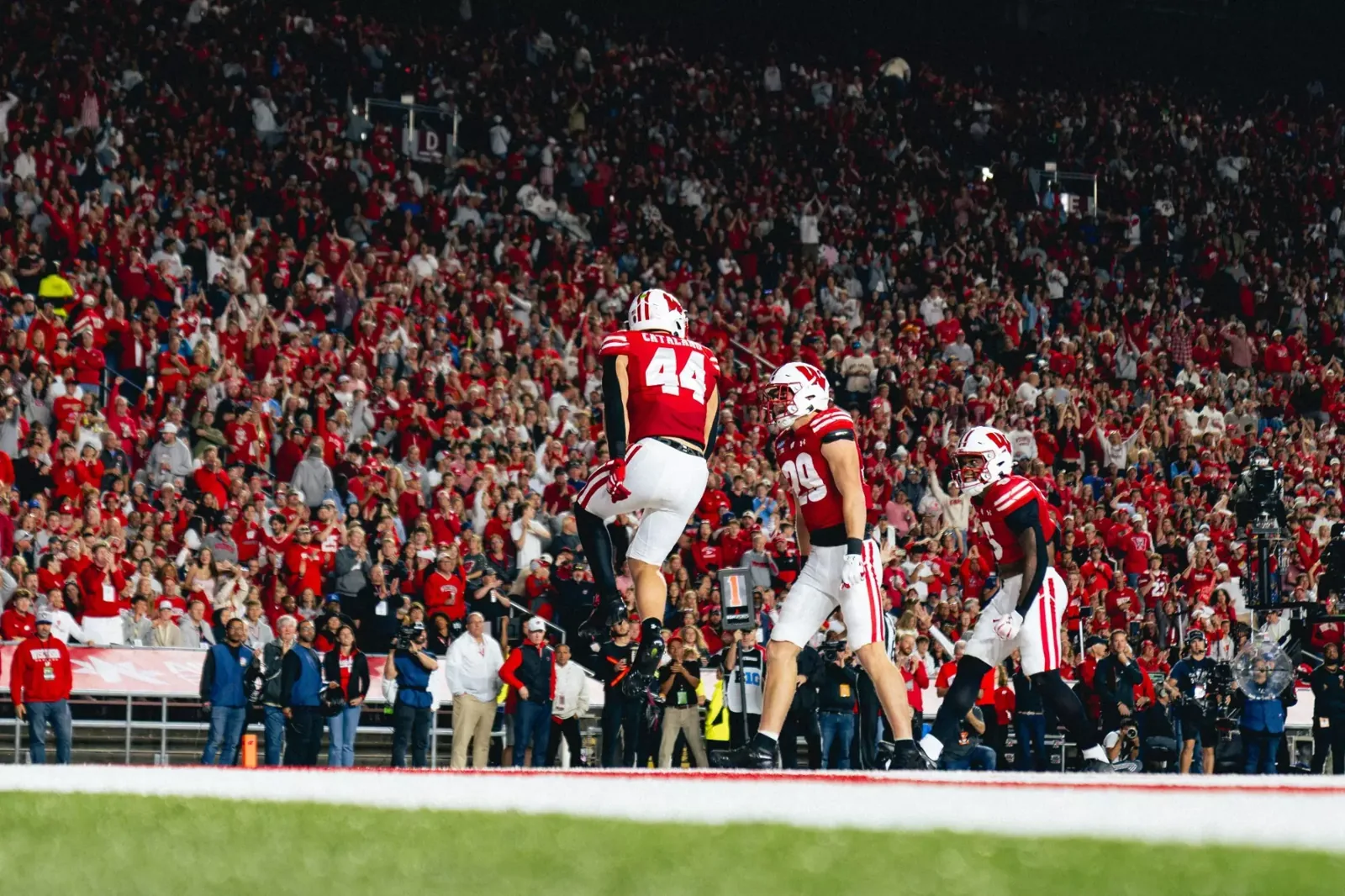
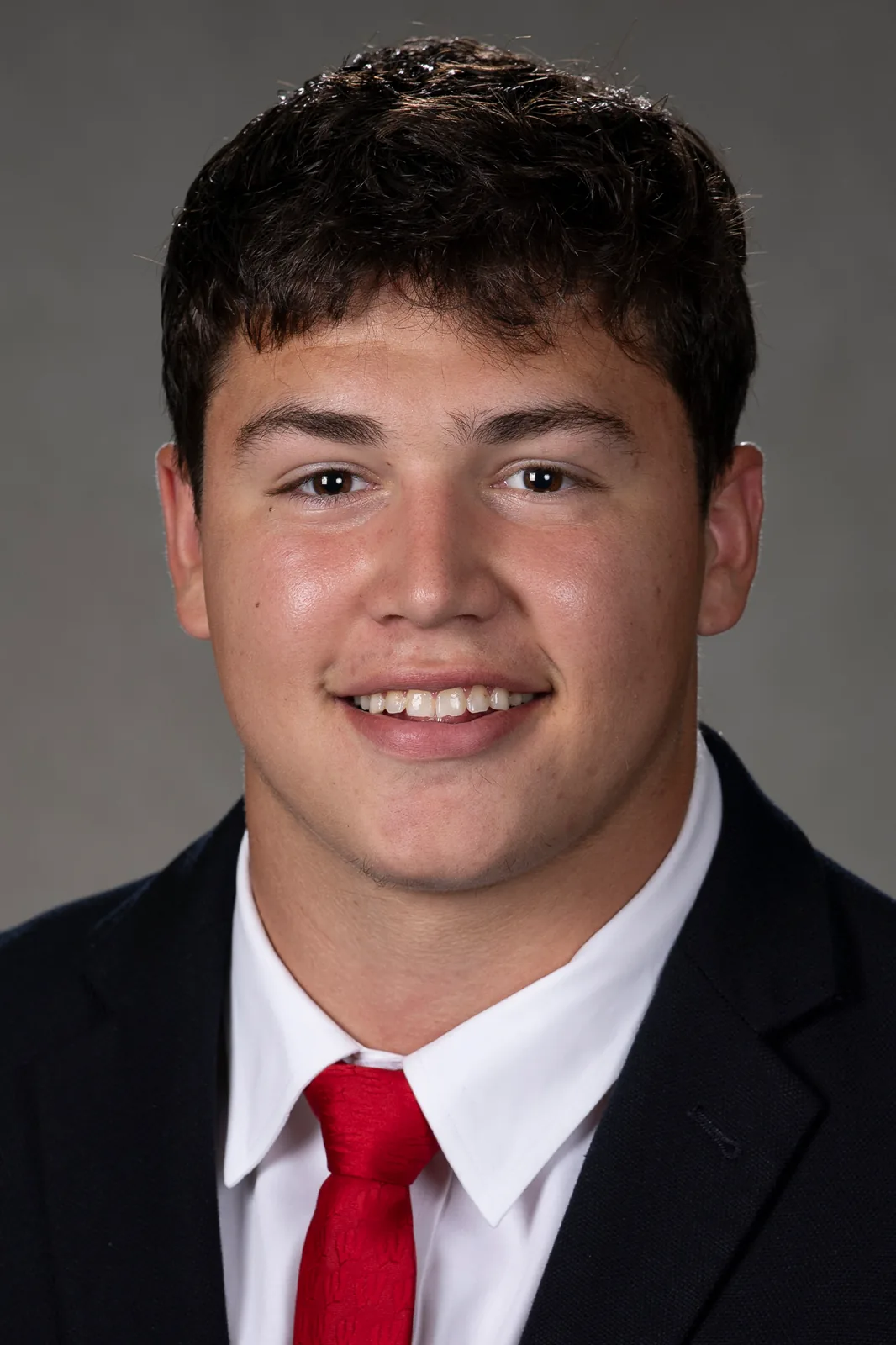
Posa and Catalano need the interior to hold its ground so their pursuit has a clear destination. The edge defenders must resist the temptation to disappear inside simply because that route looks faster. A back who reaches the outside can make an aggressive first step look very different on the replay.
Iowa will be without Kamari Moulton for the season, Ferentz confirmed Tuesday. His plan was to start Hank Brown, with Jeremy Hecklinski also part of the quarterback preparation. Wisconsin should respond to the offense on the field, including Reece Vander Zee as a receiving concern, rather than build its expectations around one familiar version of Iowa.
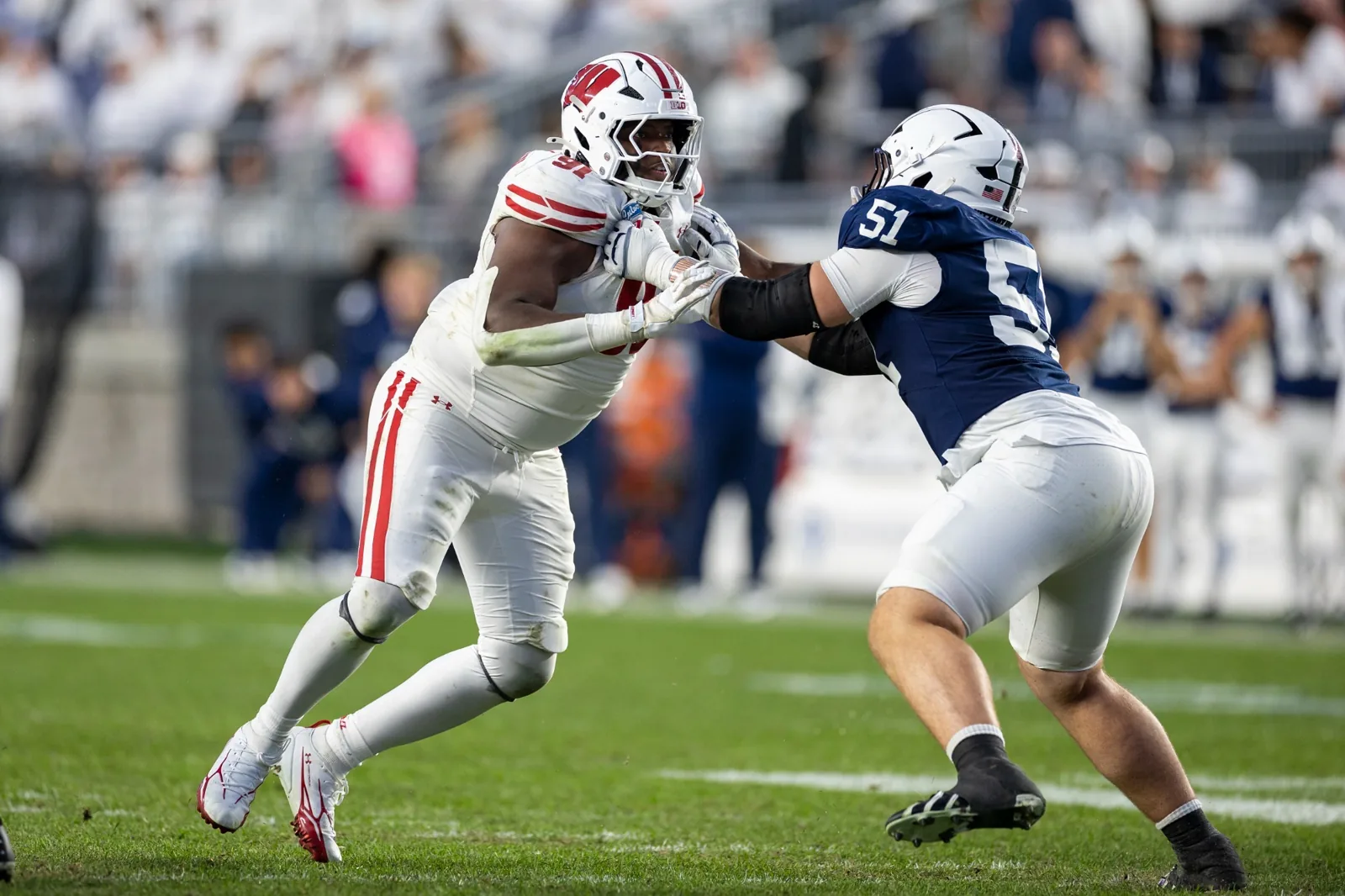
Friday’s reported Wisconsin designations list Barrett Nelson and Cai Bates out, Nate Palmer doubtful, and Marvin Burks Jr., Nolan Vils, Darrion Dupree and Malachi Coleman probable. Probable describes the report, not a promised number of snaps. Nelson’s absence is relevant to the protection plan; Burks and Vils remain important to the defensive rotation.
Iowa’s path is to make Wisconsin repeatedly solve long-yardage passing downs, then protect the field-position advantage it creates. Wisconsin’s path is to keep those situations scarce and require Iowa’s offense to earn full drives. That makes clean punt exchanges part of the central argument, especially with returner Evan James capable of changing one.
The numbers establish the assignment
For a comparison using the same measure and cutoff, UCLA’s seven-game record is 7–0 against Nevada’s 3–4, while Wisconsin and Iowa both enter 5–2. The corresponding win rates are 100.0% and 42.9%, then 71.4% apiece. They show why one game carries a clear favorite and the other demands a narrower forecast; they do not measure the difficulty of an individual possession.
For Wisconsin, distinguish a failed play from a failed approach. A well-blocked run that meets an excellent tackle does not automatically demand abandoning the ground game. Repeated penetration before the handoff reaches its destination demands an adjustment. Likewise, a short completion on first down can be useful; the same throw short of the marker on third down may end the possession. Context keeps analysis from becoming a collection of favorite complaints.
Steve’s prediction: Wisconsin 20, Iowa 17. The reason is confidence in the Badgers’ improving defense and Joseph’s ability to produce enough useful offensive movement. The reversal condition is Iowa controlling early downs and winning possession. A short road margin leaves very little room to donate either.
These picks match the completed companion podcast, but the useful work begins where the numbers stop. Watch the situations each offense creates, the responsibilities each defense maintains and the possessions that end without a gift. Wisconsin wants proof its progress travels. UCLA wants proof its attention can keep pace with its ambition. Both are reasonable requests for a Saturday. Neither comes automatically with the costume.