 POST-GAME
UCLA BRUINS + WISCONSIN BADGERS
Third down called. UCLA extended the reservation
Dieffenbach made the throws, Wisconsin made the run difficult, and the Bruins kept finding one more first down.
Listen to Repinkee Sports on Apple Podcasts UCLA17
 Wisconsin7Wisconsin7UCLA17
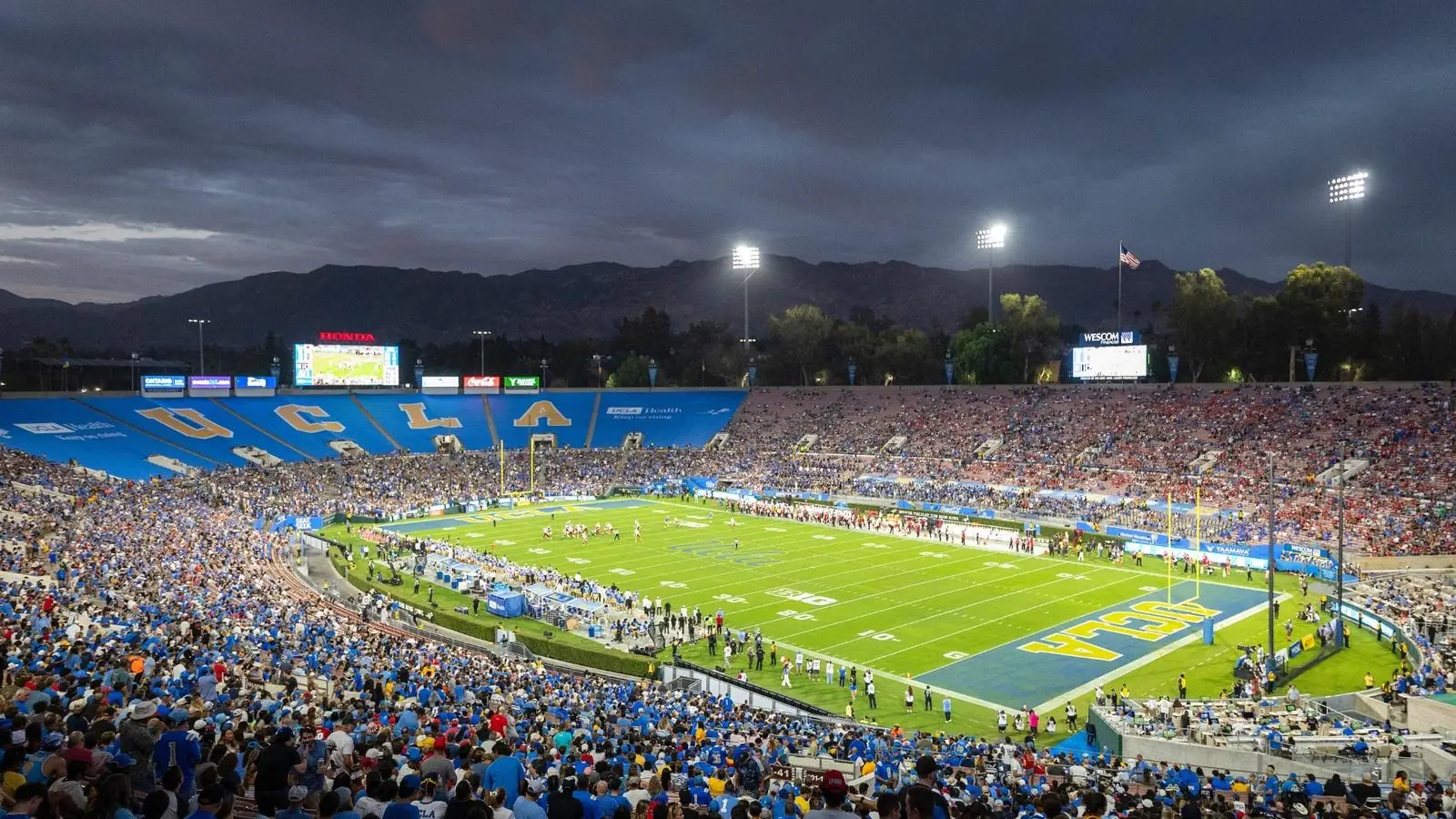
The Bruins found a quarterback they could trust. The Badgers found a way to make stopping the run feel like unfinished work. UCLA’s 17–7 win at the Rose Bowl was close enough to keep Wisconsin interested and sustained enough to explain why the visitors could never quite take hold of it.
UCLA is 6–0, with four Big Ten wins. Wisconsin is 4–2 and 2–1 in the conference. Those records describe the morning. The more useful explanation lies in what happened when a possession ought to have been running out of road. UCLA kept finding another street. Wisconsin kept being asked to walk home.
I picked the Badgers, 24–21. They gave themselves opportunities to make that forecast respectable, then left too many of them unused. Dieffenbach and the Bruins deserve the credit for the other half of that sentence. Wisconsin did not simply fail to win. UCLA repeatedly did the work required to prevent it.
The new starter made the ordinary plays matter
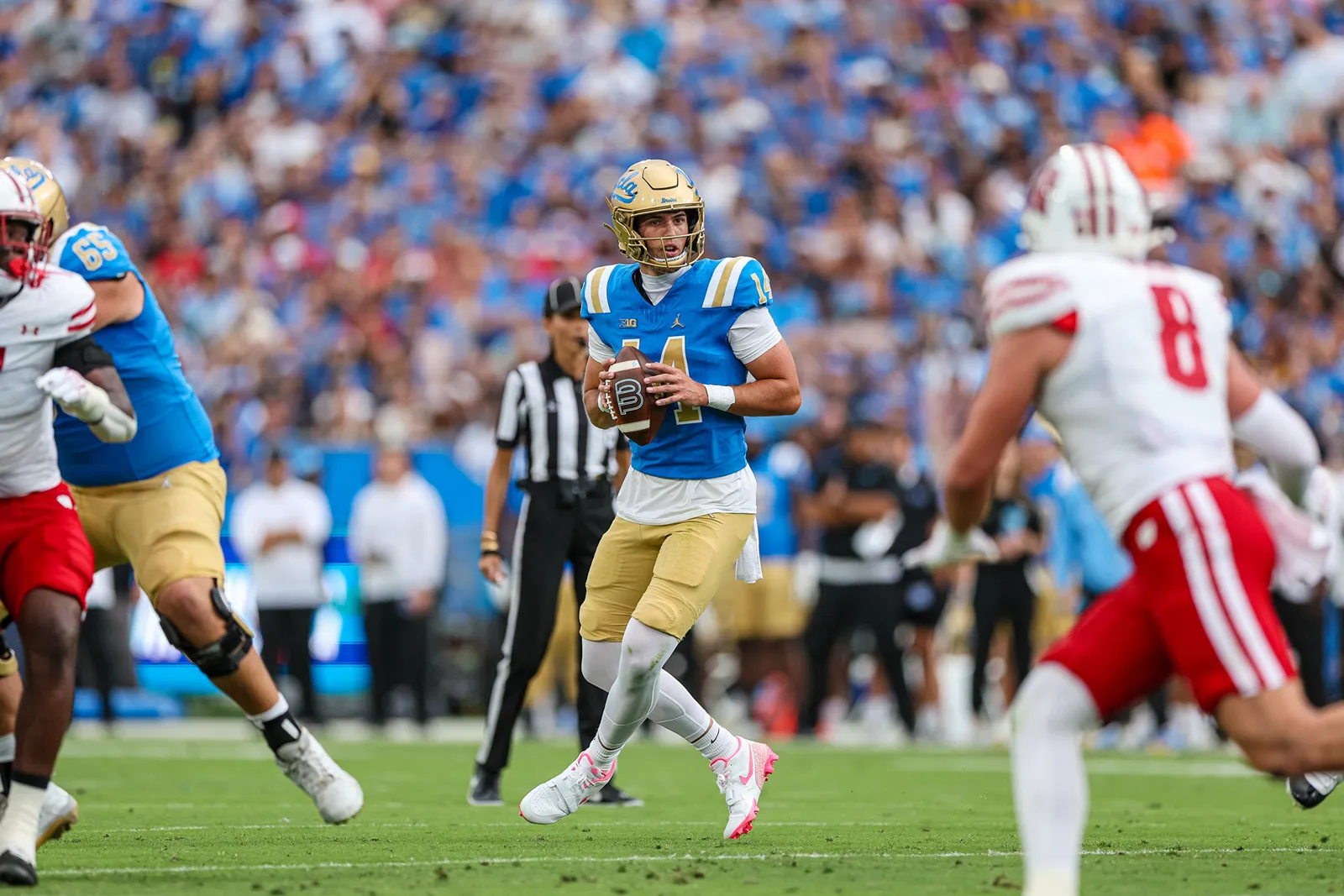
Ty Dieffenbach finished his first FBS start with 22 completions on 33 attempts for 264 yards. Semaj Morgan caught five passes for 84 yards. Those numbers matter because UCLA needed a functioning passing game while Wisconsin made its preferred rushing work difficult. The Bruins received one, and it arrived through enough repeatable completions to feel like an offense rather than a collection of emergency favors.
The opening possession was the introduction. Starting at its own 10, UCLA went 84 yards in 16 plays and used 8:42 before Mateen Bhaghani’s short field goal. Wisconsin prevented a touchdown. That was a real defensive achievement. It also meant the defense had spent most of a quarter trying to end one drive and still watched the opponent leave with points.
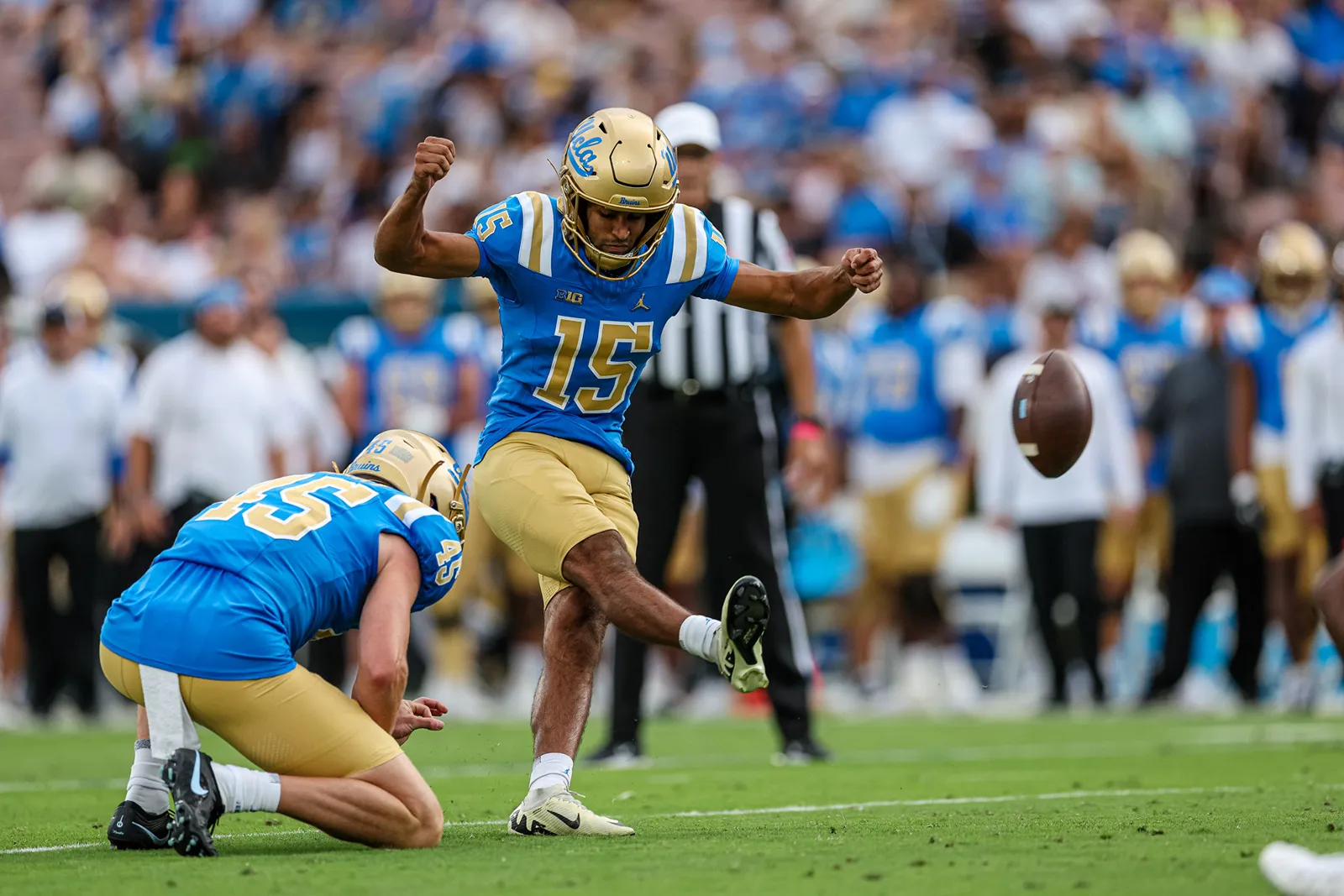
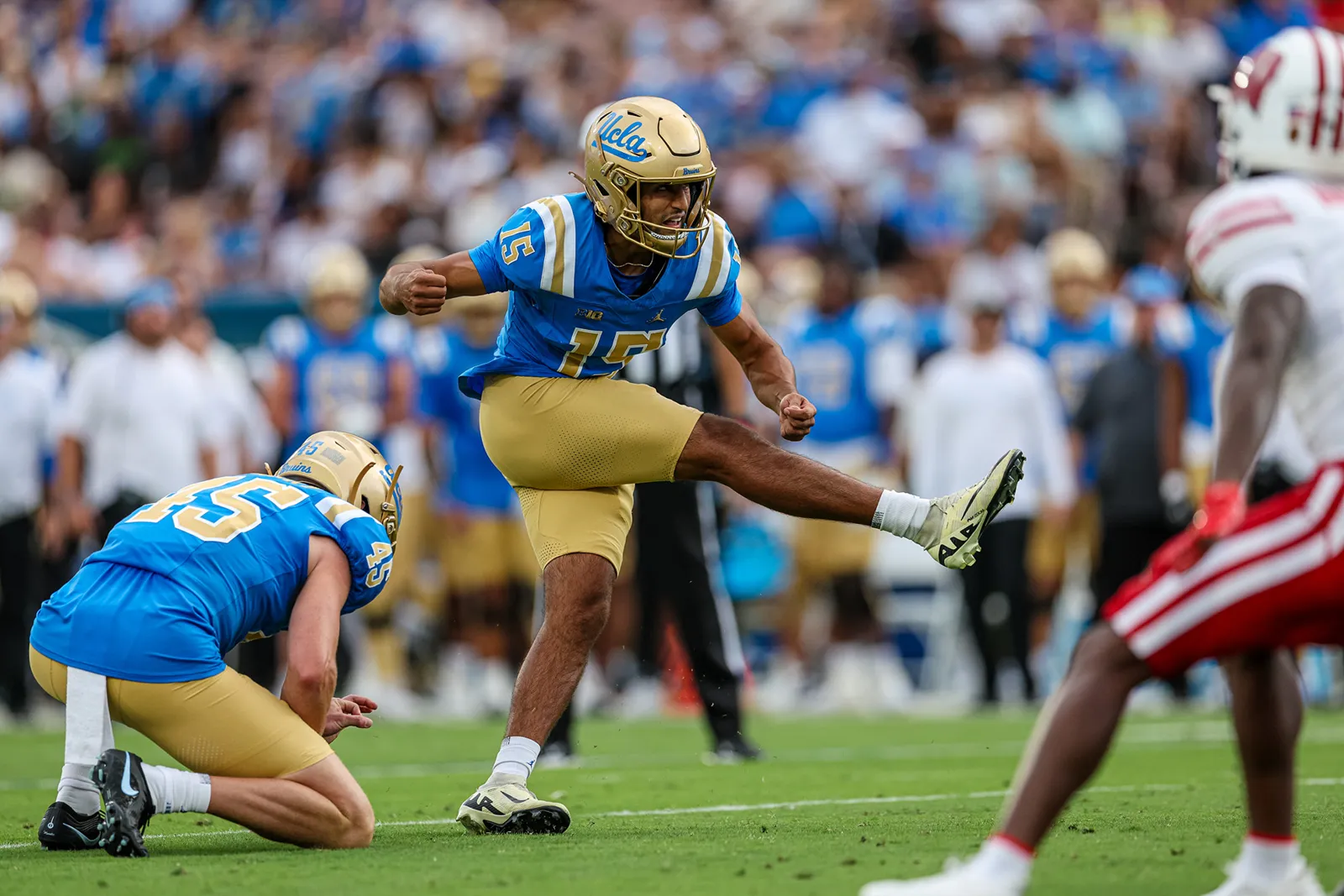
Dieffenbach did not need the entire evening explained in the first series. He needed to identify the next useful throw, deliver it, and let somebody else finish the play. For a quarterback taking over an unbeaten team, that is reassuring work. It gave UCLA something firmer than a hopeful speech to build around.
The next scoring drive made the same argument at greater length: 13 plays, 91 yards, a one-yard Wayne Knight touchdown. UCLA led 10–0. The Bruins had not overwhelmed Wisconsin with a rushing avalanche. They had kept solving the next down. A defense can perform good work against individual calls and still lose the larger negotiation over when it gets to leave.
That distinction is the reason the quarterback’s performance deserves more than the customary applause for surviving a first start. Dieffenbach helped sustain an approach Wisconsin was actively trying to disrupt. His receivers supplied catches that mattered to the life of a drive. Protection gave those decisions a chance. This was a team making a change at quarterback workable, with the quarterback doing his share.
Wisconsin won part of the argument
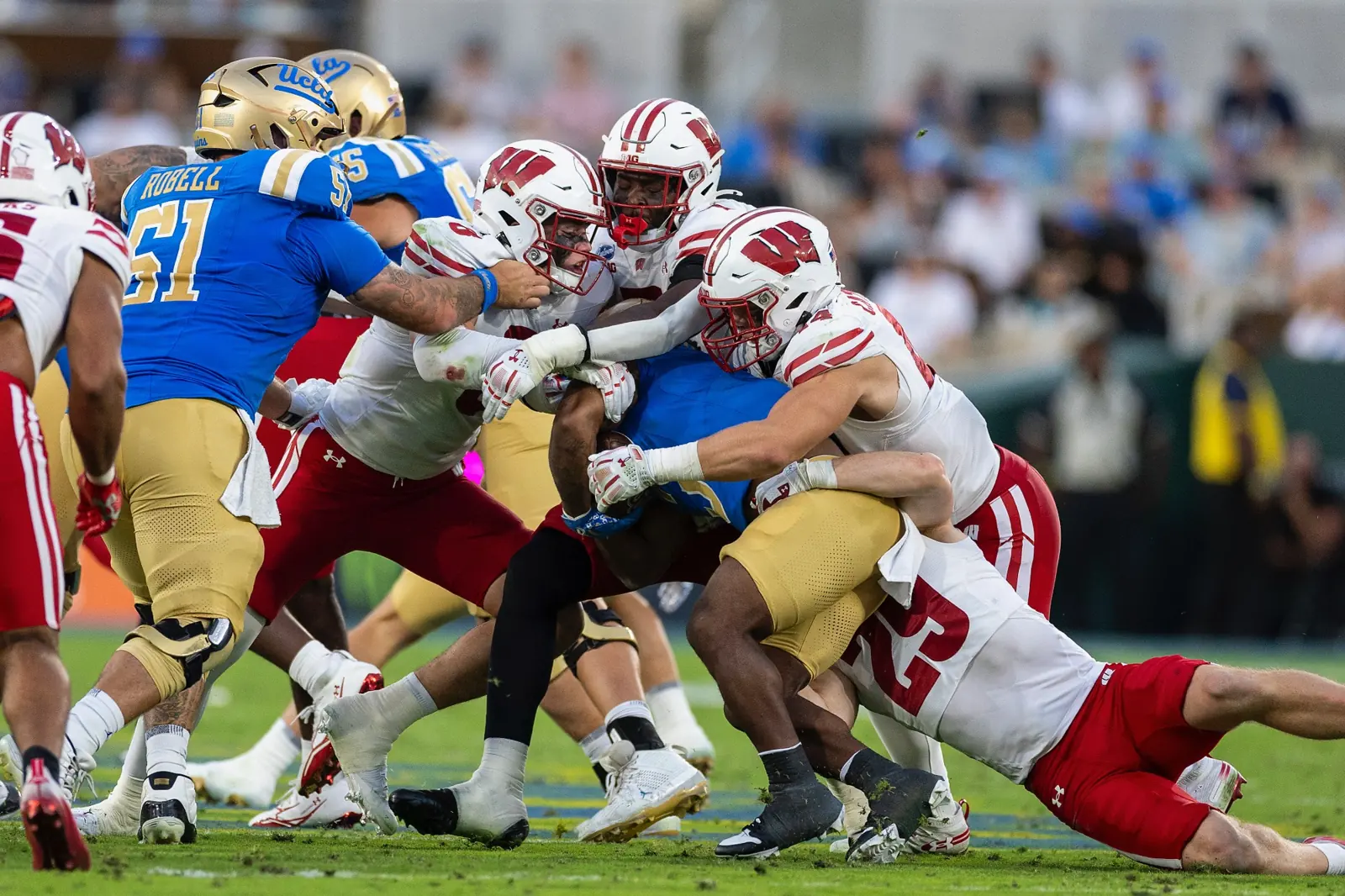
Before kickoff, we asked whether Wisconsin could make UCLA’s run game difficult enough to create passing situations. The answer was yes. The Bruins entered averaging 253.2 rushing yards and finished with 120. Knight, who had been central to the unbeaten start, managed 23 yards on 13 carries. Wisconsin had identified an important problem and done meaningful work on it.
What the Badgers could not do was convert that success into enough completed defensive possessions. UCLA went 13-for-20 on third down. Wisconsin went 3-for-10. The official box score puts the possession split at 37:02 to 22:58. That is a little more than fourteen additional minutes for the Bruins, and an awfully long time for Wisconsin supporters to keep saying that surely this next third down will be different.
The lesson is not that run defense failed to matter. It mattered enough to force UCLA to find another answer. The Bruins found one. Making a quarterback throw only produces an advantage if the coverage and pressure can finish what the early downs began. Otherwise, the opponent has simply changed the method by which it keeps your defense employed.
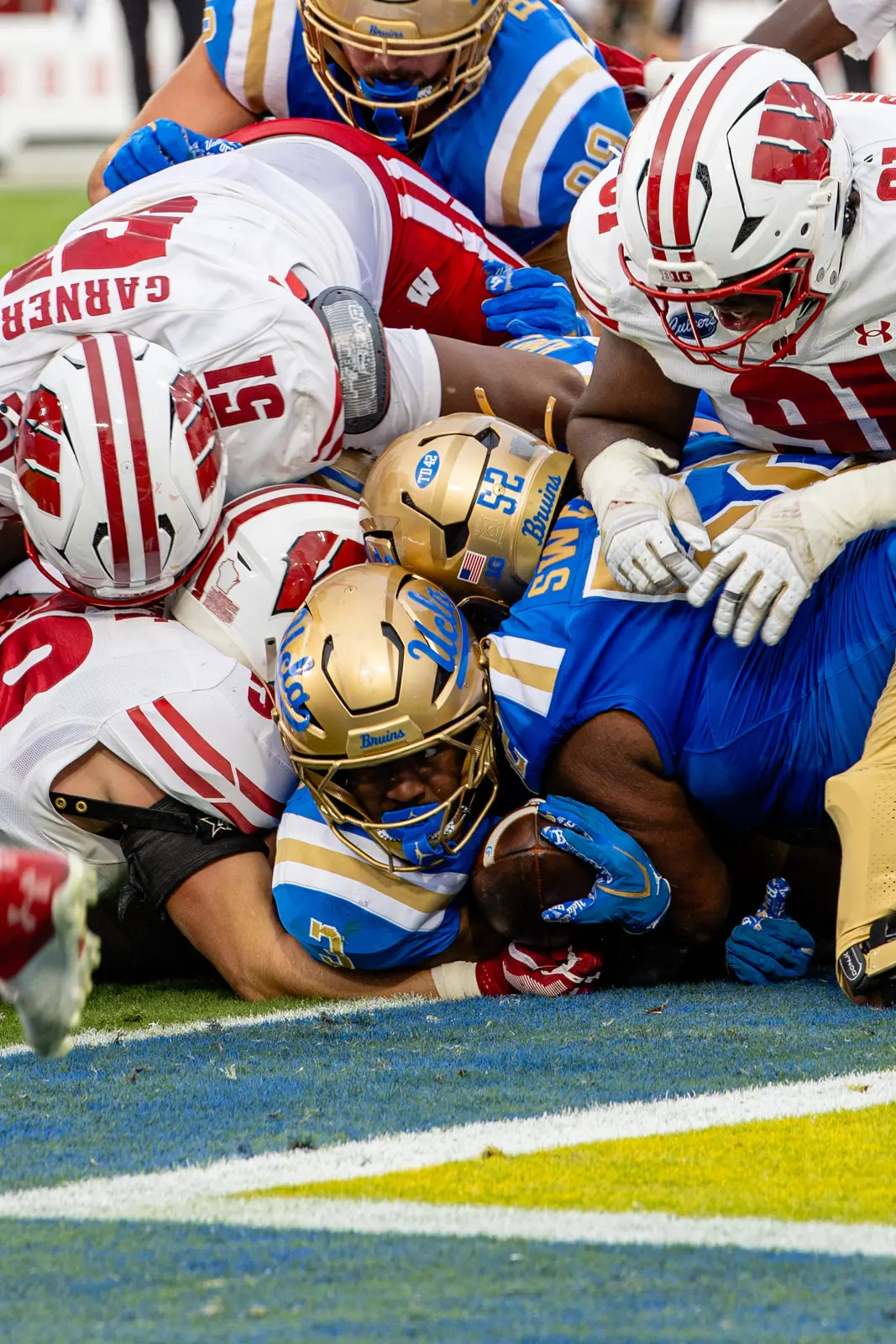
There is room here to credit both sides without manufacturing a tie. Wisconsin’s front made this a different sort of game for UCLA. Dieffenbach and the receiving group adapted well enough that the change did not become a loss. The scoreboard ultimately rewards the whole possession. It does not issue a separate trophy for making the first two snaps inconvenient.
For UCLA, that flexibility is encouraging. A team can enjoy its favorite approach for several weeks without knowing how it will respond when an opponent interrupts it. Saturday supplied evidence. The ground game was constrained, the new quarterback carried more responsibility, and the Bruins continued to assemble drives. That is useful information about the offense, even with plenty left to improve.
Burks opened the door. UCLA closed it again
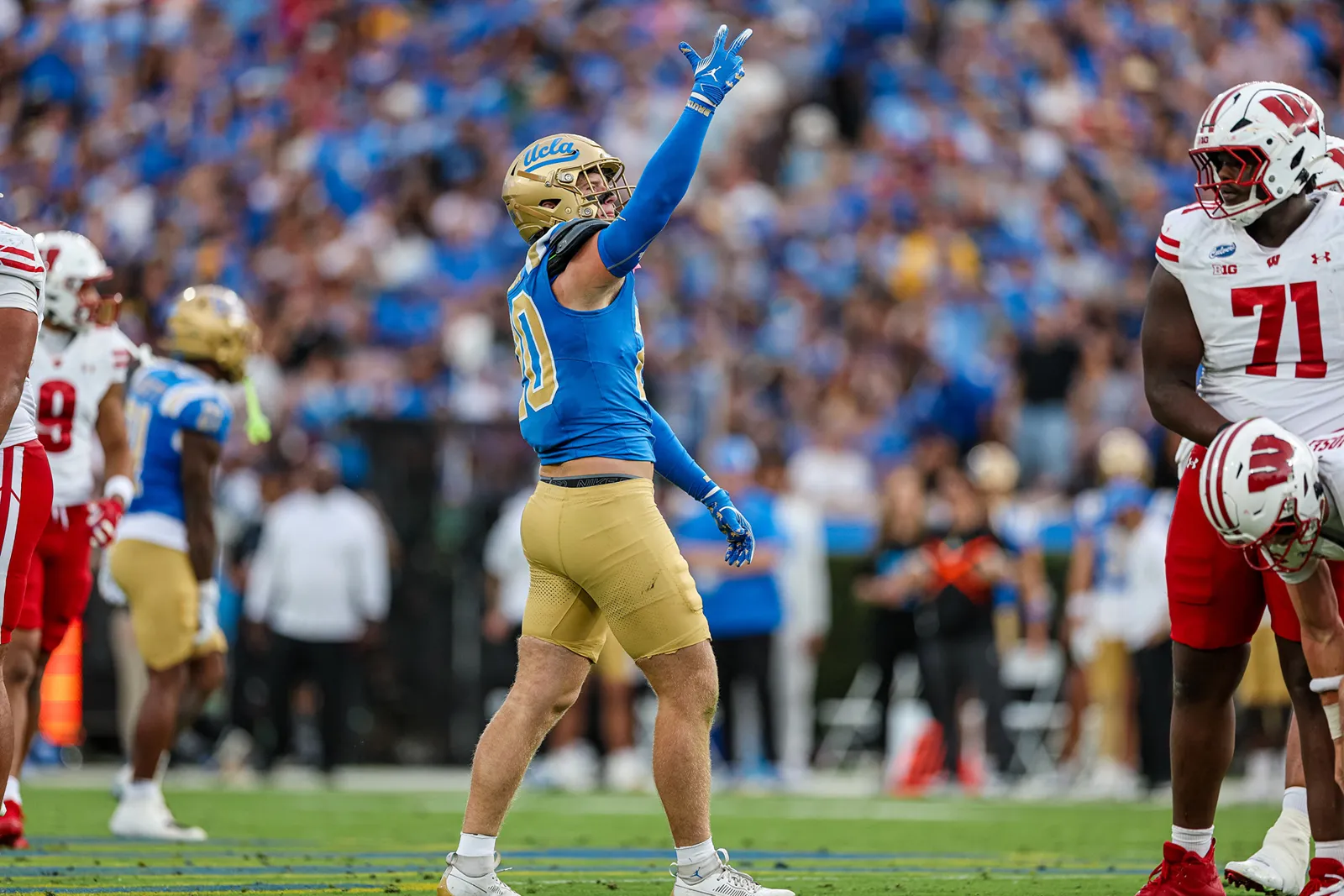
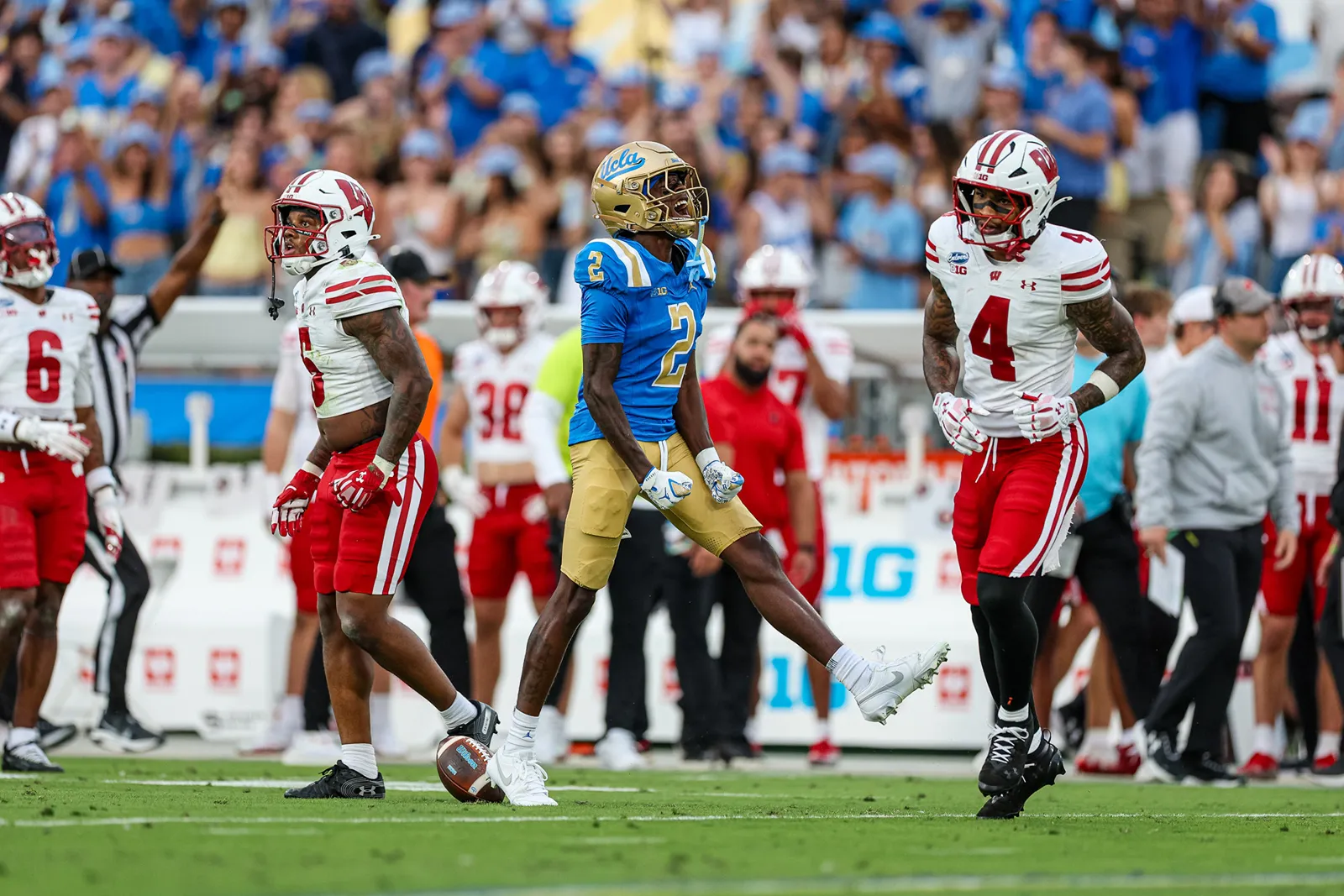
Marvin Burks Jr. intercepted UCLA’s final desperation throw before halftime. Then he picked off the Bruins’ trick-play pass on the third snap after the break. The second interception was the opportunity Wisconsin needed: possession at UCLA’s 44 and a manageable distance between the offense and a meaningful change in the game.
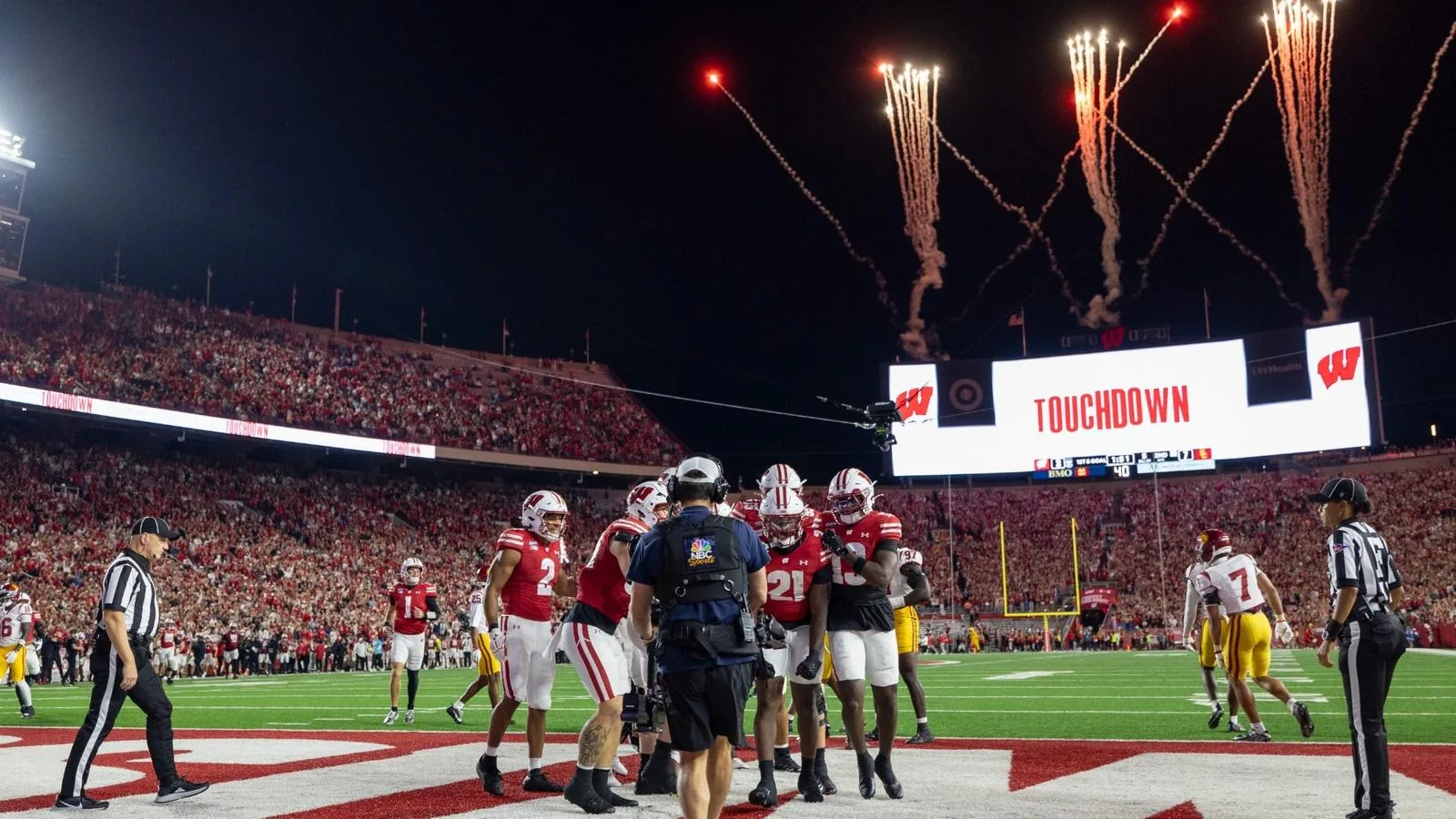
The Badgers finished that work. An 11-play touchdown drive ended with Colton Joseph scoring from three yards out. The deficit was 10–7, and Wisconsin followed by stopping UCLA on fourth down. For a stretch, the visitors had something more substantial than the hope of hanging around. They had created a route to taking control.
This is where a recap can become unfair if it lets the final margin flatten everything that came before. Wisconsin was not helpless. Burks made two plays that changed possession. The offense used the second one. The defense supplied another stop. UCLA had to respond to an opponent that had climbed back into the argument, and a new starting quarterback had to help make that response happen.
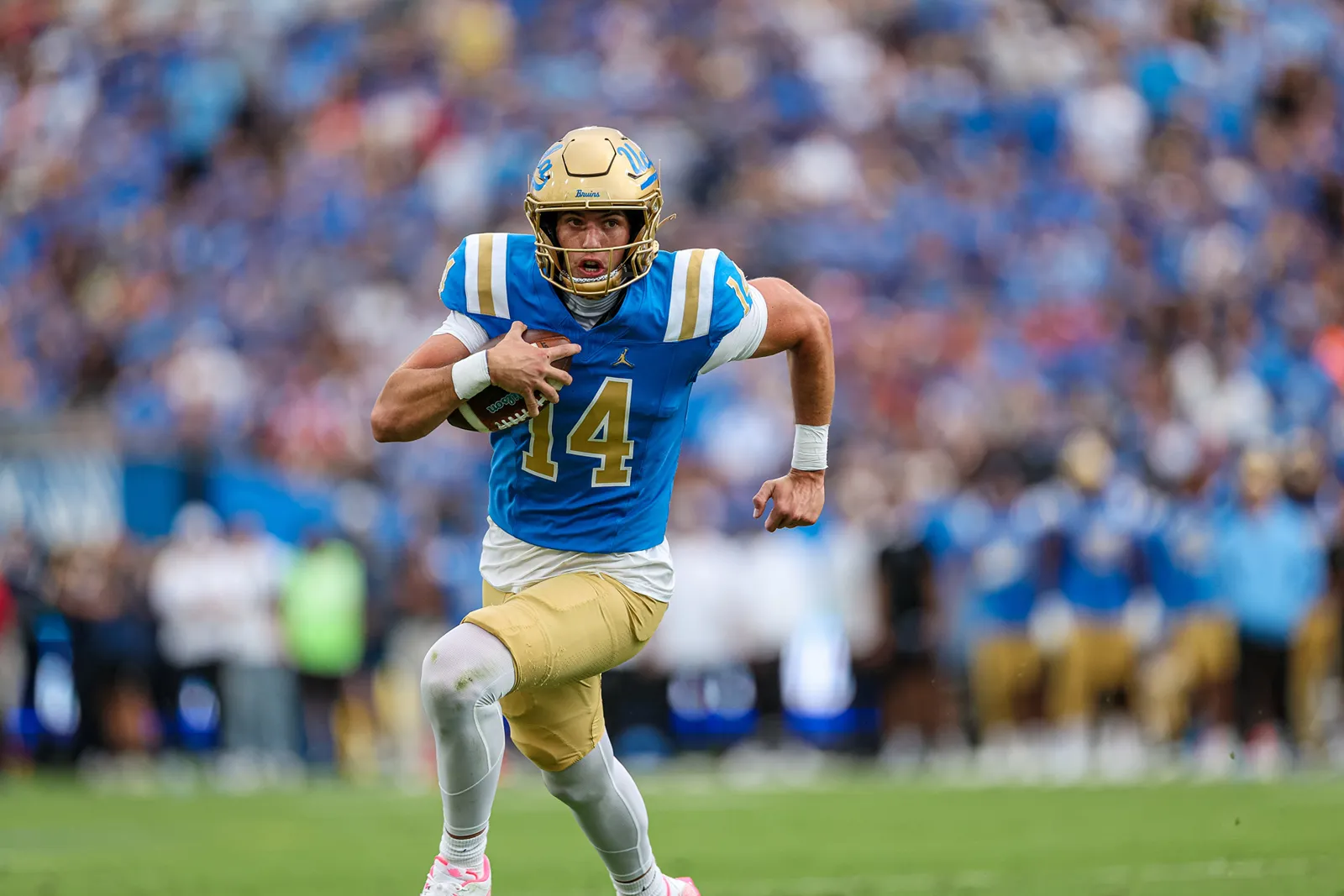
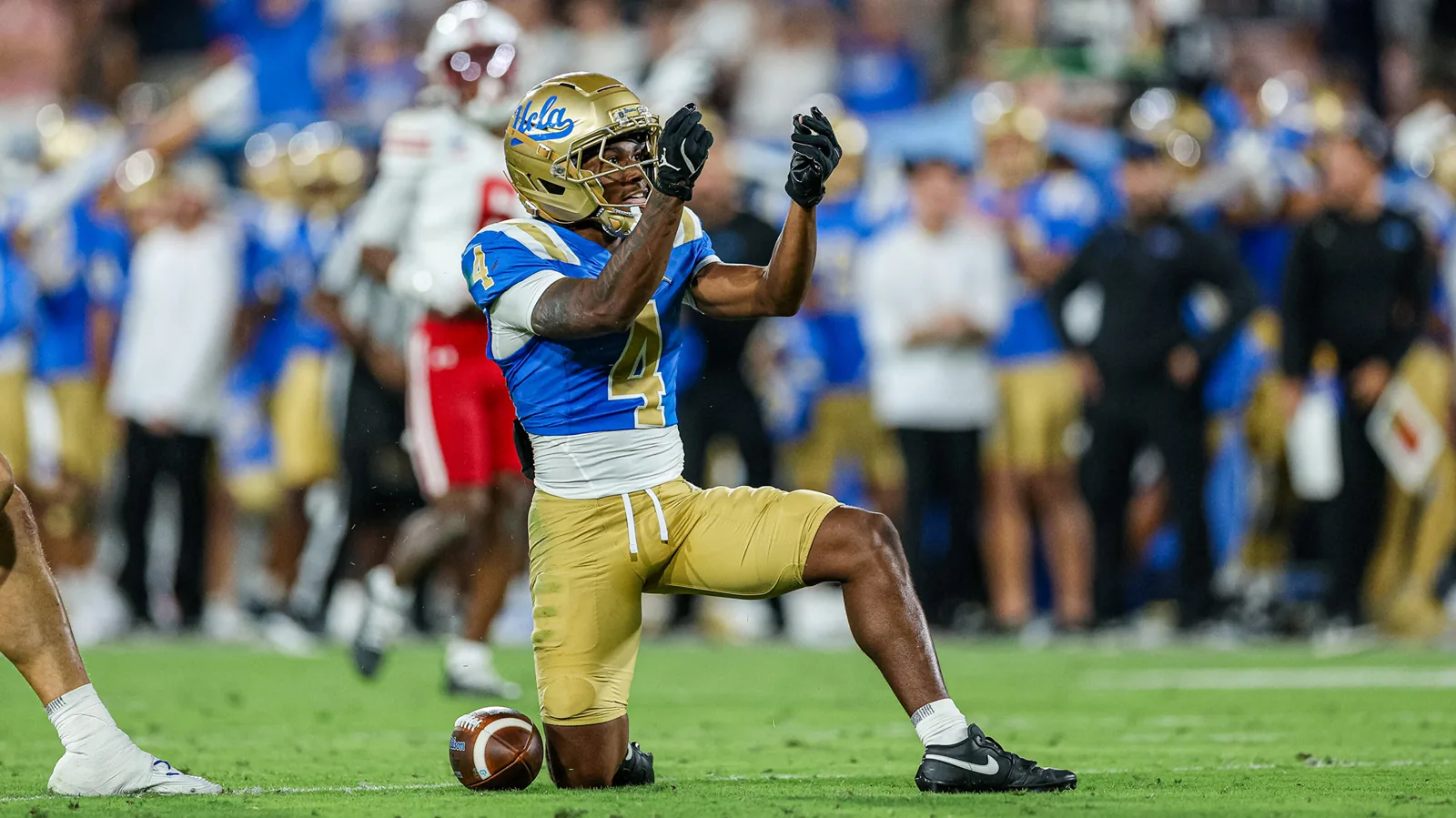
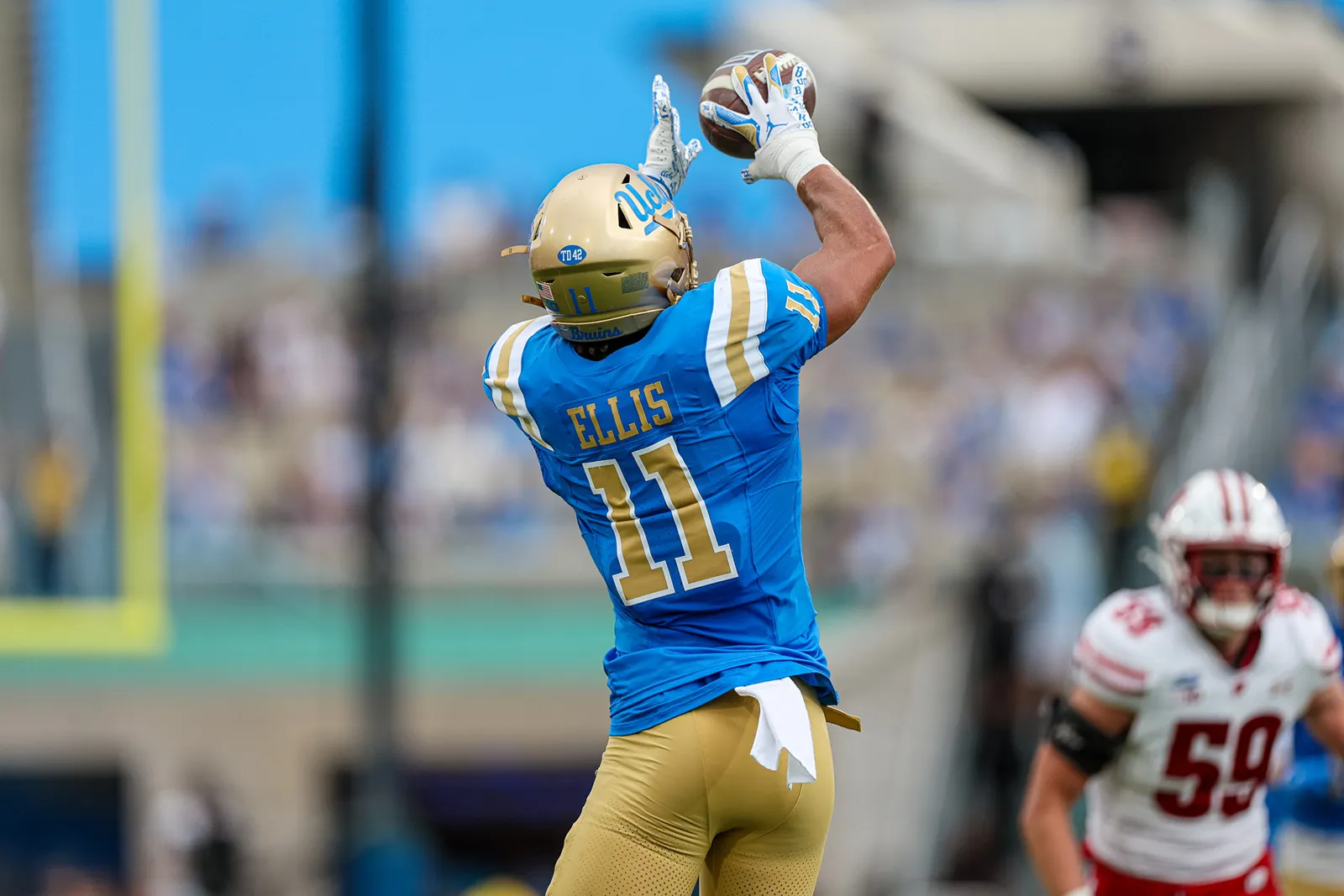
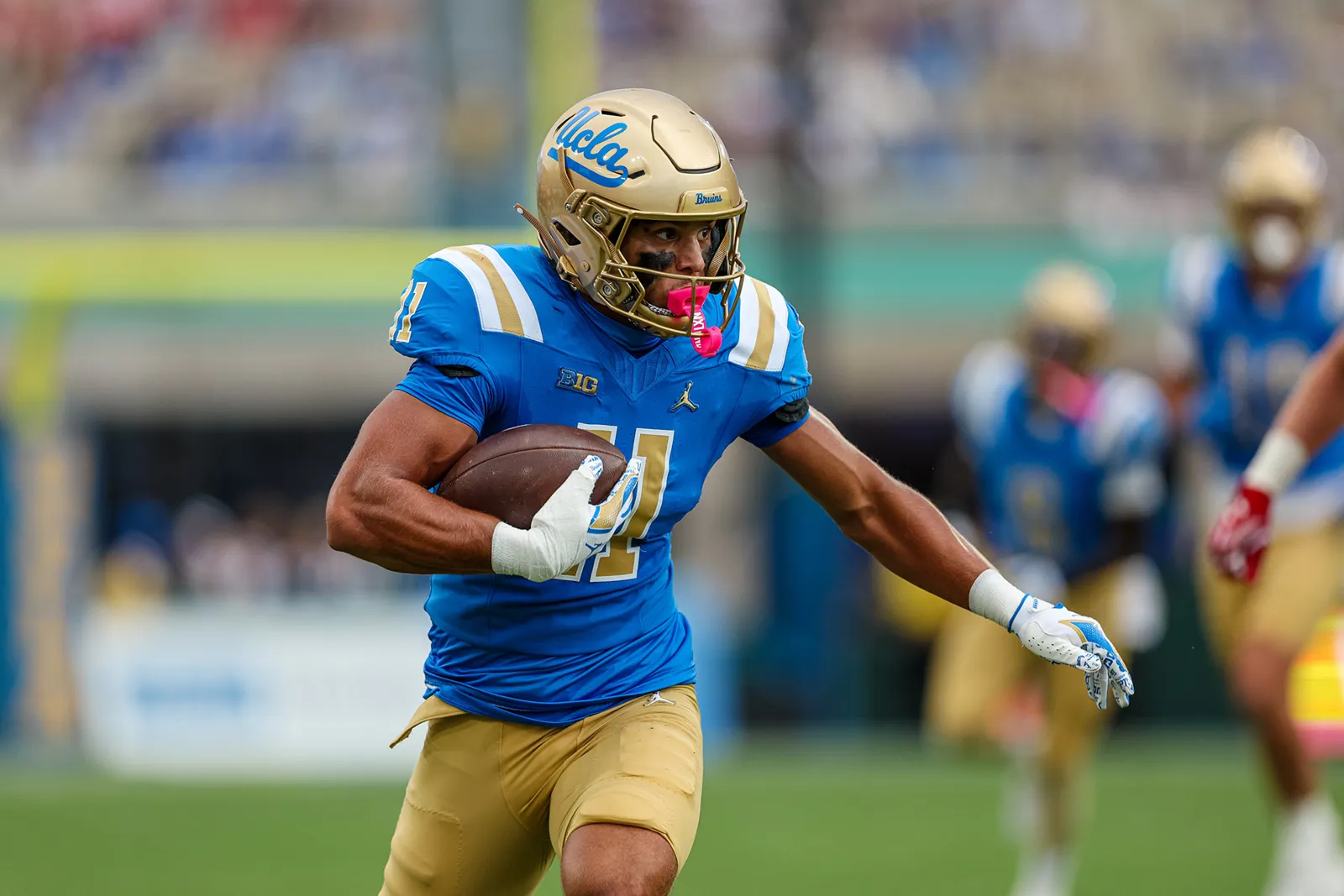
The decisive reply came across the third-quarter break into the fourth. Dieffenbach found Landon Ellis for 28 yards from near UCLA’s own goal line, then later connected with Morgan for 33. Anthony Woods finished the possession with a three-yard touchdown. The official scoring summary records six plays and 89 yards. However the night had tightened, UCLA could still move it back toward itself.
That was the throw-and-catch work Wisconsin needed to prevent and the Bruins needed to trust. It is one thing to operate successfully while the opening plan is fresh. It is another to make useful decisions when the opponent has cut the lead to three and the next mistake could change the whole afternoon. Dieffenbach gave UCLA a drive instead of an explanation.
An offense cannot live on escapes
Joseph completed six of 16 passes for 66 yards. He added 71 rushing yards and Wisconsin’s touchdown. His running gave the Badgers a way to create offense; the passing production left that offense with too few dependable answers. Effort is not the question. A quarterback carrying the ball into this defense 18 times supplies a fairly clear statement of intent.
Execution belongs to the whole group. The line must keep the timing of a call viable. Receivers must create space and complete the catch. The design must offer a useful response when pressure arrives. Joseph must recognize and deliver it. Putting all of that under the heading of quarterback play is convenient for television and insufficient for understanding why a possession stalled.
The practical concern is how often Wisconsin can make an ordinary throw work. If every successful snap requires Joseph to escape the original difficulty, defenders can keep compressing the problem. A short completion on time changes the next down. Another incomplete ambition usually leaves the offense negotiating from a worse position. Wisconsin needs more of the first kind of progress.
UCLA deserves equal attention in that explanation. The Bruins limited Wisconsin to 214 total yards. Joseph’s movement could make a snap untidy without giving the Badgers a sustainable passing game. The defense kept the score within a range its offense could protect, then made Wisconsin’s remaining opportunities expensive in time and effort.
That matters because the second-half interception had supplied the visitors with favorable field position. UCLA did concede the touchdown, but it did not allow one difficult sequence to become the entire game. Staying useful after something goes wrong is an underappreciated defensive skill. The Bruins continued to give their new quarterback room to work.
The territory nobody could afford to donate
Wisconsin committed ten penalties for 108 yards. UCLA had eight for 78. Neither total belongs in a congratulatory paragraph. For the Badgers, the cost was particularly sharp because the offense had so little spare production with which to repair a setback. A difficult drive gets considerably more difficult when somebody moves the destination another fifteen yards away.
There is a difference between an error made while trying to win a contested play and one that extends the trouble after the useful work is finished. Wisconsin needs fewer of both. UCLA needs the same conversation despite the win. Being unbeaten creates a pleasant setting for correcting mistakes. It does not make the mistakes more affordable against the next opponent.
The trick-play interception belongs in that UCLA discussion as well. Creativity should improve a possession’s possibilities. This attempt improved Wisconsin’s. The Bruins recovered, and they earned credit for doing so, but there is no requirement to keep creating an obstacle simply because the team has demonstrated an ability to climb over it.
Six wins, and some honest film
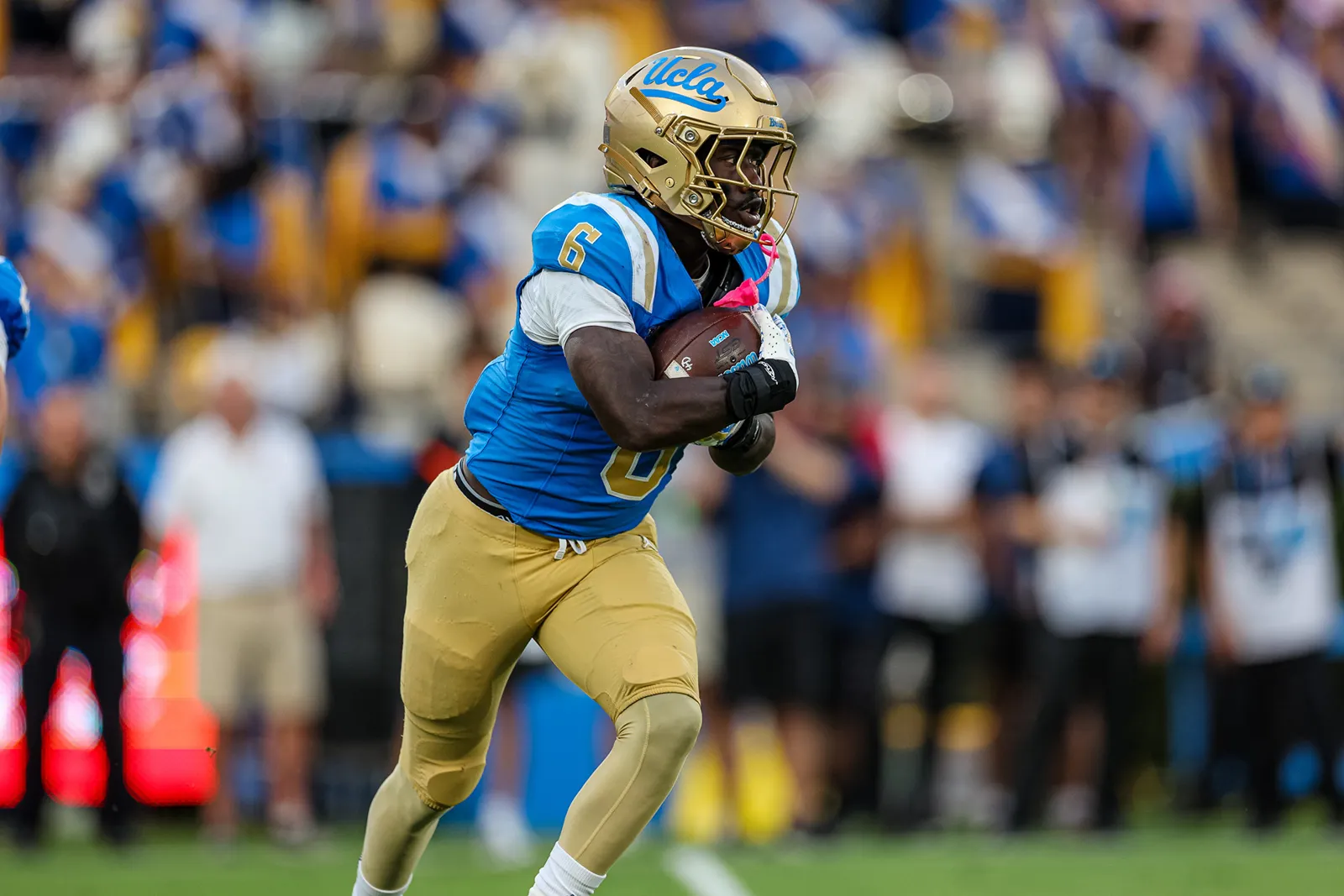
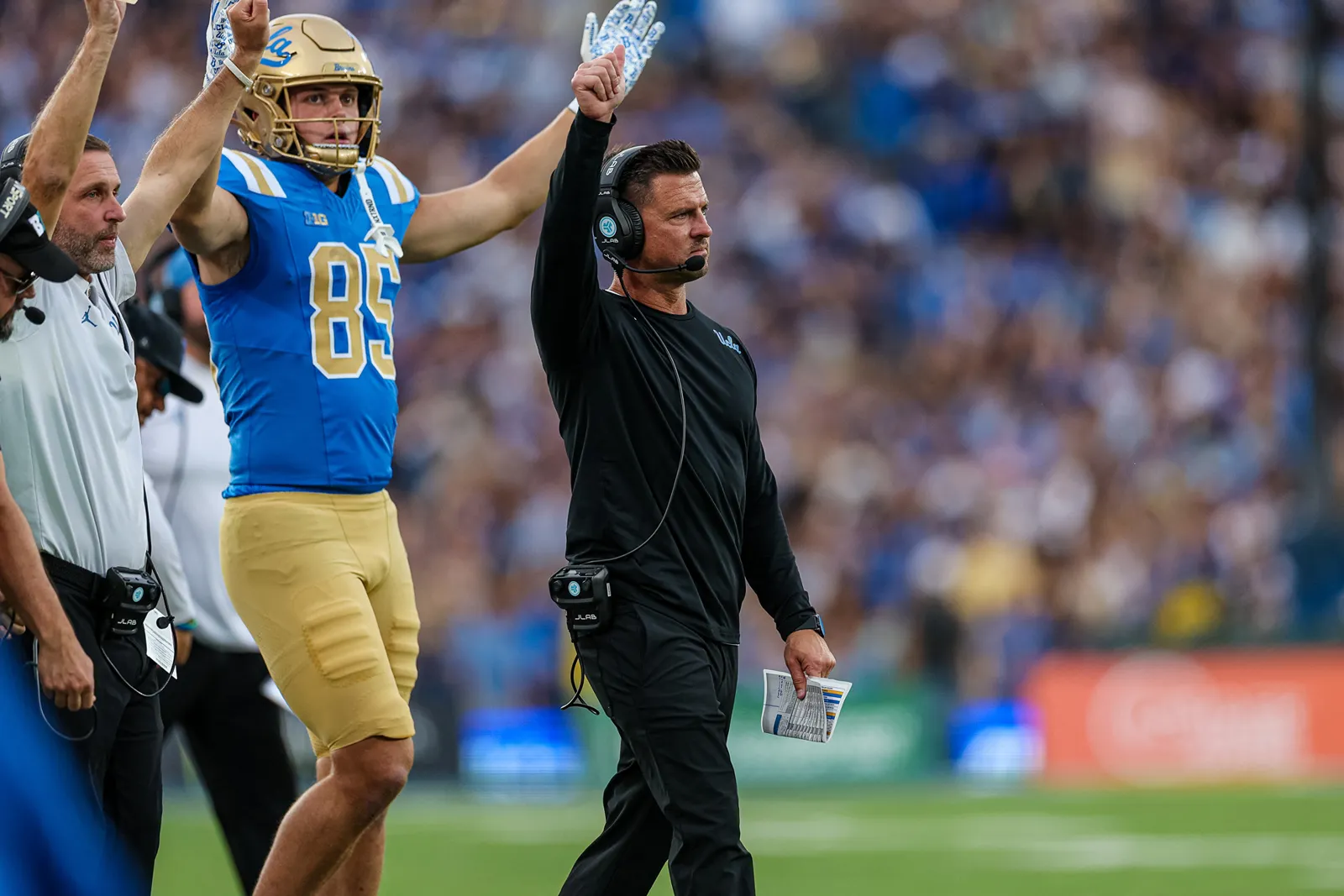
Chesney’s postgame assessment emphasized Dieffenbach’s decisions and ability to get UCLA into useful calls and protections. That fits the visible shape of the evening: third downs extended, receivers involved, a decisive response when the game narrowed. It is encouraging evidence about this start. It is not a demand that the quarterback now solve every future problem himself.
Dieffenbach also spoke afterward about having watched UCLA from the stands. That detail deserves a moment. College football spends so much time discussing what a player represents that it can forget what an afternoon means to him. Someone who once watched this field was now responsible for helping an unbeaten team leave it with another win. The connection is worth appreciating without asking it to explain the entire box score.
Wisconsin’s earlier progress still counts. The Penn State comeback happened. The Michigan State performance happened. Saturday shows that neither settled the passing-game questions or guaranteed a clean road performance. The useful response is specific: improve the routine completions, finish defensive possessions, and stop donating territory when the offense is already working hard to acquire it.
UCLA hosts Michigan State next Saturday. Wisconsin returns to Camp Randall for USC. This morning, the Bruins can enjoy a win that required them to adapt, and the Badgers can examine a loss that contained opportunities they did not finish. I can examine Wisconsin 24–21 and admit that the new quarterback had rather better plans. Go Bruins. On, Wisconsin. Breakfast is more enjoyable when somebody tells the truth.