 POST-GAME
UCLA BRUINS + WISCONSIN BADGERS
Wisconsin gave the fourth quarter its afternoon off
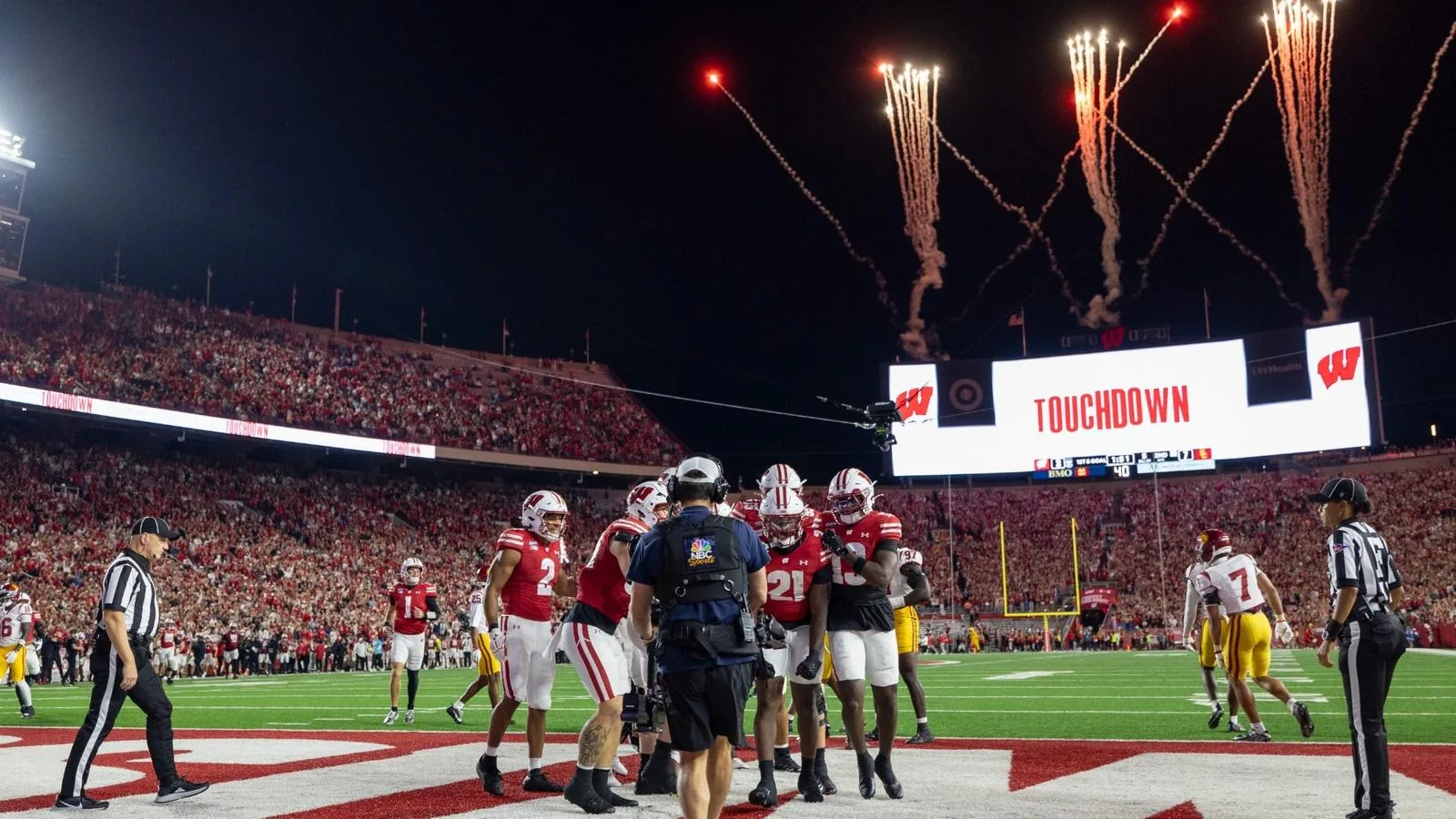
Joseph created, Harris finished, and the defense kept closing the door. Wisconsin’s 31–3 Homecoming win left room to enjoy the view.
Listen to Repinkee Sports on Apple Podcasts Wisconsin31
 Michigan State3
 UCLA4–0
BYE WEEK
Next: at Oregon · October 10
Wisconsin gave Homecoming an unfamiliar luxury: a fourth quarter with room to breathe. The Badgers beat Michigan State 31–3 at Camp Randall, turned defensive stops into offensive opportunity, and reached their bye with a fourth consecutive victory. Nobody needed to spend the closing minutes negotiating with a perfectly functional television.
The Badgers are 4–1 and 2–0 in the Big Ten. Michigan State leaves 2–3 and 0–2. UCLA remained 4–0 during its bye, with a trip to Oregon next Saturday. Wisconsin gets its rest now, followed by the October 17 visit to Pasadena. Our two teams have work ahead, but only one had to complete it on the field this weekend.
The pregame report asked Wisconsin to carry the belief from Penn State into a more controlled performance. Saturday delivered that change. Joseph created offense with his legs and finished scoring opportunities through the air. The defense repeatedly ended Michigan State’s attempts to continue drives. There are still passing-game questions worth keeping. There is also a 28-point win that deserves to be enjoyed without immediately attaching an anxious footnote.

Start with a drive, rather than a rescue
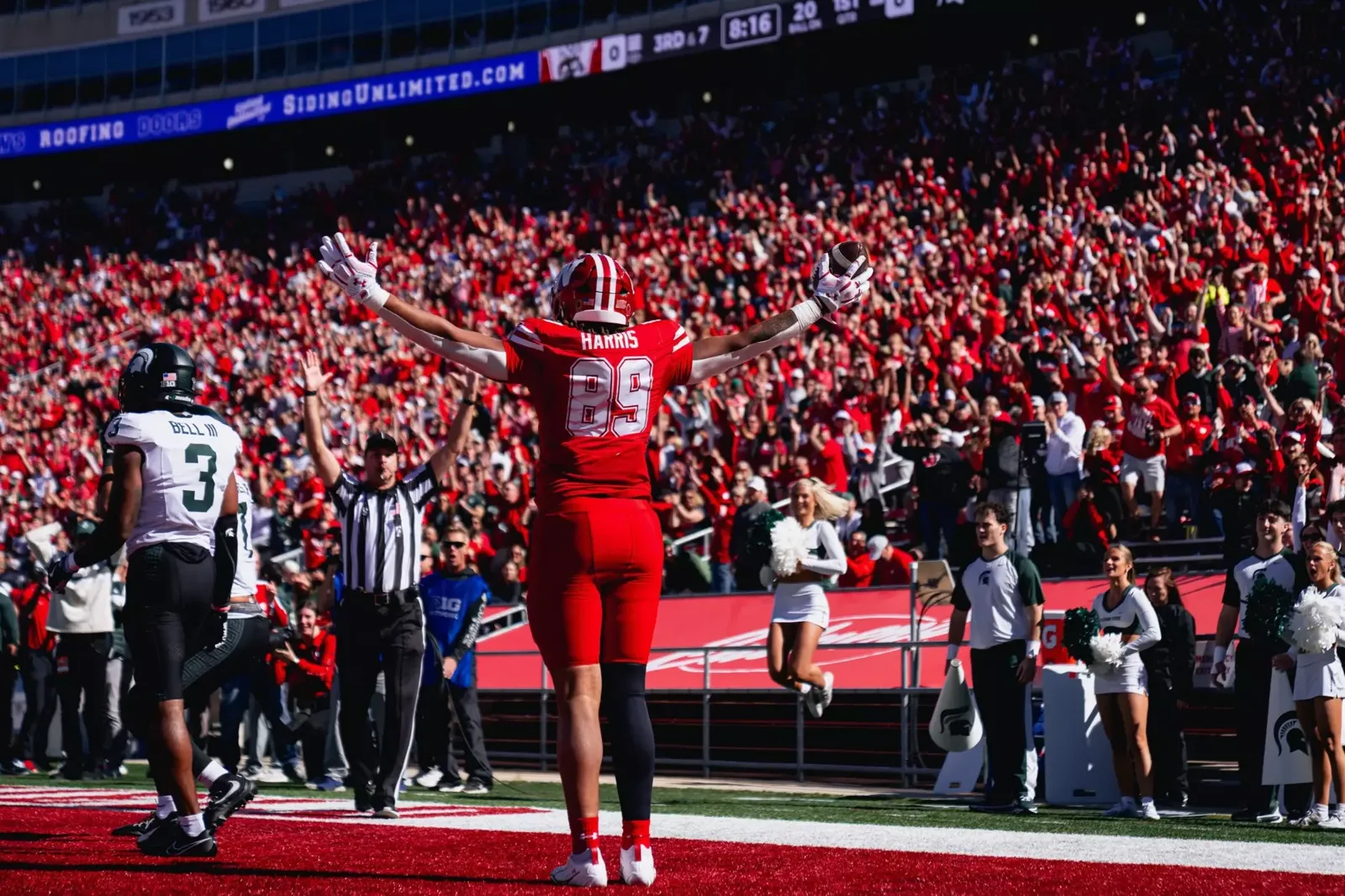
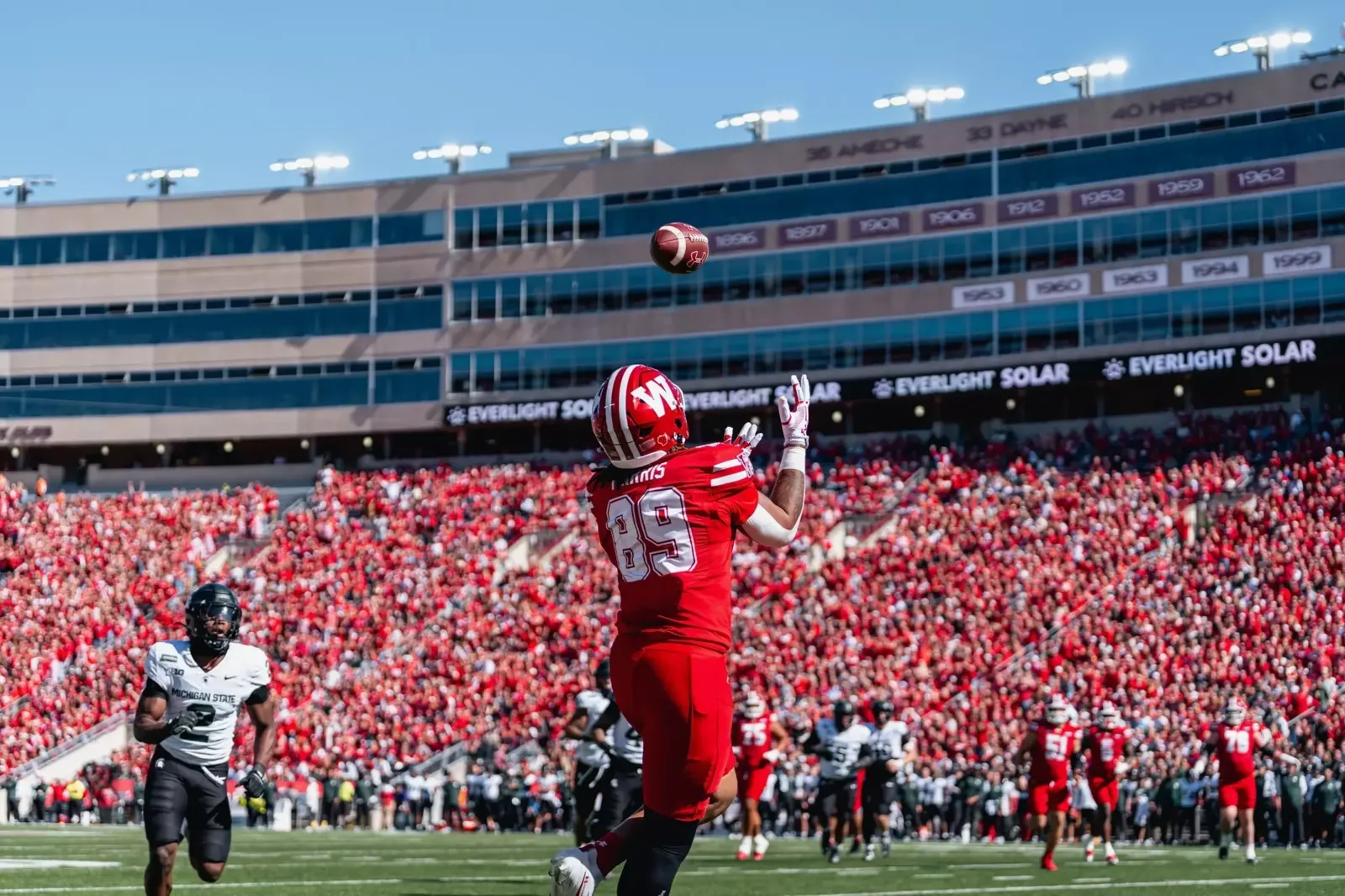
Wisconsin’s first possession covered 75 yards in thirteen plays and ended with Colton Joseph finding Jacob Harris for a twenty-yard touchdown. That opening mattered beyond the seven points. It gave the Badgers a sustained piece of successful work before the afternoon had any reason to become complicated. The offense began by solving its own assignment.
Joseph contributed on the ground during that drive, making the defense account for his movement as well as the receiving options developing around it. A quarterback who can keep the ball changes the defender’s original calculation. Used well, that threat can create space elsewhere. It should improve the offense’s available choices rather than replace the need to make them.
Harris supplied the finish. After his contribution to the Penn State comeback, another early touchdown made him a continuing part of Wisconsin’s offensive argument. The Badgers did not need to manufacture a different personality for Homecoming. They needed useful production from players already showing they could provide it, with enough help around them to keep the plan coherent.
The second touchdown arrived before the first quarter ended. Joseph and Harris connected again, this time from fifteen yards. Wisconsin led 14–0, and Michigan State had already discovered that reaching a difficult down did not guarantee receiving another chance. The home team had converted preparation into a position from which it could control the afternoon.
Fourth down kept closing the door
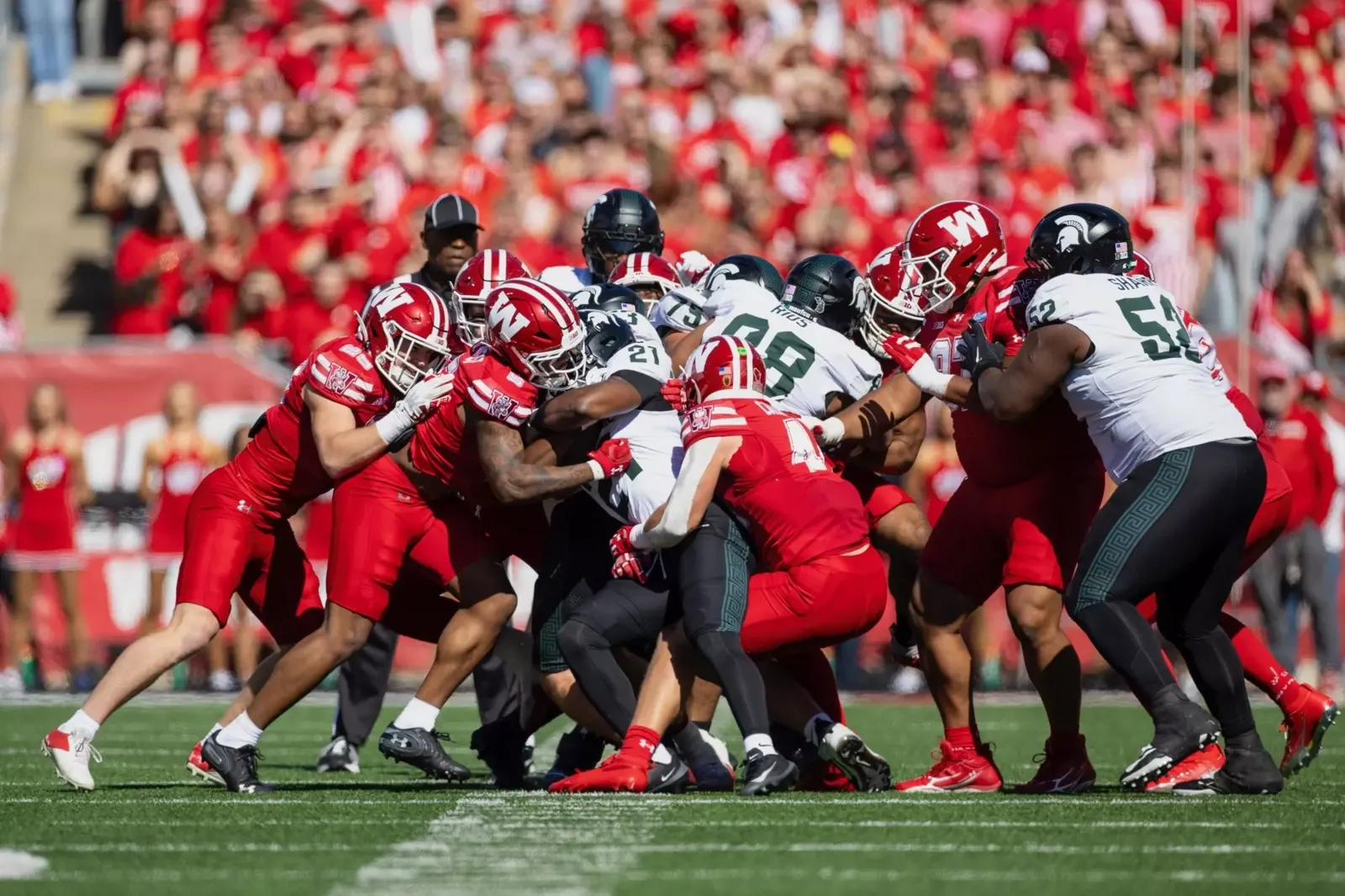
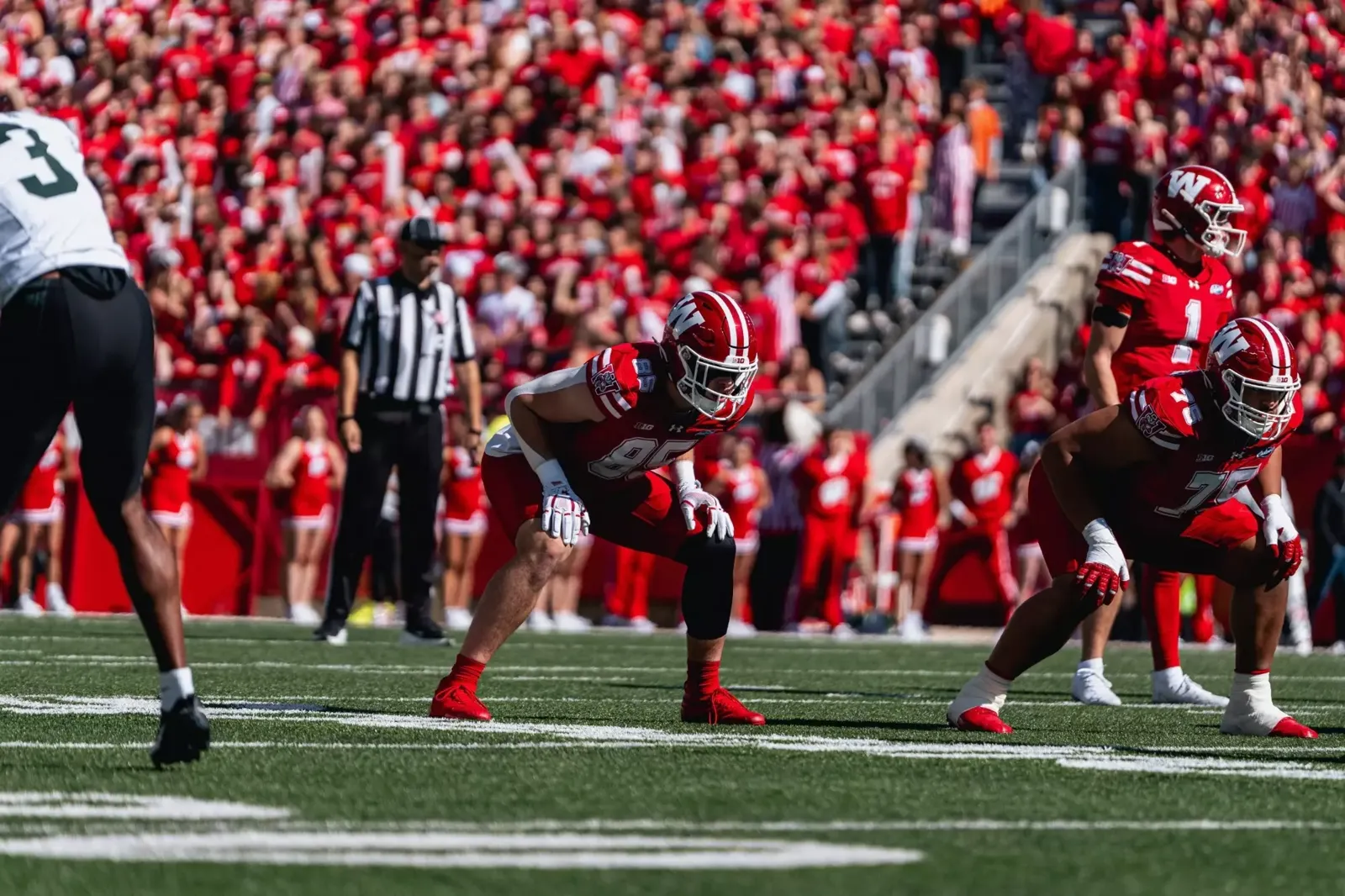
The Spartans moved into Wisconsin territory on their early possessions, but movement did not become the scoring they needed. The Badgers stopped fourth-down attempts and gave their offense the football again. That is an important distinction in a game whose final score could otherwise suggest the visitors never presented a problem at all.
A defense earns credit for its response to that problem. The field becomes shorter near the end zone, but the consequences of an error become larger. A defender must know the distance, protect the relevant space, and finish when the ball arrives. Wisconsin kept completing that sequence often enough that promising Michigan State possessions ended as opportunities for the other sideline.
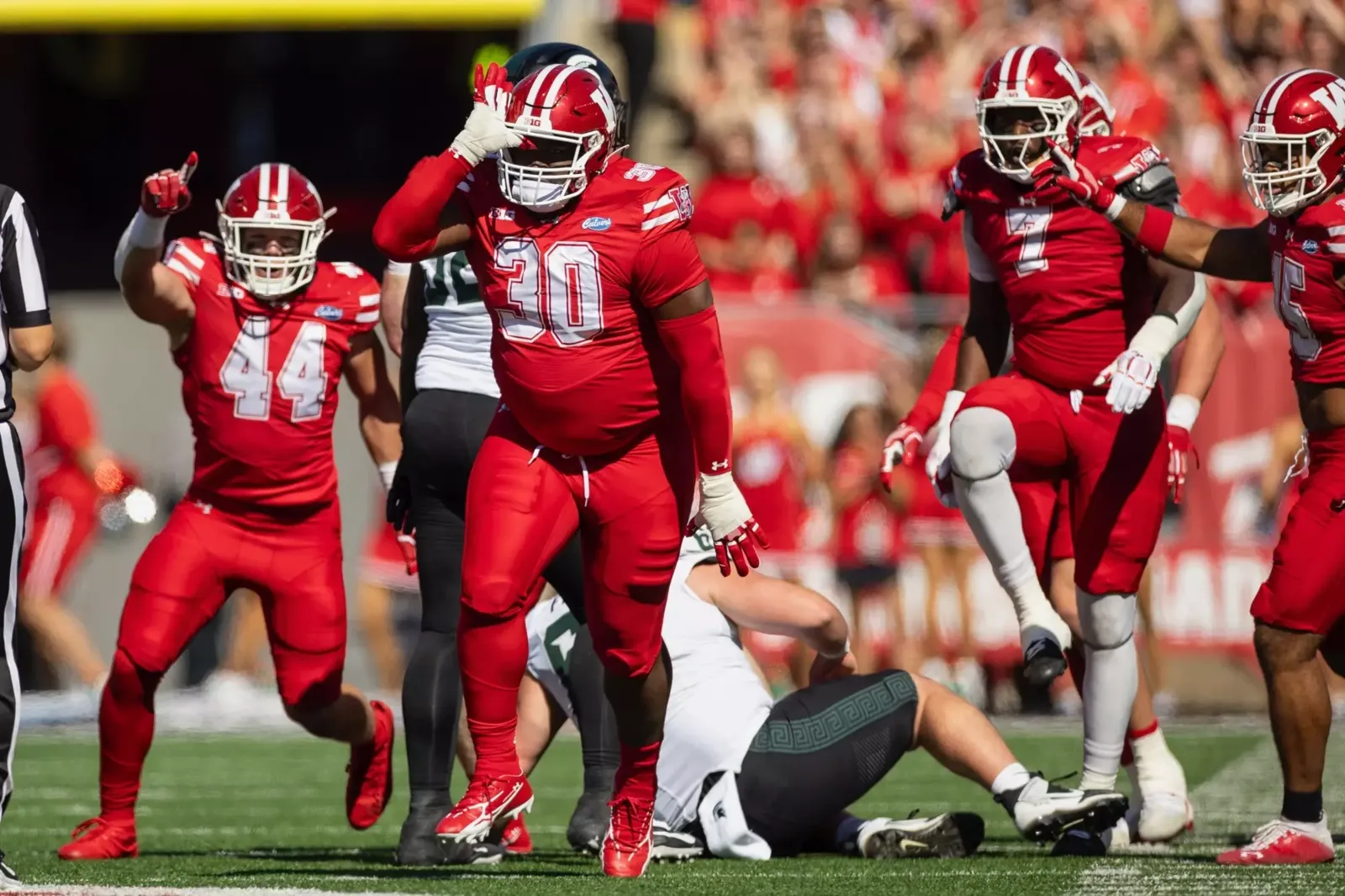
Javan Robinson broke up an early fourth-down pass. Cooper Catalano contributed another pass breakup when the Spartans tried again. After halftime, Mason Posa supplied a tackle that prevented another conversion. The pattern was collective: different players, the same useful ending. A defense is considerably more convincing when its success can survive changing the name attached to the play.
Michigan State finished one-for-six on fourth down. That number explains a great deal of the gap between moving the ball and putting points on the board. It also explains why Wisconsin could have less possession time and still spend most of the afternoon in control. The Badgers kept making the important exchange: a stop for another chance to score.
Joseph’s legs changed the geometry
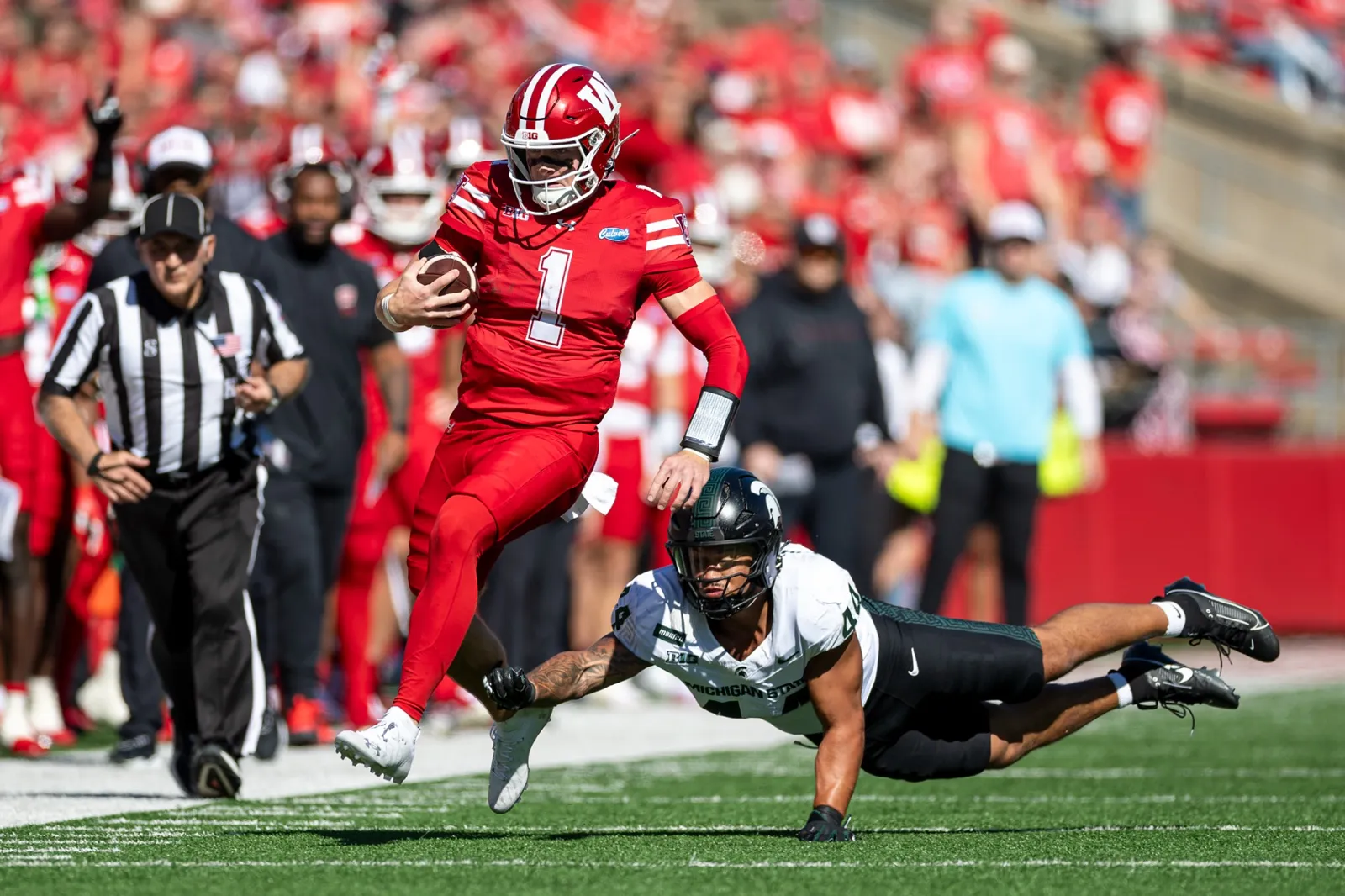
The quarterback ran for 141 yards on thirteen carries. That was productive movement rather than incidental scrambling dressed up as a plan after the fact. Joseph supplied gains that made Michigan State defend another runner, and the defense could not consistently account for him without leaving something else to be solved.
The clearest example came early in the third quarter. After Wisconsin’s defense stopped another fourth-down attempt, the offense needed only three plays to go 54 yards. Joseph’s 47-yard touchdown run extended the lead to 24–3. That sequence turned defensive work into a meaningful change on the scoreboard before the Spartans could rebuild much momentum.
A quarterback’s running does not absolve the players around him of their responsibilities. Blocks still need to hold up. The edge still needs to be available. A useful decision still requires the runner to recognize the space and take it. Wisconsin put enough of those pieces together to make Joseph’s mobility an advantage the opponent could not easily contain.
There is room to appreciate that production without announcing that every future defense will offer the same solution. The next opponent may preserve its outside leverage or force a different read. Saturday showed what Wisconsin can do when Joseph has room to influence a possession. The following step is maintaining enough complementary offense that an opponent cannot reduce the whole plan to containing him.
Three touchdown passes, with a question still attached
Joseph completed nine of twenty passes for 145 yards, three touchdowns, and no interceptions. The scoring production was valuable. So was avoiding the turnover that would give Michigan State a shorter route back into the game. Those are real improvements in the practical business of making an offense help its own defense.
The completion rate still deserves attention. Nine completions can be enough in the particular shape of a 31–3 victory, especially when the quarterback is producing heavily on the ground. It does not establish that Wisconsin has a reliable answer to every game that demands more passing volume. The distinction keeps the evaluation useful rather than allowing one happy result to settle several unrelated arguments.
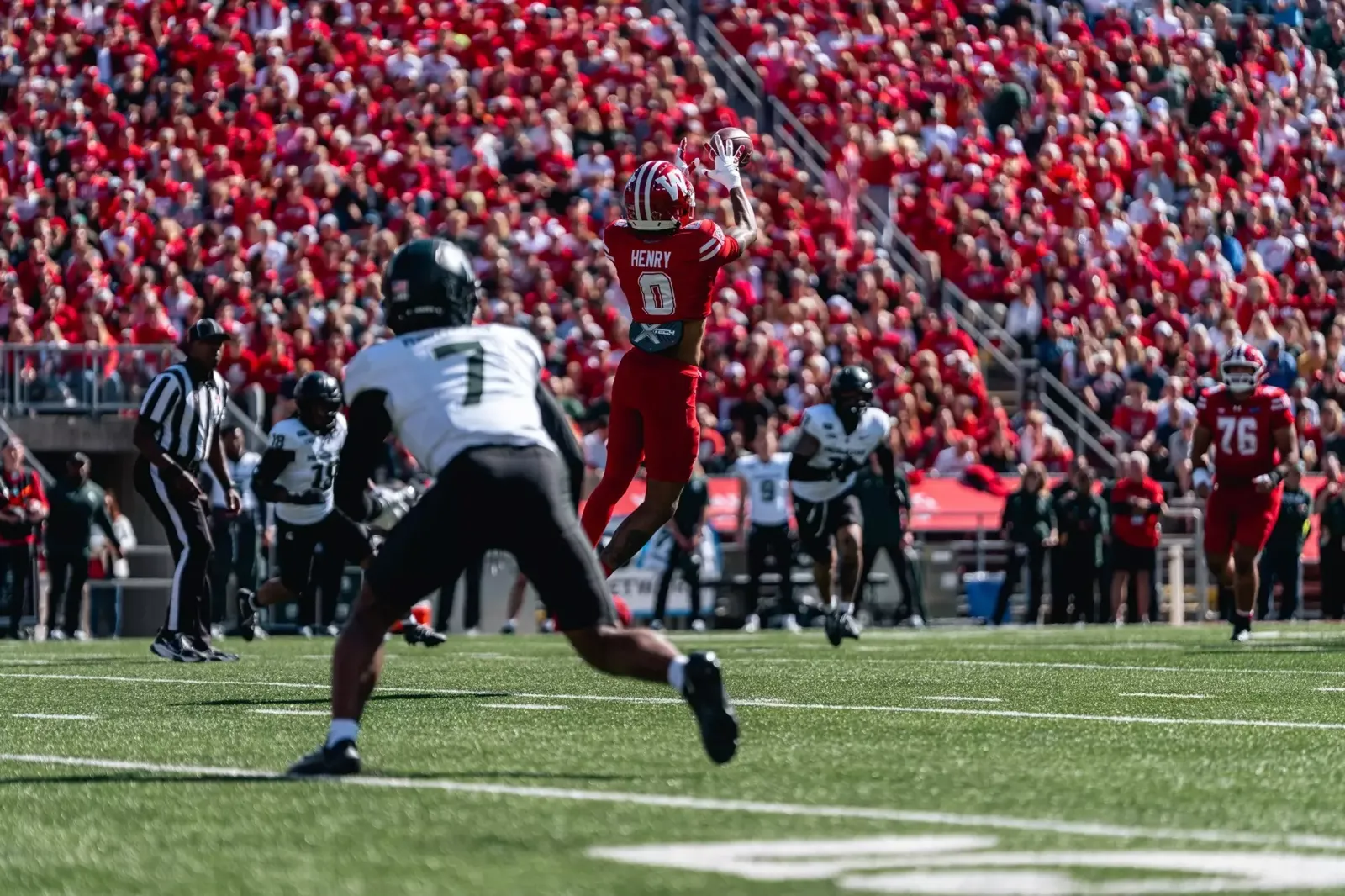
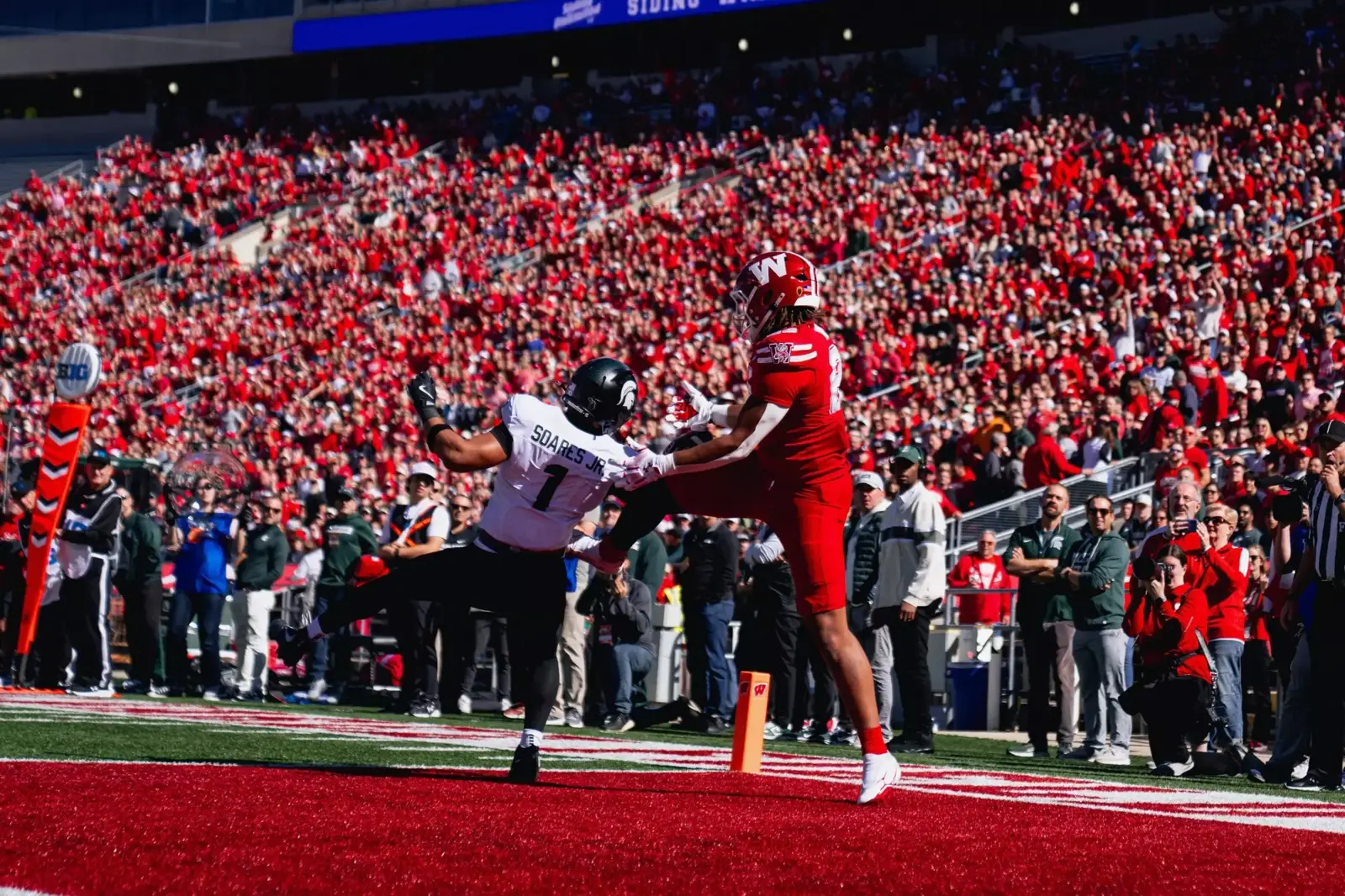
What worked was the consequence of the completed throws. Harris’s two touchdowns gave the Badgers their opening separation. Malachi Coleman’s 46-yard touchdown reception in the fourth quarter supplied the final score. Wisconsin did not accumulate empty passing production while searching for an end zone. Its successful throws repeatedly reached one.
That is a good afternoon for the receiving group, with room for the whole offense to keep refining routine execution. A short throw delivered on time can preserve a drive when an explosive opportunity is unavailable. The Badgers should want both kinds of success. One produces the highlight; the other gives an offense enough possessions that the highlight does not have to carry the entire evening.
Harris made the early lead feel earned
The tight end’s two touchdowns were particularly encouraging because they followed his important work at Penn State. Wisconsin has found a player who can make a passing opportunity count near the point where a drive becomes points. That gives the coordinator a useful problem to present to a defense worried about Joseph’s legs.
The two responsibilities interact. A defender stepping toward the quarterback has less freedom to occupy a receiving lane. A defender remaining in coverage may give the quarterback another running option. The offense’s task is to identify the choice and execute the response. Saturday supplied evidence that Wisconsin can make that relationship productive, rather than merely discuss how promising it ought to be.
For Harris, the performance deserves straightforward appreciation. Two touchdown catches helped establish the lead before the afternoon required Wisconsin to protect it. College football spends plenty of time discussing potential. A player completing the work in front of him is a pleasant alternative to another extended conversation about what might eventually happen.
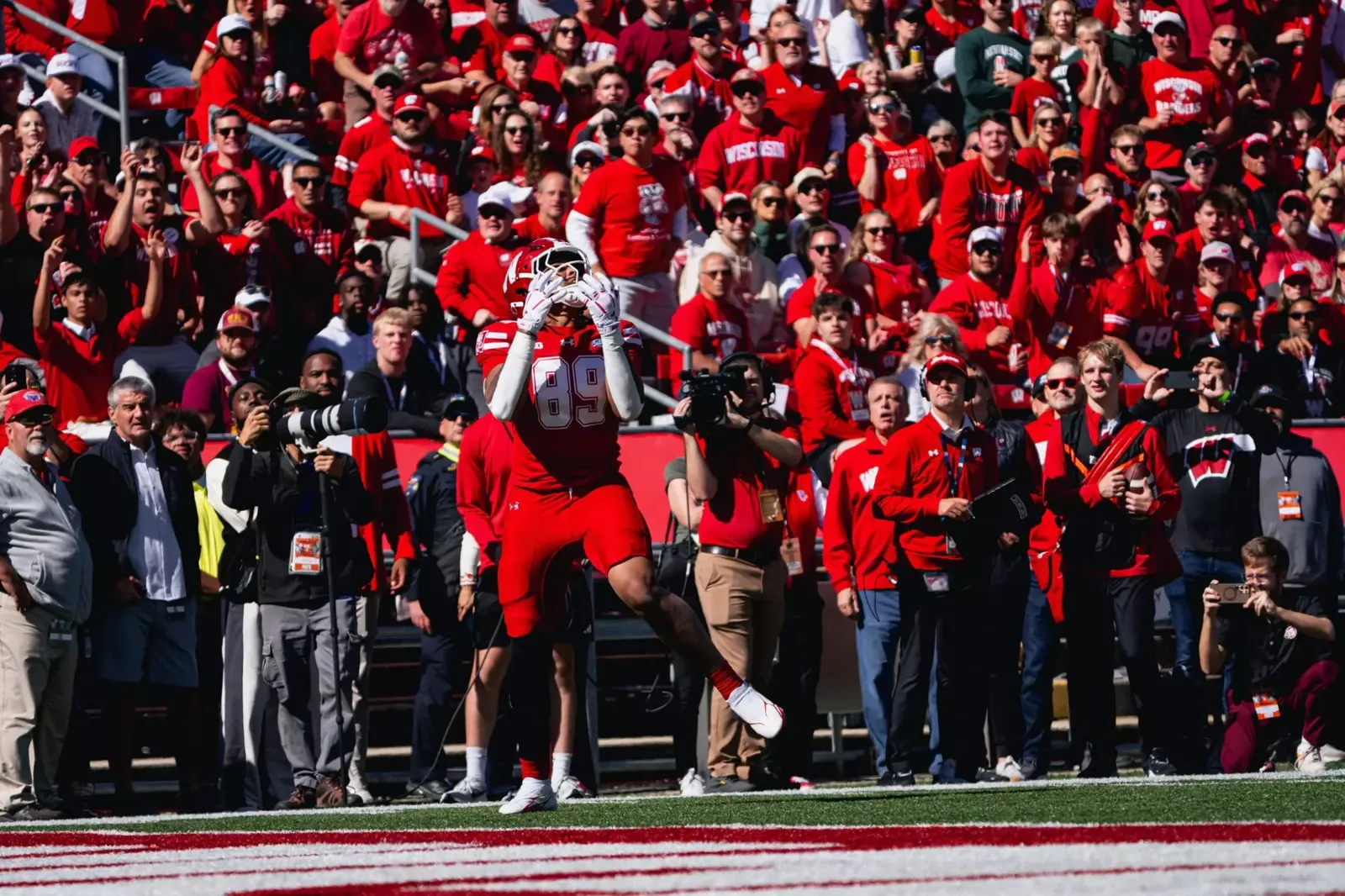
Coleman’s late score added another receiving contribution to the result. A defense already trying to solve the quarterback and tight end still had to account for a receiver capable of changing the field quickly. Wisconsin benefits when its useful answers do not all involve asking the same player to do something exceptional again.
The defense did not need one rescuer
Catalano and Posa combined for nineteen tackles, while Charles Perkins and Thomas Heiberger each recorded a sack. Wisconsin’s recap also credited eight different players with a pass breakup. Those details support the larger impression of a defense receiving useful work across the group. The result was not waiting on one defender to repair every difficult snap.
Michigan State finished with 235 total yards and only a field goal. Those numbers tell us the Spartans had possessions without finding enough productive conclusions. Wisconsin repeatedly forced the next decision into a more difficult setting, then made the play that kept the visitors from getting the fresh set of downs they wanted.
The Badgers should still examine where drives developed. Preventing points is the objective, but a defense does not have to become comfortable with every gain that precedes the eventual stop. The film can identify a pursuit angle to improve or an underneath completion to contest without diminishing the value of holding a conference opponent to three points.
That is the advantage of a convincing win. Correction can remain specific. There is no need to invent a crisis to keep the team attentive, and no benefit in pretending the result makes every detail satisfactory. Wisconsin can celebrate the collective effort while asking the next version of the defense to make some of the work easier on itself.
The unnecessary yards still belong on the film
Michigan State’s field goal came just before halftime after Wisconsin penalties helped the visitors move into range. The Badgers finished with 66 penalty yards. Against a struggling offense, donated territory can be the most reliable assistance the opponent receives. Homecoming hospitality should have a boundary somewhere before the first-down marker.
The cost remained manageable because Wisconsin controlled so much else. That does not make it a useful habit. A different game can make the same fifteen yards matter considerably more. A player can compete aggressively without adding an avoidable action after the part of the snap that could actually help his team.
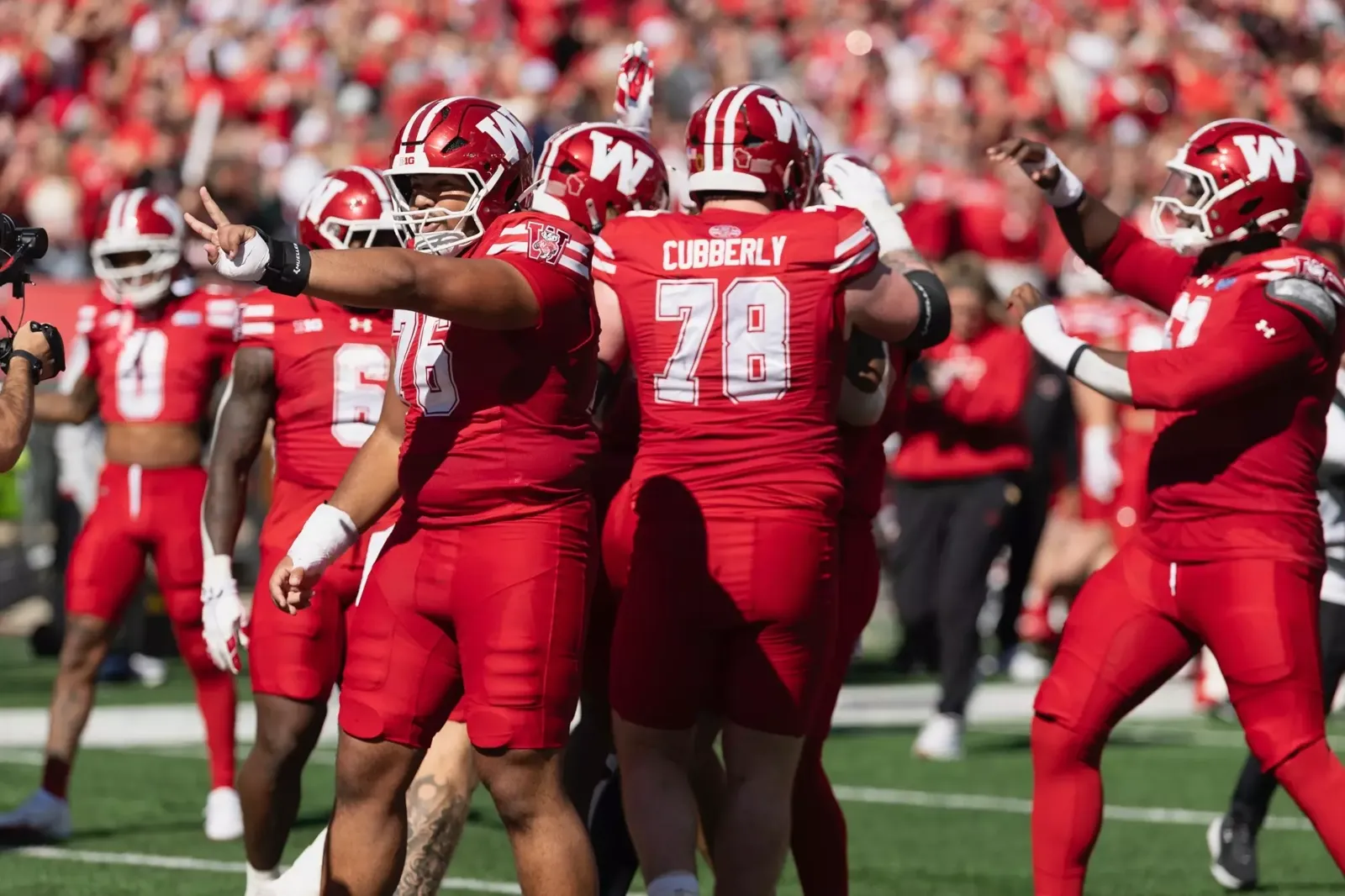
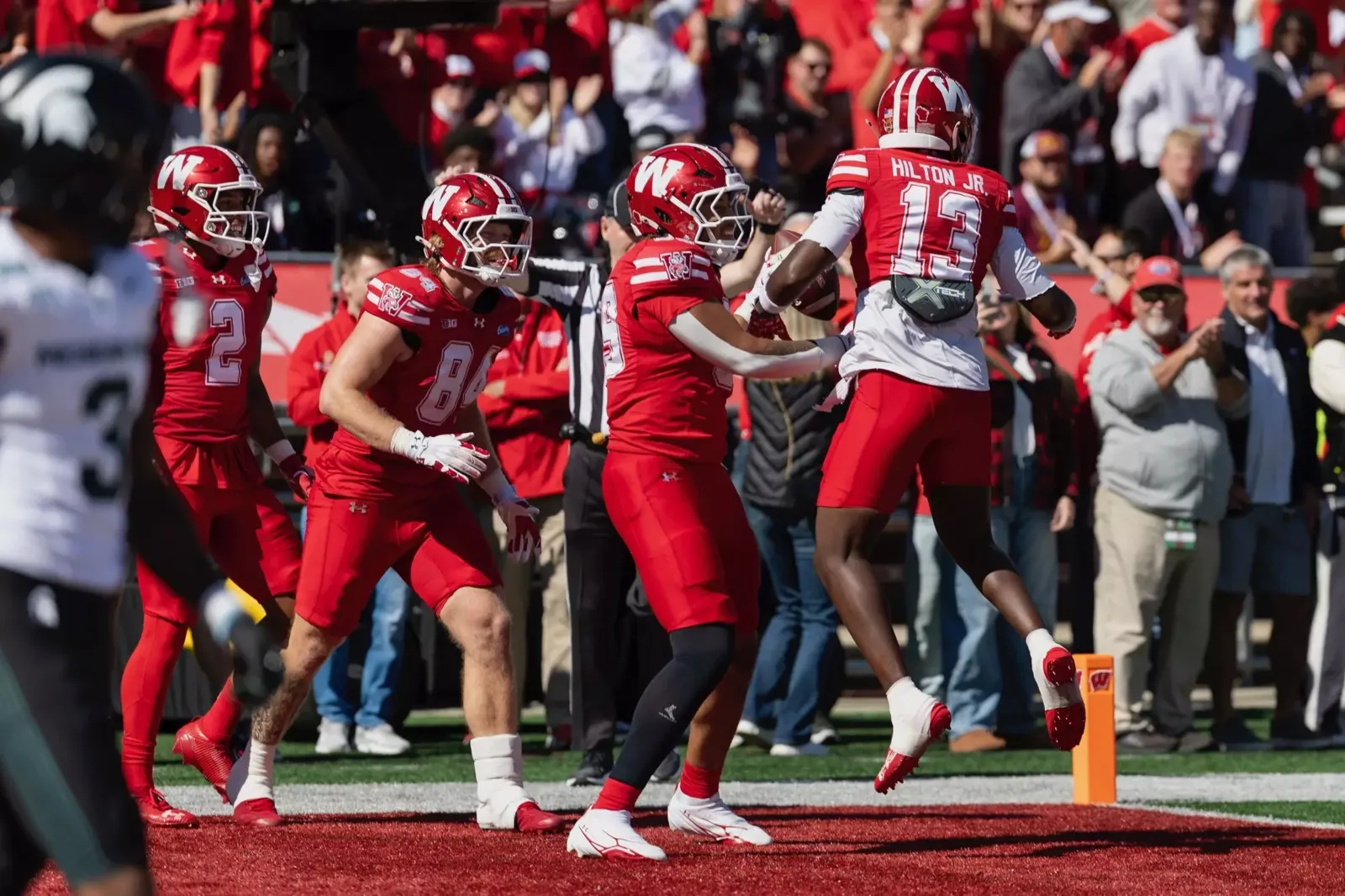
This is also why the final margin should not become a complete description of discipline. Wisconsin gave the audience a comfortable finish, and it earned that comfort. The coaching staff can still circle the mistakes that might make a future afternoon less comfortable. Enjoyment and correction are entirely capable of occupying the same Sunday.
A good place to take a breath
The pregame call favored Wisconsin, 27–17. The Badgers supplied four more points than that forecast and allowed fourteen fewer. I am very happy to have overestimated the amount of suspense required. Some predictions demand a defense. Others deserve a quiet thank-you to the players who made the afternoon substantially better than advertised.
At 4–1, Wisconsin enters its bye with consecutive conference wins and something concrete to build upon. The Penn State comeback showed the team could recover under pressure. Saturday showed it could create a lead and keep the opponent from turning the game into another rescue assignment. Neither result guarantees the next one. Together, they give the work a more convincing foundation.
UCLA’s bye ends with a trip to Oregon next Saturday. Wisconsin returns to action at the Rose Bowl on October 17. There is time to prepare for the complications of supporting both, and no reason to borrow next week’s anxiety before it arrives. This morning, appreciate a quarterback who created, a tight end who finished, and a defense that kept closing the door. Go Bruins. On, Wisconsin. Breakfast may proceed at a normal pulse.