 POST-GAME
UCLA BRUINS + WISCONSIN BADGERS
One comfortable win. One spectacular rescue
UCLA rolled 54–3. Wisconsin erased a seventeen-point hole. Both teams won on the road; only one let us sit down comfortably.
Listen to Repinkee Sports on Apple Podcasts UCLA54
 Maryland3
 Wisconsin24
 Penn State20
UCLA made its afternoon comfortable. Wisconsin made its evening unforgettable. The Bruins beat Maryland 54–3 in College Park, while the Badgers came back from seventeen points down to defeat No. 13 Penn State 24–20 at Beaver Stadium. Supporting both teams supplied a complete range of Saturday experiences, from relaxed appreciation to standing in front of a chair that remained perfectly capable of seating a person.
The Bruins are 4–0 and 2–0 in the Big Ten. Wisconsin is 3–1 after winning its conference opener. The results deserve celebration for different reasons. UCLA overwhelmed an opponent after a scoreless first quarter. Wisconsin repeatedly created trouble, remained close enough to survive it, and then produced the two late possessions that changed everything.
The pregame report picked UCLA to win a much closer game and gave Penn State the edge. The Bruins exceeded the first forecast considerably. The Badgers supplied a particularly welcome correction to the second. There is no obligation to defend a prediction after the players have furnished a better account of the evening. Wisconsin’s finish deserves the microphone.
A seventeen-point problem does not solve itself
Penn State led 17–0 in the second quarter, helped substantially by consecutive Wisconsin interceptions. Josiah Zayas returned the first one 51 yards for a touchdown. The next gave the Nittany Lions possession near Wisconsin’s goal line, and Rocco Becht finished that short field with a scoring run. The Badgers had made an already difficult road assignment considerably more demanding.
The honest account keeps those mistakes in the story. A comeback is not evidence that giving the opponent an early lead was secretly a useful plan. Wisconsin needed to improve the decisions that created the deficit and keep enough of the game available to repair them. That second responsibility belonged to more than the quarterback who would eventually lead the finish.
The defense had already prevented a touchdown near its goal line earlier in the game. Later, it continued to supply stops rather than allowing the afternoon to become an uninterrupted procession toward a comfortable Penn State win. Those contributions are easy to overlook once the decisive touchdown acquires all the available attention. They are also why the decisive touchdown could matter.
Joseph’s seven-yard touchdown run late in the first half cut the deficit to 17–7. It did not make the performance satisfactory. It gave Wisconsin a manageable reason to return after halftime believing the next useful possession could change the terms. Ten points is still a problem. It is a different problem from seventeen when the defense is keeping the opponent within reach.
Perkins gave the offense another opening
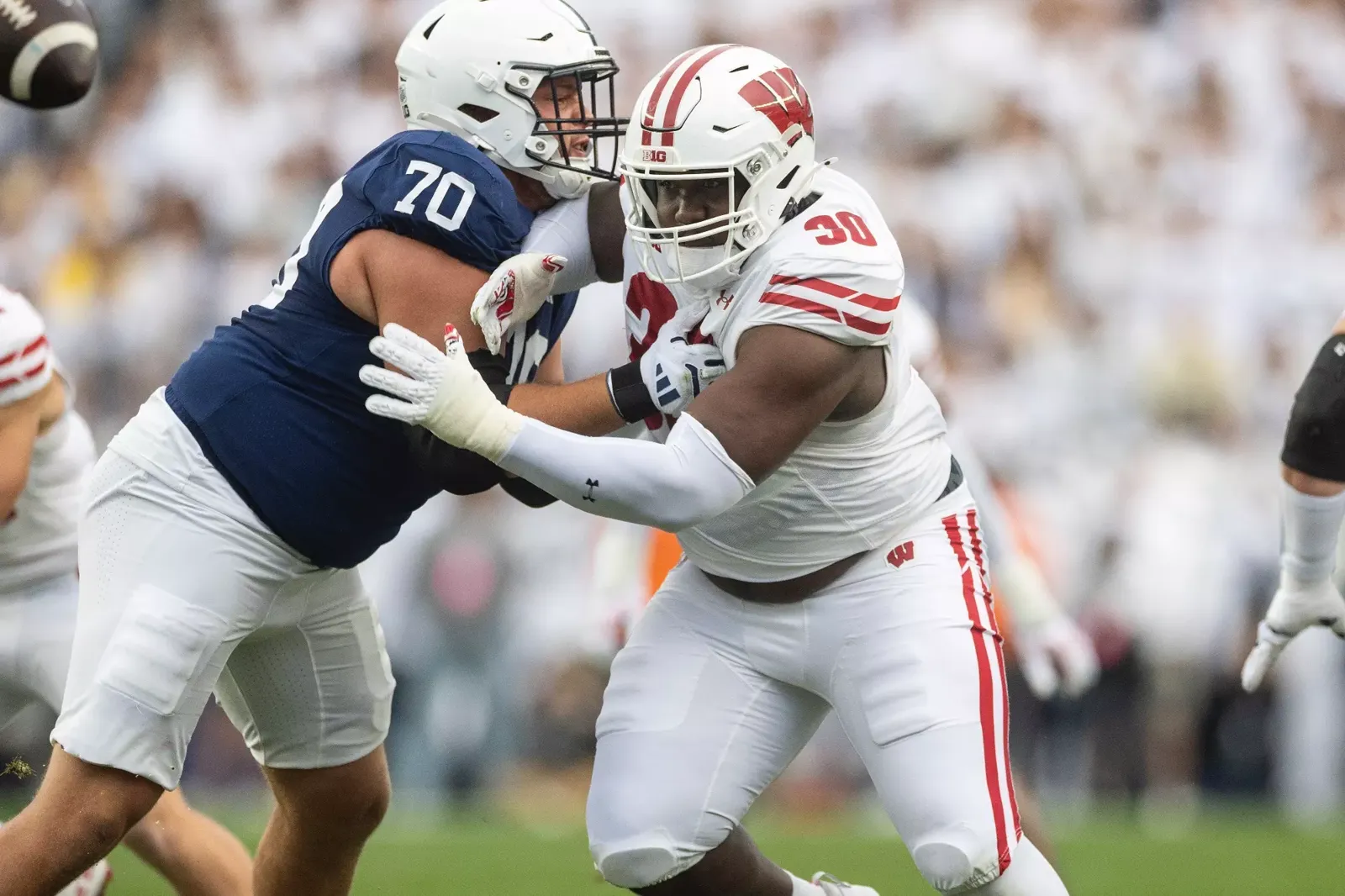
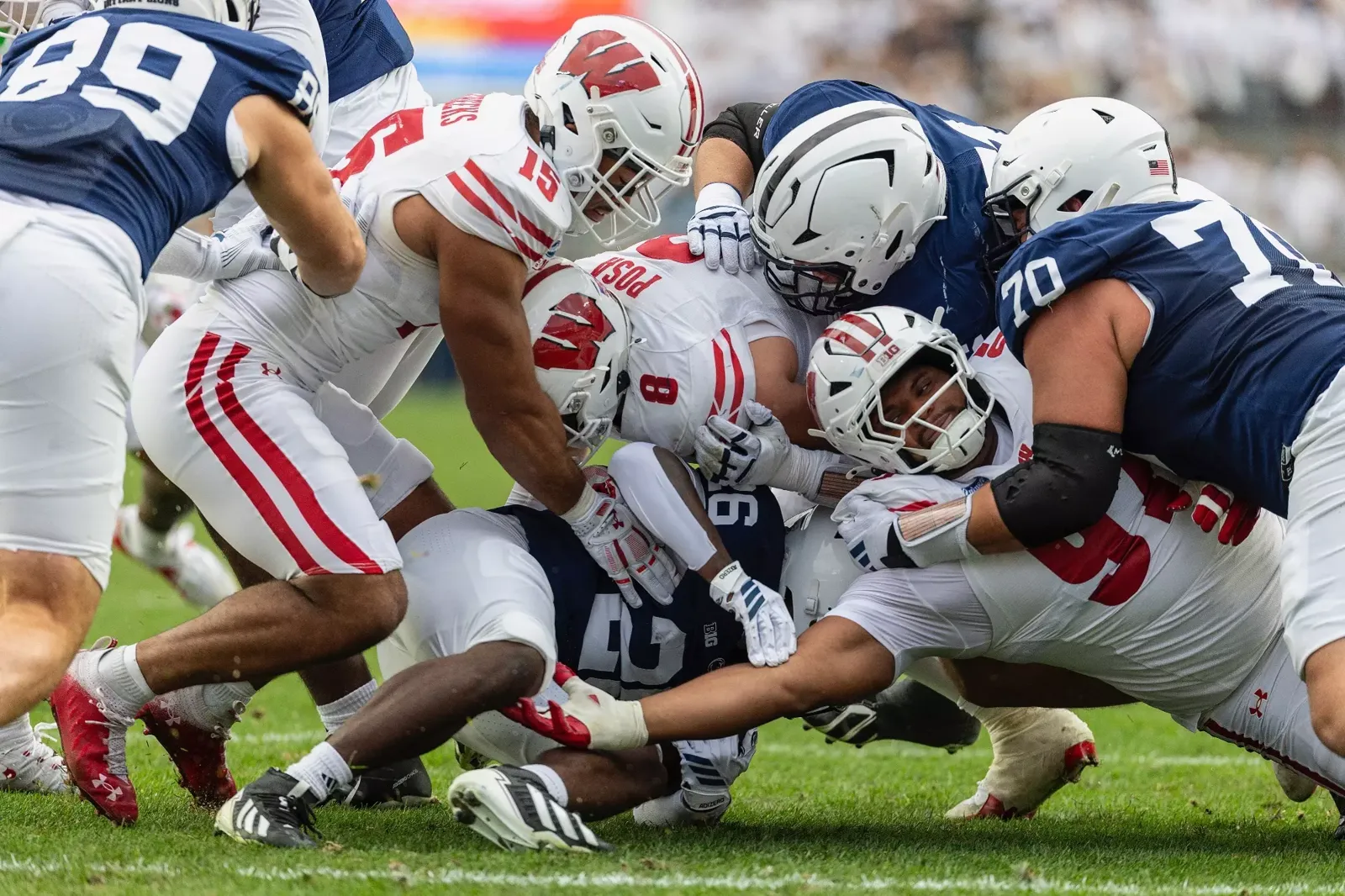
Charles Perkins intercepted Becht in the second half, producing a possession that ended with a Gavin Lahm field goal. A defensive lineman collecting a pass is one of football’s more enjoyable interruptions to the expected order of business. Wisconsin needed the opportunity, and the defense supplied it without waiting for the offense to become comfortable first.
The Badgers did not turn that field position into a touchdown. That belongs in the evaluation, too. Taking points was useful, but the missed chance to finish more emphatically left the offense with additional work. Penn State answered with a field goal of its own and carried a 20–10 lead into the fourth quarter. The route back remained available and unpleasantly narrow.
A third Joseph interception could have settled the evening in Penn State’s favor. Wisconsin’s defense prevented the mistake from becoming the extra points the home side wanted. The Badgers kept requiring another snap, another drive, another attempt to close the game. Persistence becomes more than an inspirational word when it keeps the score within two productive possessions.
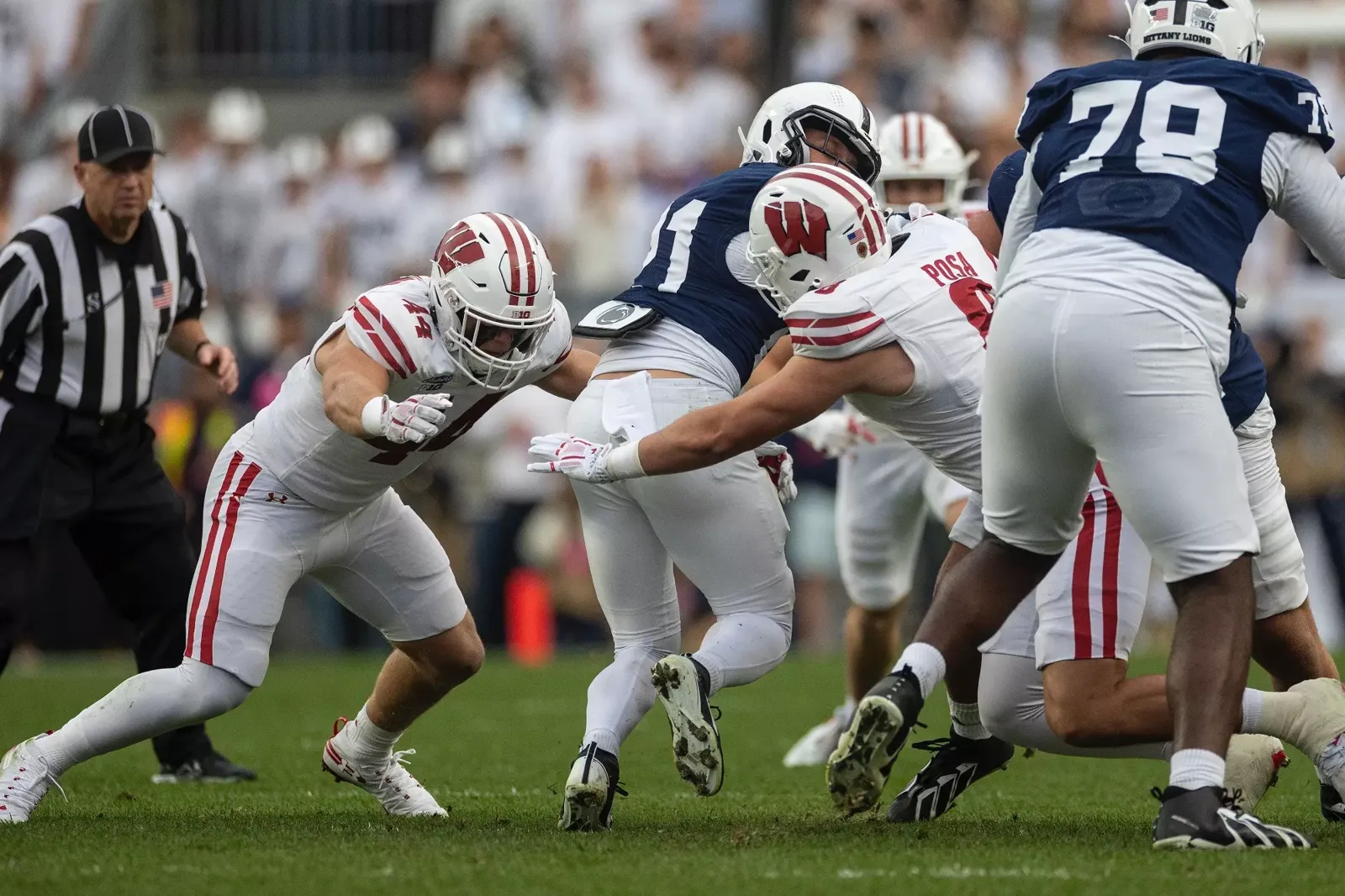
That was the essential defensive contribution: preserving a game the offense had made difficult. The group did not need every play to become a takeaway. It needed enough successful responses that the next Wisconsin possession still had a purpose. When the comeback finally arrived, it was standing on that less spectacular work.
Two drives changed the breakfast conversation
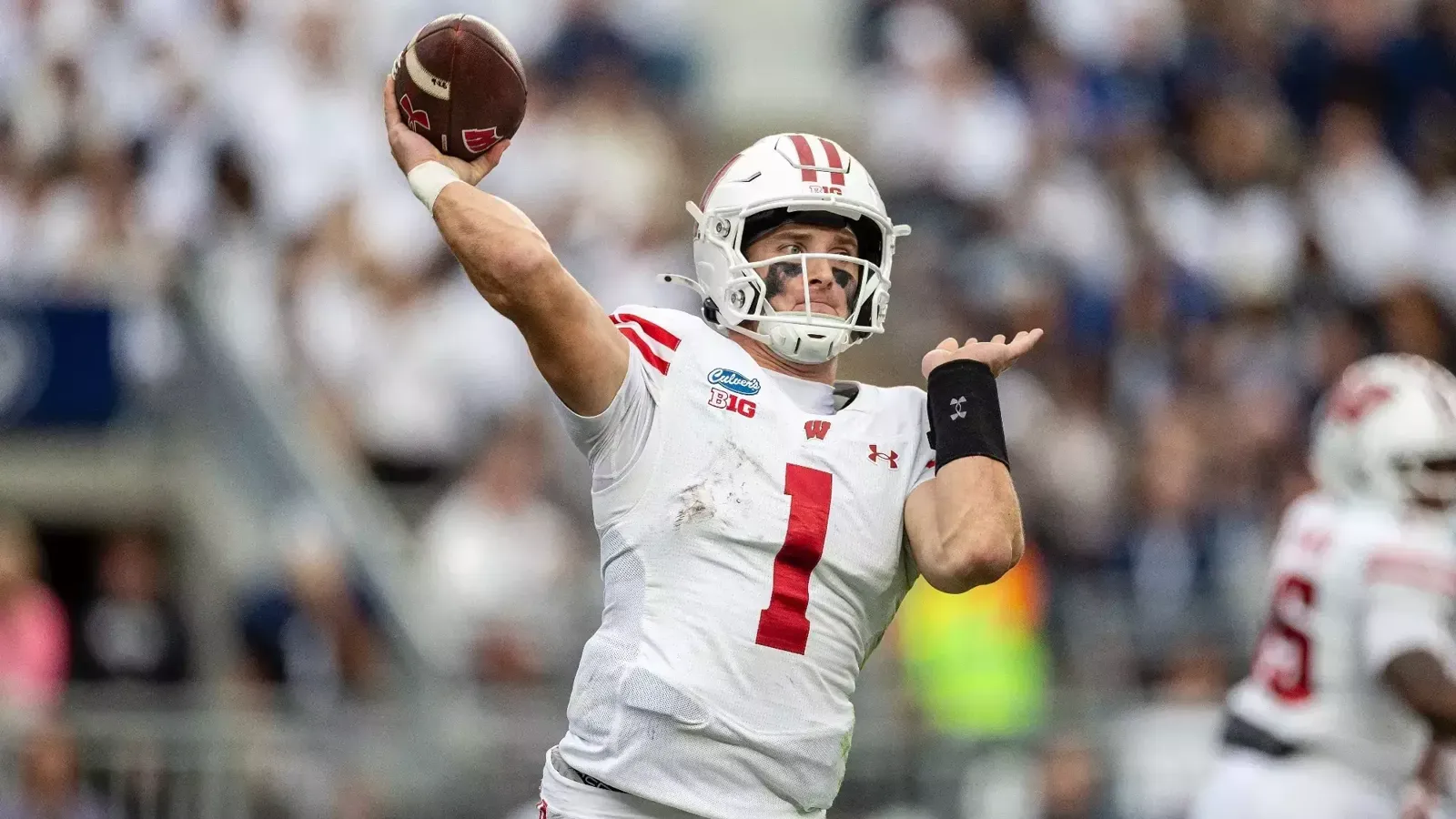
Wisconsin went 75 yards in ten plays to pull within 20–17, with Joseph finding Eugene Hilton Jr. for an eleven-yard touchdown at the 3:31 mark. The timing mattered. The Badgers had produced the first of the two scores they required while leaving enough of the game to pursue the second. They still needed help from the defense, and they received another possession.
Then came the play that will be remembered long after the earlier frustration becomes less vivid. Joseph connected with Jacob Harris, who turned the throw into a 72-yard touchdown with 1:13 remaining. Wisconsin led 24–20. An offense that had spent much of the evening struggling to improve its circumstances had crossed the field quickly enough to leave Beaver Stadium confronting an entirely different ending.
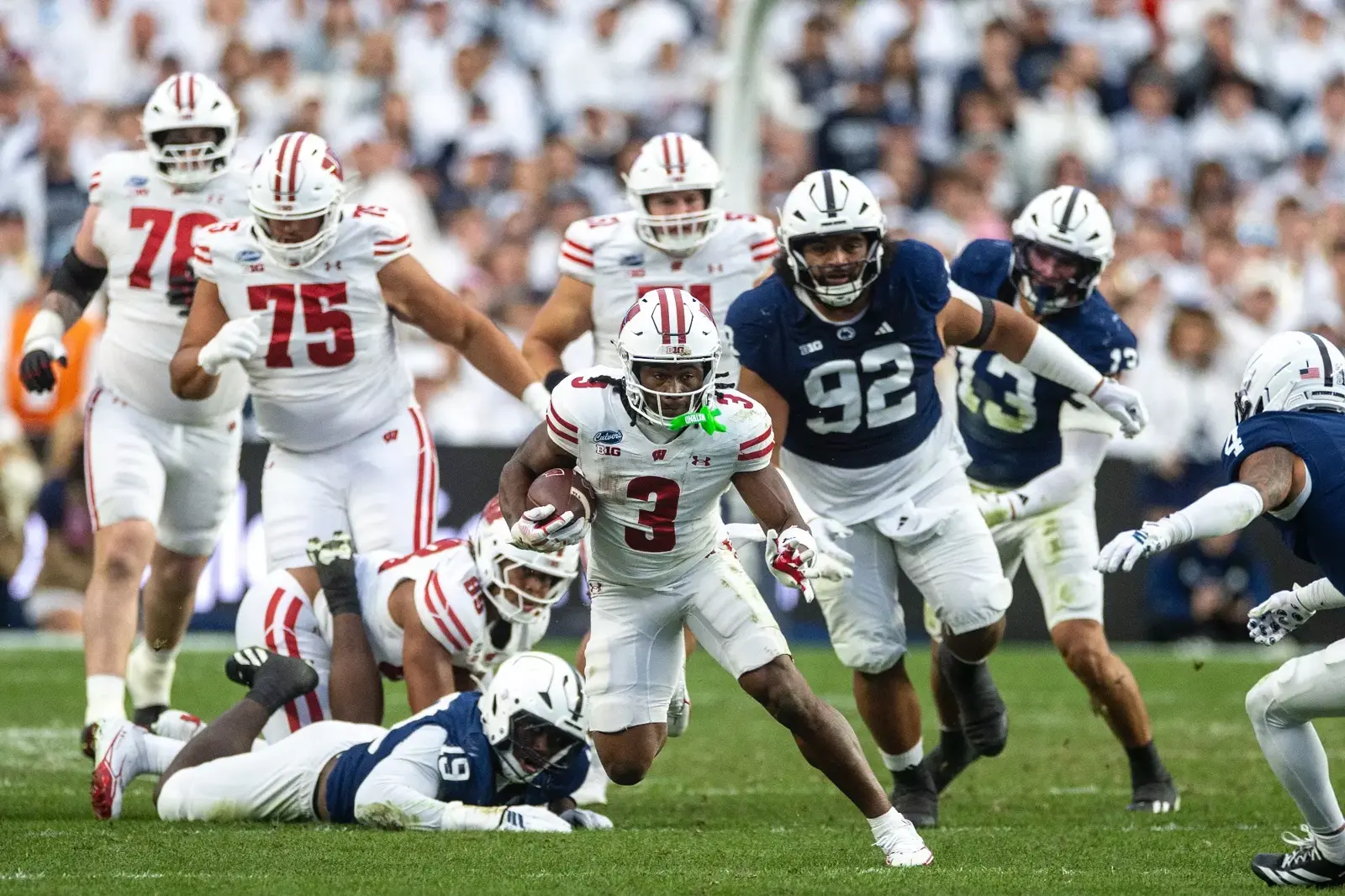
The long completion deserves the excitement it produced. It also belongs to the sequence around it: the preceding touchdown drive, the defensive stop, the protection, the throw, the catch, and Harris finishing the available space. A memorable play can make the whole story feel inevitable in retrospect. Nothing about Wisconsin’s earlier mistakes made this finish automatic.
Penn State had one final chance, moving into Wisconsin territory before the Badgers prevented the last set of throws from becoming the winning score. That completed the responsibility the comeback had created. Taking the lead was not the final assignment. Wisconsin still had to protect it, and the defense did enough to send its teammates home with a result worth remembering.
Celebrate the response without losing the lesson
Joseph threw two touchdown passes in the final minutes after three interceptions earlier in the game. That is a striking demonstration of recovery, and it should not require us to choose between describing the mistakes and appreciating the finish. Both occurred. The quarterback helped create the problem and helped solve it, with considerable assistance from the players around him.
For Wisconsin, the next step is making the reliable part of that offense easier to find before the afternoon becomes an emergency. The late drives showed passing opportunities that could be completed and receivers who could make them consequential. The earlier possessions showed the cost when decisions and execution failed to meet the same standard.
The defense should receive its own appreciation rather than appearing merely as scenery around a comeback. It kept the opponent from using Wisconsin’s final interception to close the argument. It supplied the possession that gave the offense another chance. There is something distinctly valuable about a group continuing to work when its teammates have made the work less enjoyable.
The result does not establish that every offensive concern has disappeared. It establishes that Wisconsin can respond in a difficult setting, protect an opportunity long enough to use it, and finish a game that seemed to be moving elsewhere. That is meaningful progress. Asking the Badgers to enjoy it while continuing to correct the mistakes is a reasonable way to spend the coming week.
UCLA took a different route to the same happy morning
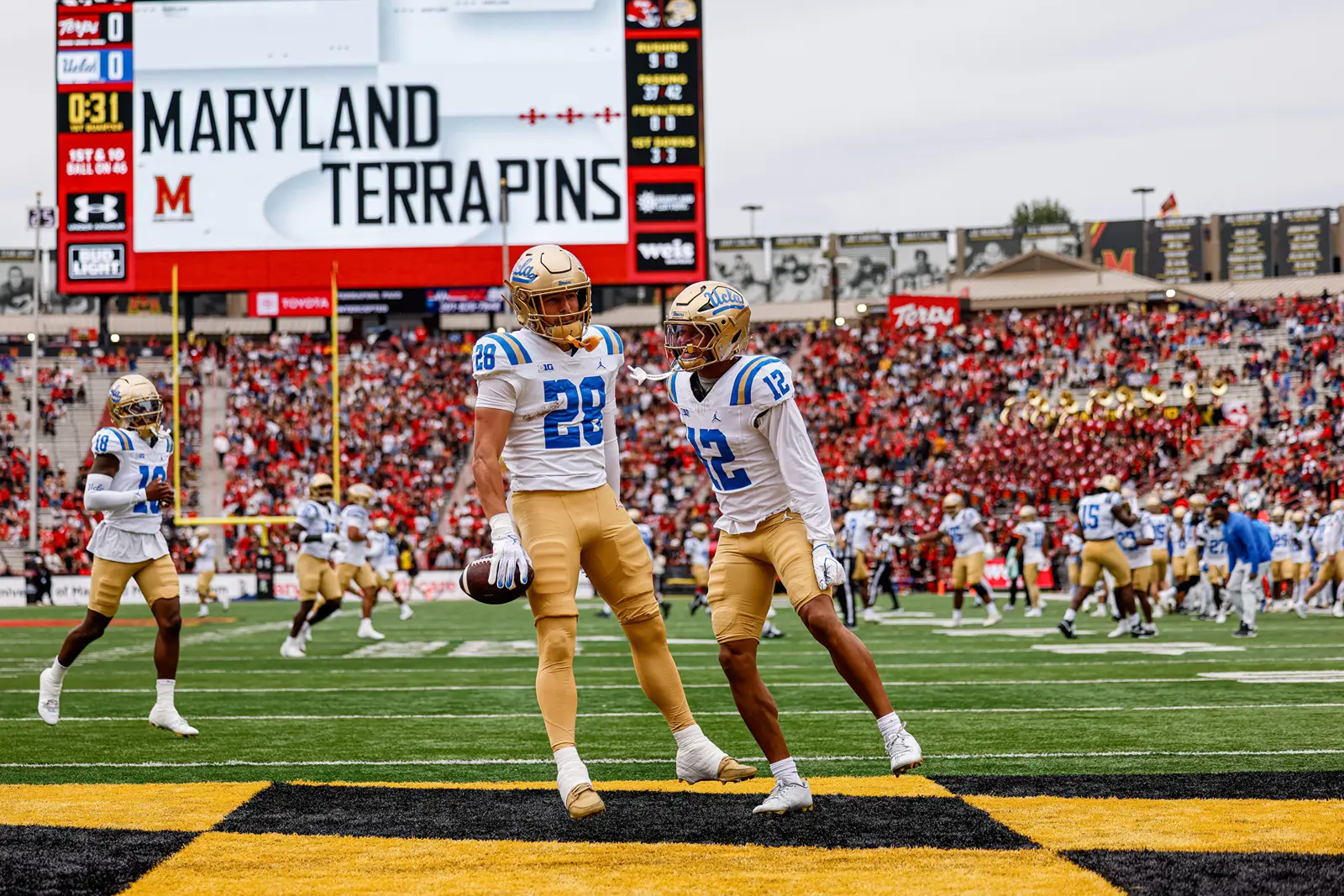
Neither team scored in the opening quarter at Maryland. The Bruins then put twenty points on the board before halftime and allowed the Terrapins only a field goal. The final margin can make the afternoon look like one uninterrupted rush downhill. UCLA first had to establish control, then make that control grow instead of letting the home side find an answer.
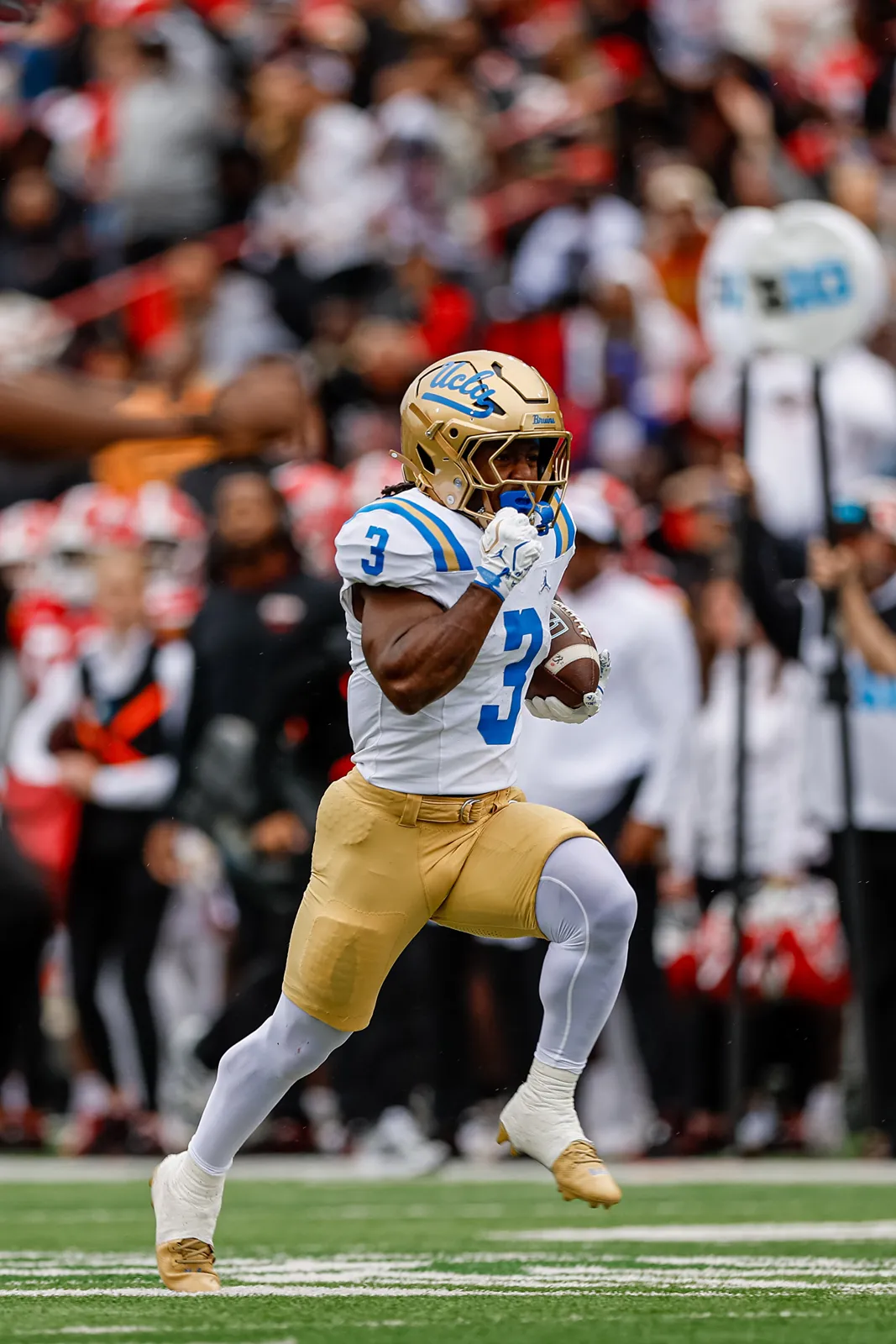
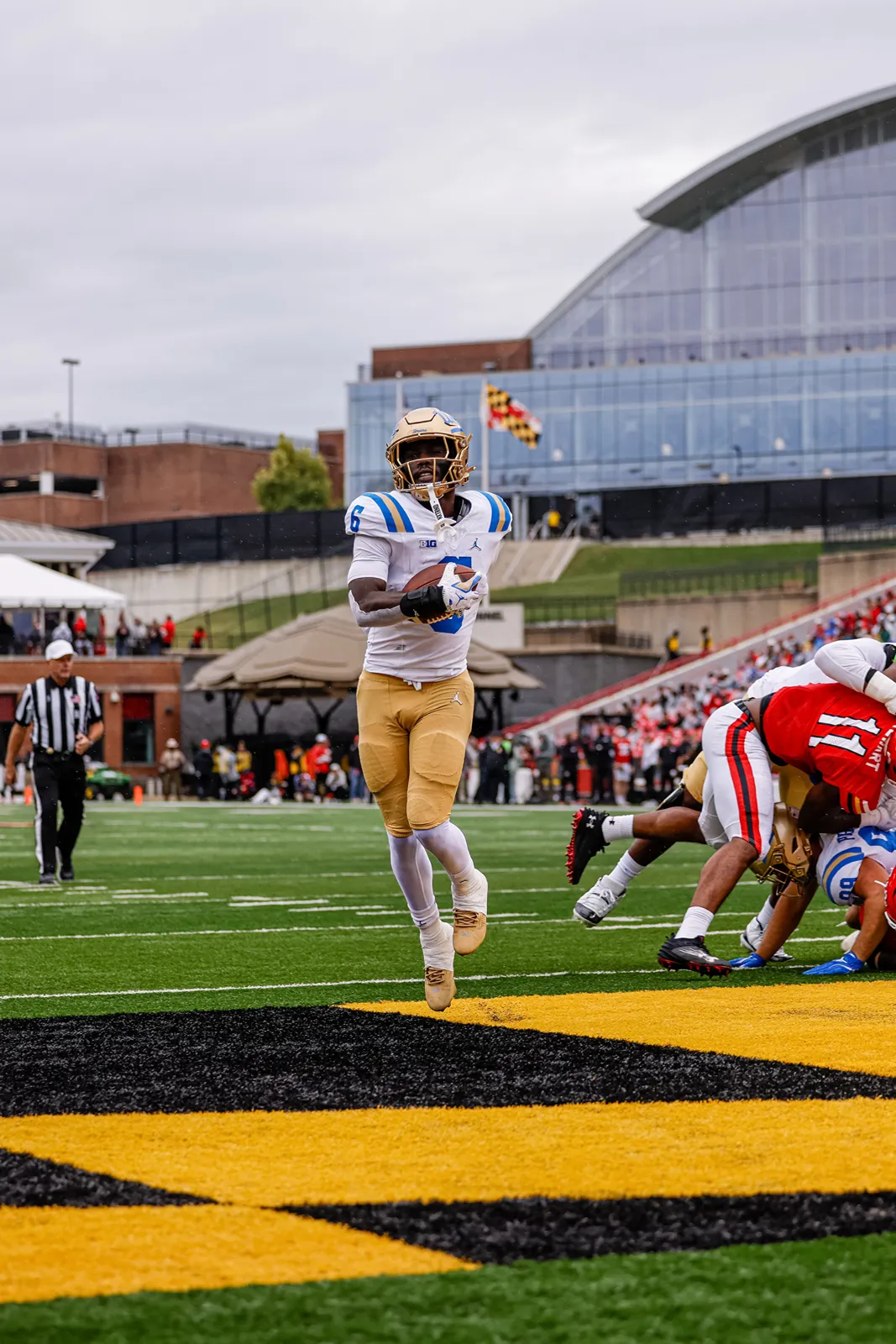
Wayne Knight’s 45-yard touchdown run opened the scoring in the second quarter. Anthony Woods and Jaivian Thomas added rushing touchdowns before the break. That distribution is encouraging because it gives the offense several useful contributors without requiring every productive possession to be a personal demonstration by one player.
The larger benefit is what a functioning ground game asks of the defense. Maryland had to account for the backs and still preserve enough coverage to challenge the passing attack. When those responsibilities become difficult to manage together, the offense receives choices. UCLA repeatedly turned its available choices into something more substantial than a promising setup.
The Bruins also improved the other half of their performance after allowing Purdue thirty-eight points the previous week. Maryland finished with 181 total yards, including just 39 rushing yards. That is clear evidence of defensive control rather than a result explained only by an offense scoring faster than the opponent could respond.
Two interceptions became fourteen points
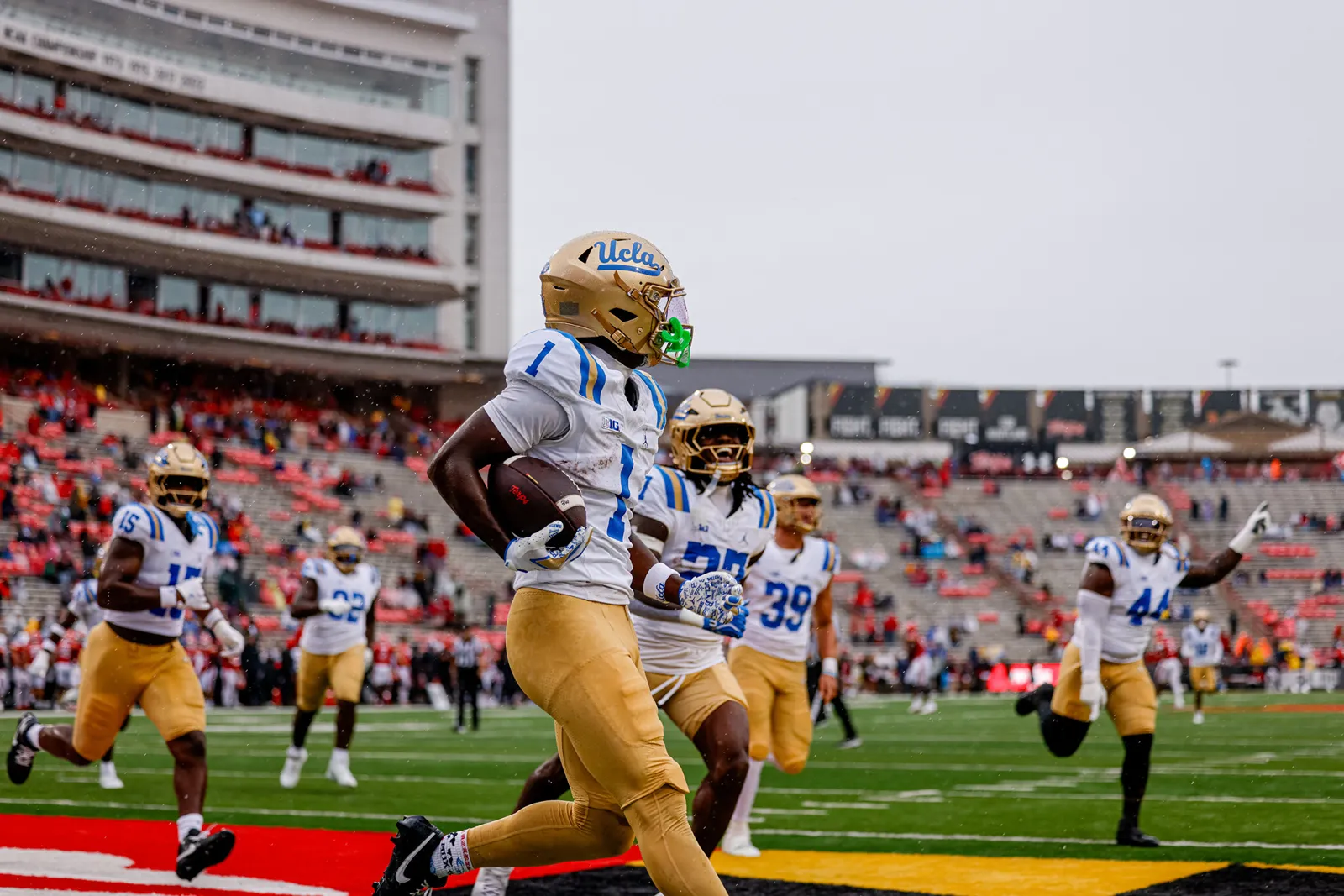
Ta’Shawn James returned an interception 39 yards for a touchdown in the third quarter. Scooter Jackson followed with a 65-yard interception return for another score. UCLA’s 20–3 halftime advantage became 34–3, and the defense had supplied the points that made an already difficult Maryland assignment much less manageable.
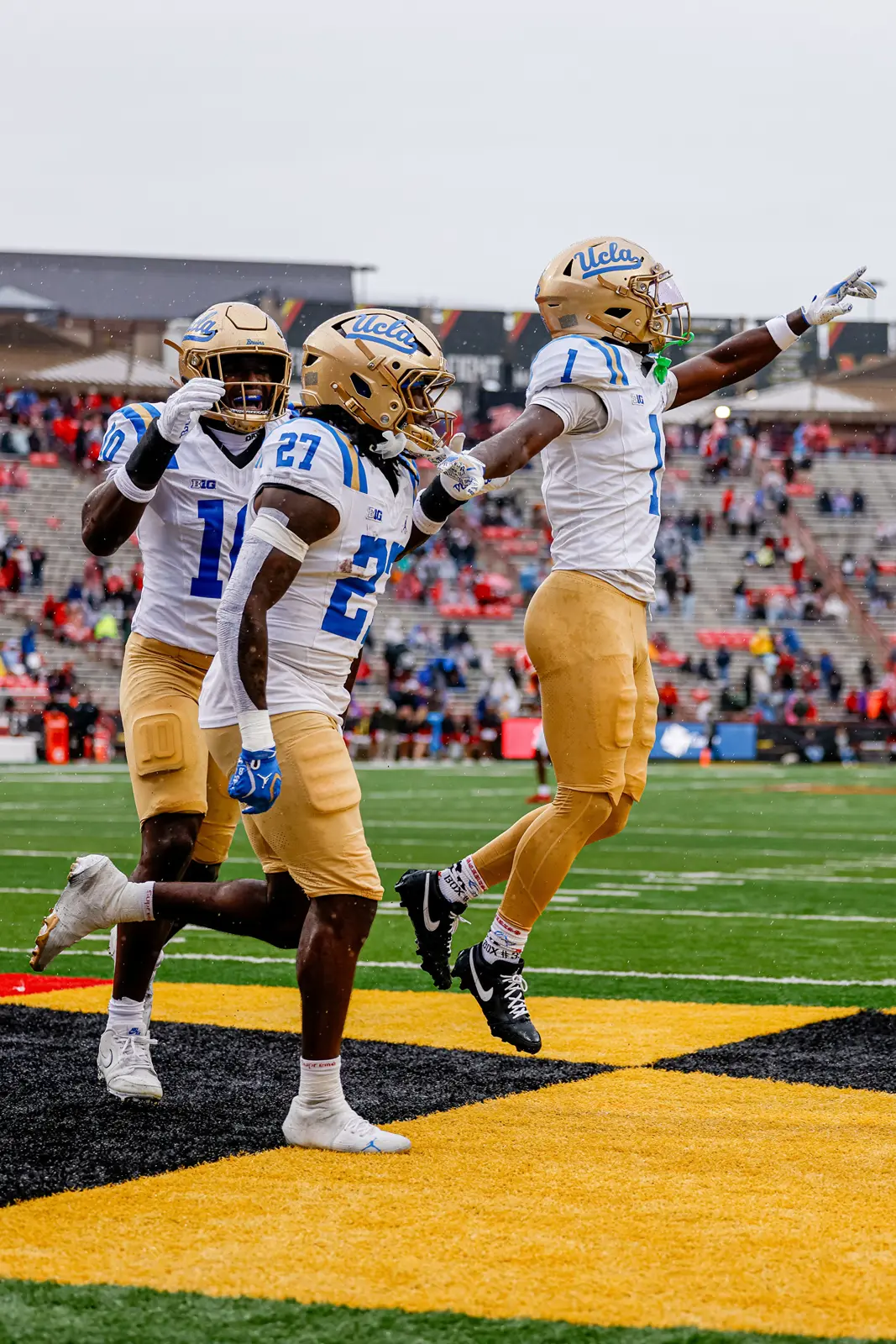
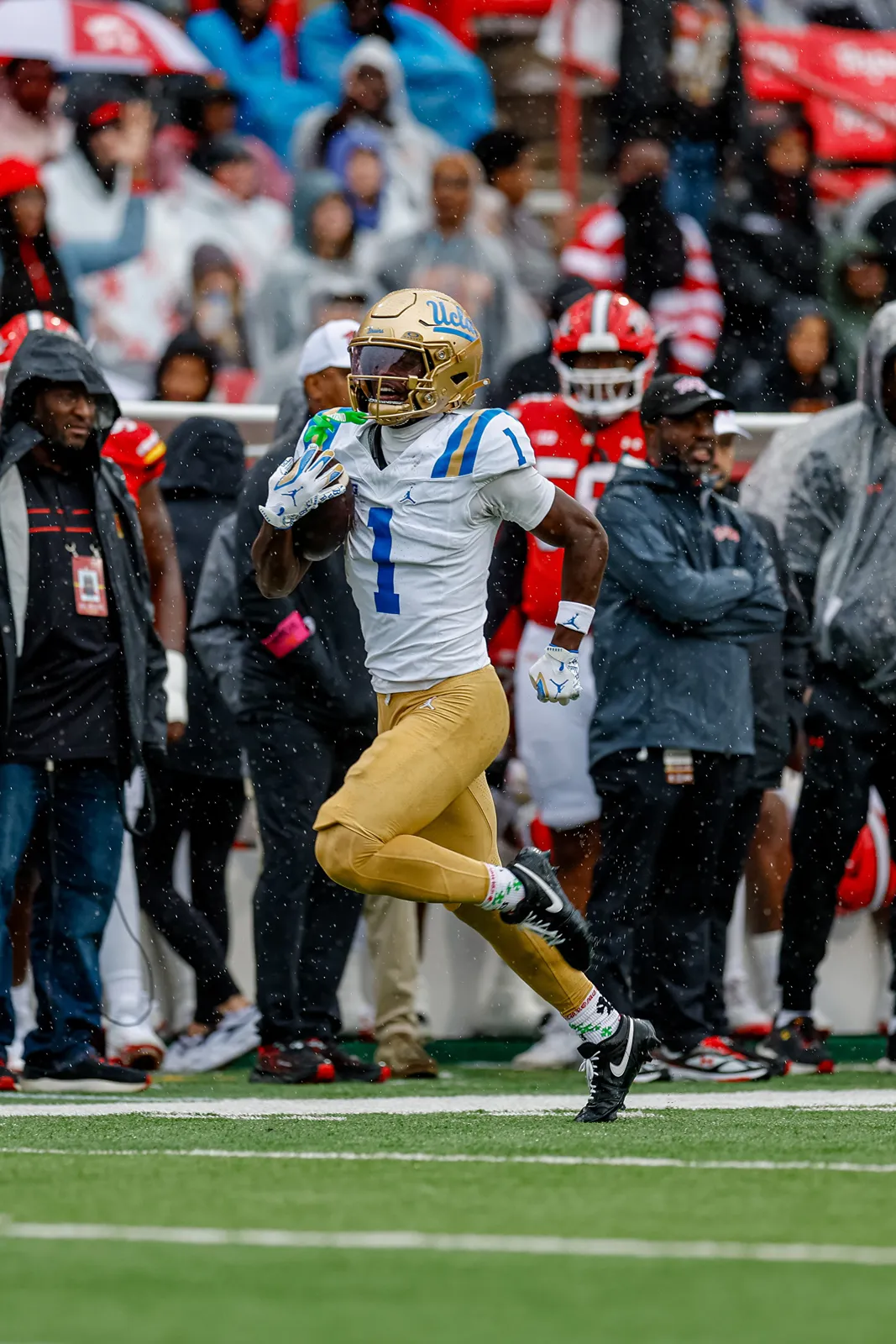
The returns deserve attention, but so does what a defense does before the throw becomes available. Pressure, coverage, and a quarterback forced into a difficult decision are connected parts of the same problem. A defensive back still has to finish the catch and the return. Saturday supplied both the opportunity and the execution needed to turn it into immediate consequence.
Maryland’s official recap credited UCLA with twenty-four points off turnovers. That figure explains why the margin grew so sharply. It also reminds the Bruins that protecting possession remains important even in a game where the opponent makes more mistakes. An offense can improve a dominant afternoon by removing the unnecessary gifts it leaves behind.
UCLA did not need to make every defensive possession spectacular. It needed to keep Maryland from sustaining enough offense to make the game competitive again. The takeaways accelerated the separation. The broader defensive work made the separation hold. That combination gave the Bruins something substantially more complete than another afternoon requiring the offense to repair everything.
The long pass arrived with room to enjoy it
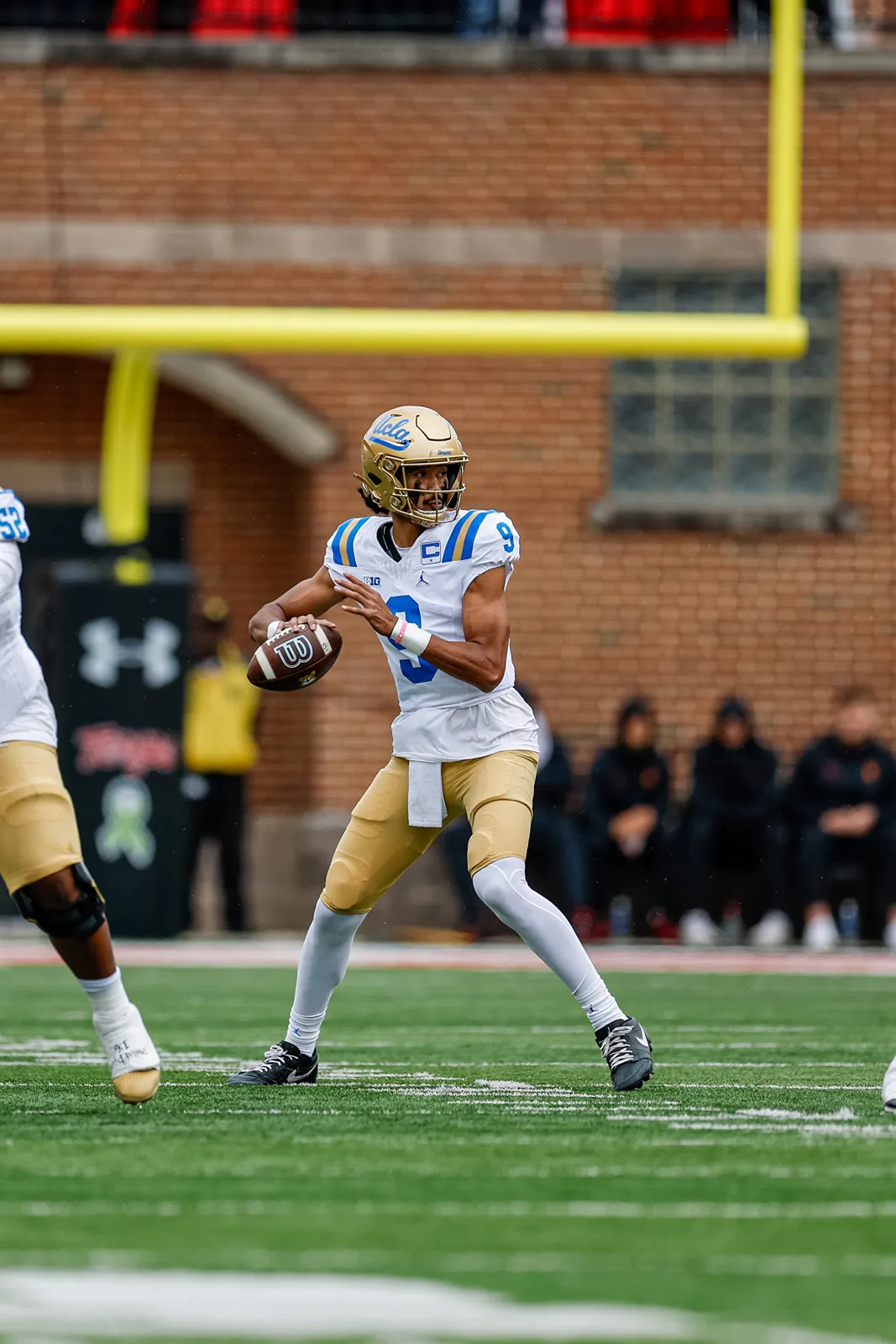
Nico Iamaleava connected with Aidan Mizell for an 83-yard touchdown in the fourth quarter. In a close game, that play would have changed the room’s entire emotional condition. Here it added a passing contribution to an afternoon already controlled by the ground game and defense. There are worse problems than having the spectacular throw arrive after the audience has regained its appetite.
Troy Leigber later scored on a 63-yard run, giving UCLA a fourth different running back with a rushing touchdown. Those late contributions extended the margin without changing the central explanation. The Bruins had several routes to production, and Maryland could not consistently close enough of them to make the next possession difficult.
That does not mean fifty-four points should become the weekly expectation. Opponents will offer different resistance, field position will change, and the next collection of turnovers may be smaller. The useful confidence comes from seeing several parts of the team contribute, not from assuming the exact circumstances can be ordered again next Saturday.
For Chesney’s Bruins, the unbeaten start now contains both a high-scoring conference opener and a road victory built with considerably stronger defensive control. Those results are different enough to be useful evidence. The coaching staff can ask what traveled well, what improved, and what still needs attention without having to explain away a difficult scoreline.
Two wins, two useful standards
UCLA should leave College Park expecting its defense to remain connected and its offense to keep sharing useful work. Wisconsin should leave State College expecting a better standard of early ball security while recognizing that its response under pressure was substantial. There is no need to force the performances into the same description merely because both end with a win.
The pregame calls were UCLA 31–24 and Penn State 27–20. The Bruins made the first unnecessarily cautious; the Badgers made the second pleasantly wrong. Predictions are a useful way to explain an expectation before the game. They become much less useful when the writer insists on protecting them from what the players actually did.
UCLA gets its bye before visiting Oregon. Wisconsin returns home to face Michigan State next Saturday. Both teams have earned a good Sunday morning, although one half of our audience may require rather more coffee after the journey. Appreciate the people who kept working when the game was uncomfortable, and the people who made another game comfortable enough to enjoy. Go Bruins. On, Wisconsin. This breakfast table has room for both kinds of happiness.