 POST-GAME
UCLA BRUINS + WISCONSIN BADGERS
Fifty-four. Fifty-two. Both breakfasts improved
Wisconsin found its passing afternoon. UCLA brought enough offense to cover a demanding defensive conversation. Two wins, different next steps.
Listen to Repinkee Sports on Apple Podcasts UCLA52
 Purdue38
 Wisconsin54
 Eastern Michigan10
Wisconsin scored fifty-four. UCLA scored fifty-two. Both teams won, which makes breakfast pleasant, although the Bruins’ defense may prefer that we finish eating before opening the film.
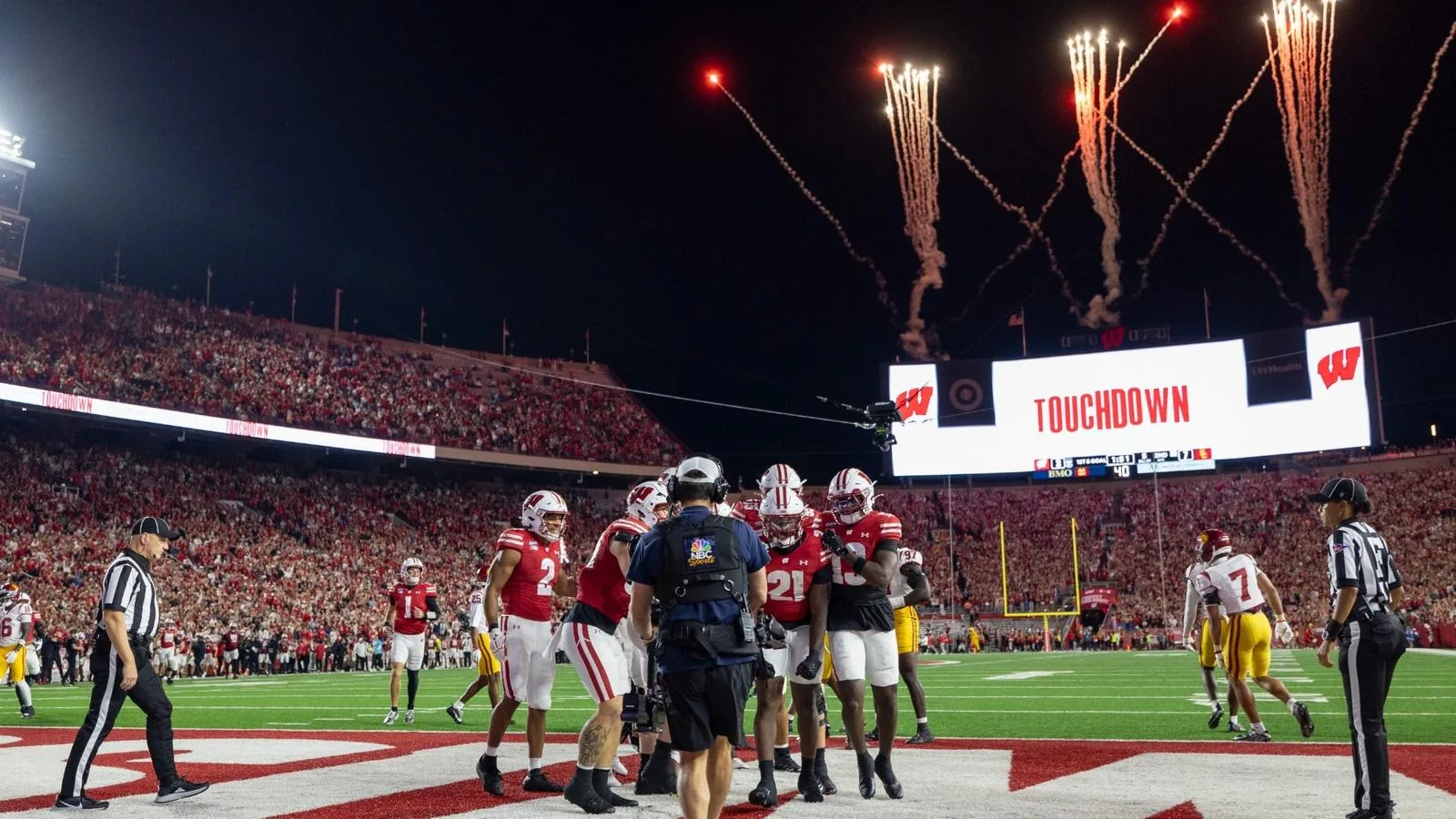
The Badgers beat Eastern Michigan 54–10 at Camp Randall and improved to 2–1. UCLA defeated Purdue 52–38 at the Rose Bowl, reaching 3–0 and winning its Big Ten opener. The scores supplied plenty to enjoy. The games supplied different explanations for why the next week still contains work.
The pregame report picked Wisconsin 31–13 and UCLA 34–24. Our offenses treated those totals as preliminary paperwork. That is a welcome correction, provided we give the opposing offenses enough attention to explain why the two victories felt rather different.
Wisconsin found its passing afternoon
Eastern Michigan scored first, and Joseph threw an early interception. The Badgers did not begin with the polished control the final margin suggests. They improved the performance instead of asking the audience to reinterpret the opening mistakes as part of a sophisticated plan.
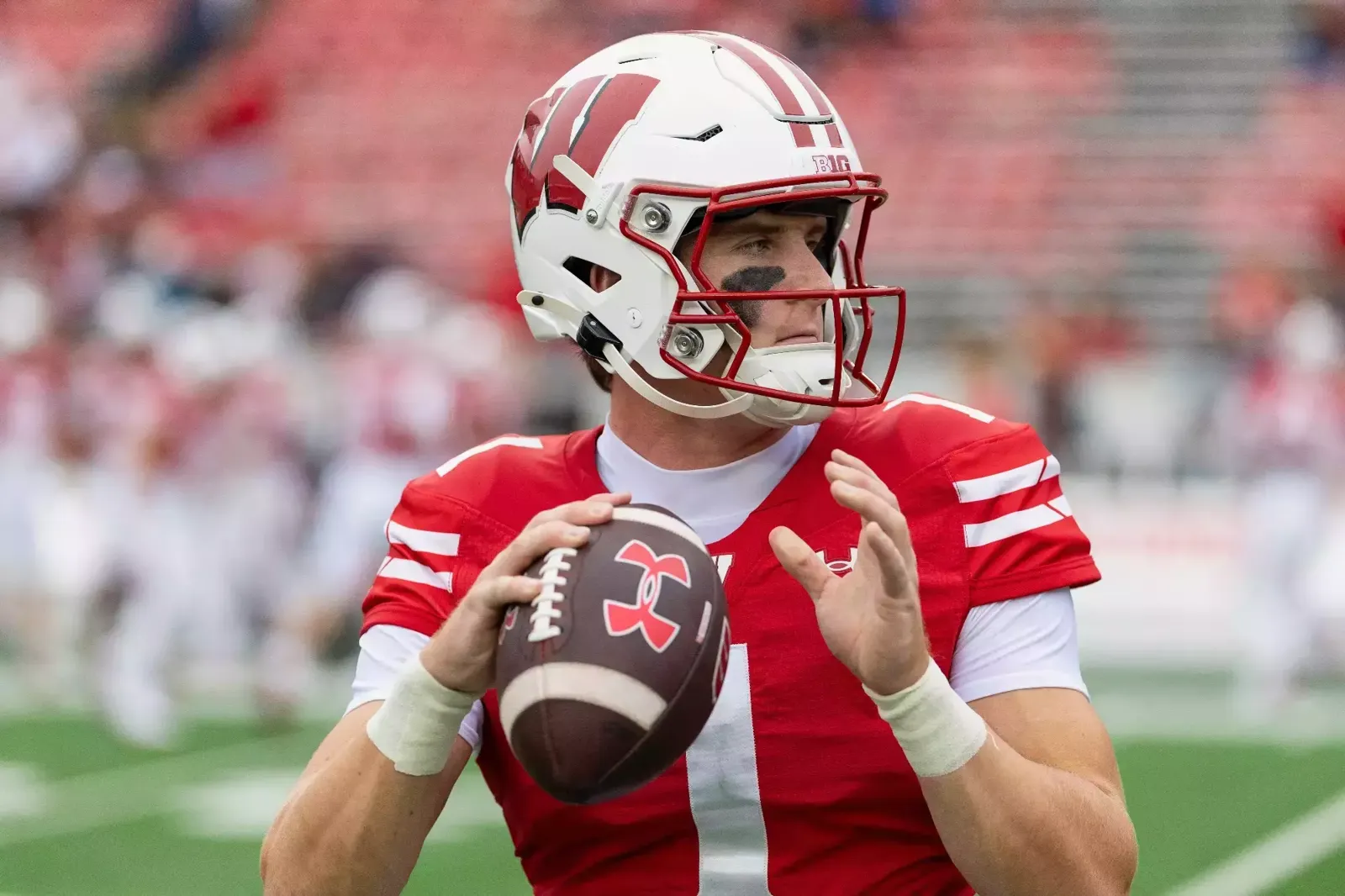
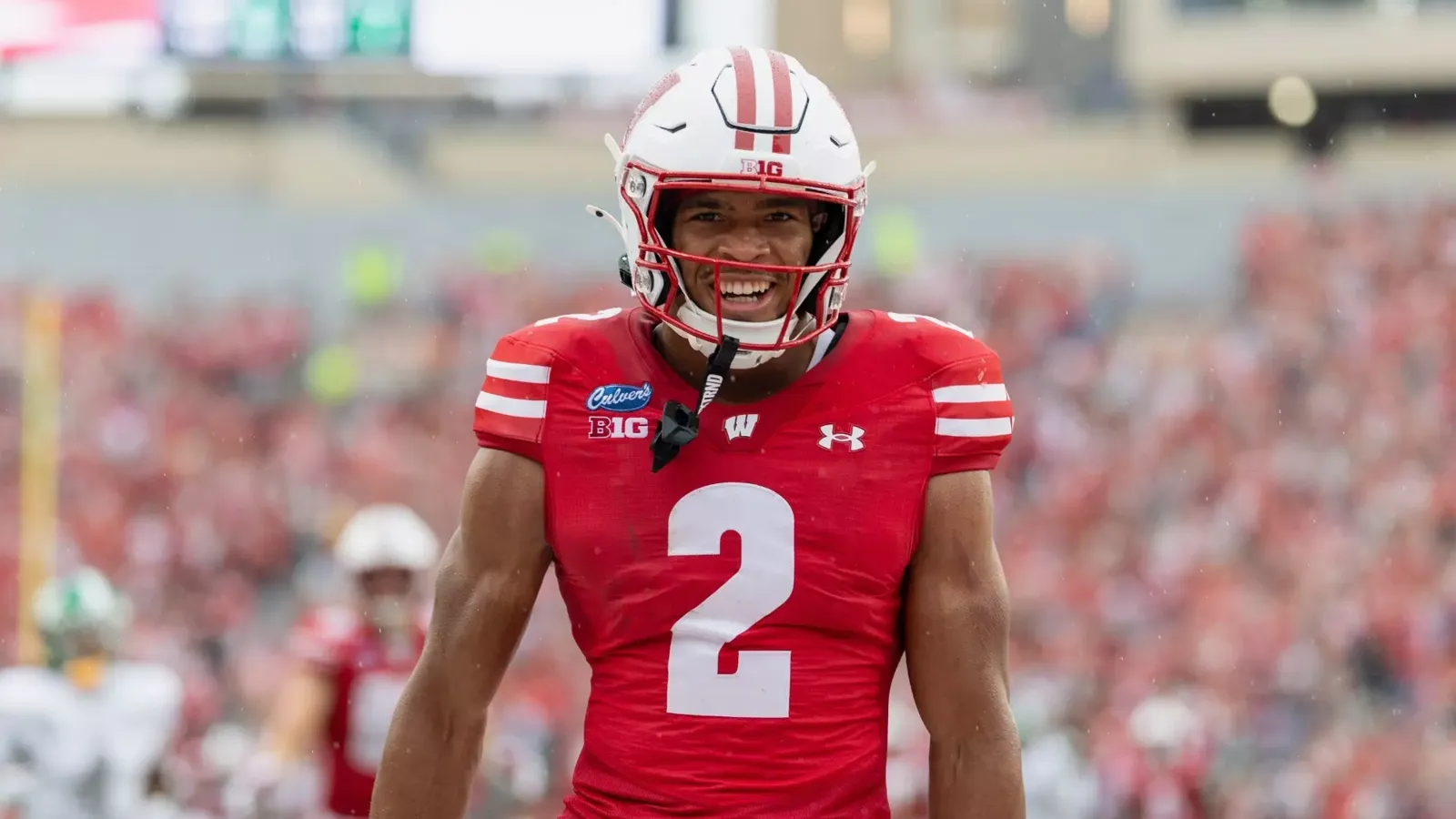
Colton Joseph passed for a program-record 302 yards in the first half. Tyrell Henry finished with a school-record fourteen catches for 160 yards and a touchdown. Those are concrete answers to the pregame question about dependable production through the air. Wisconsin found a connection it could keep using, and the offense became more dangerous because the completed throws had consequences.
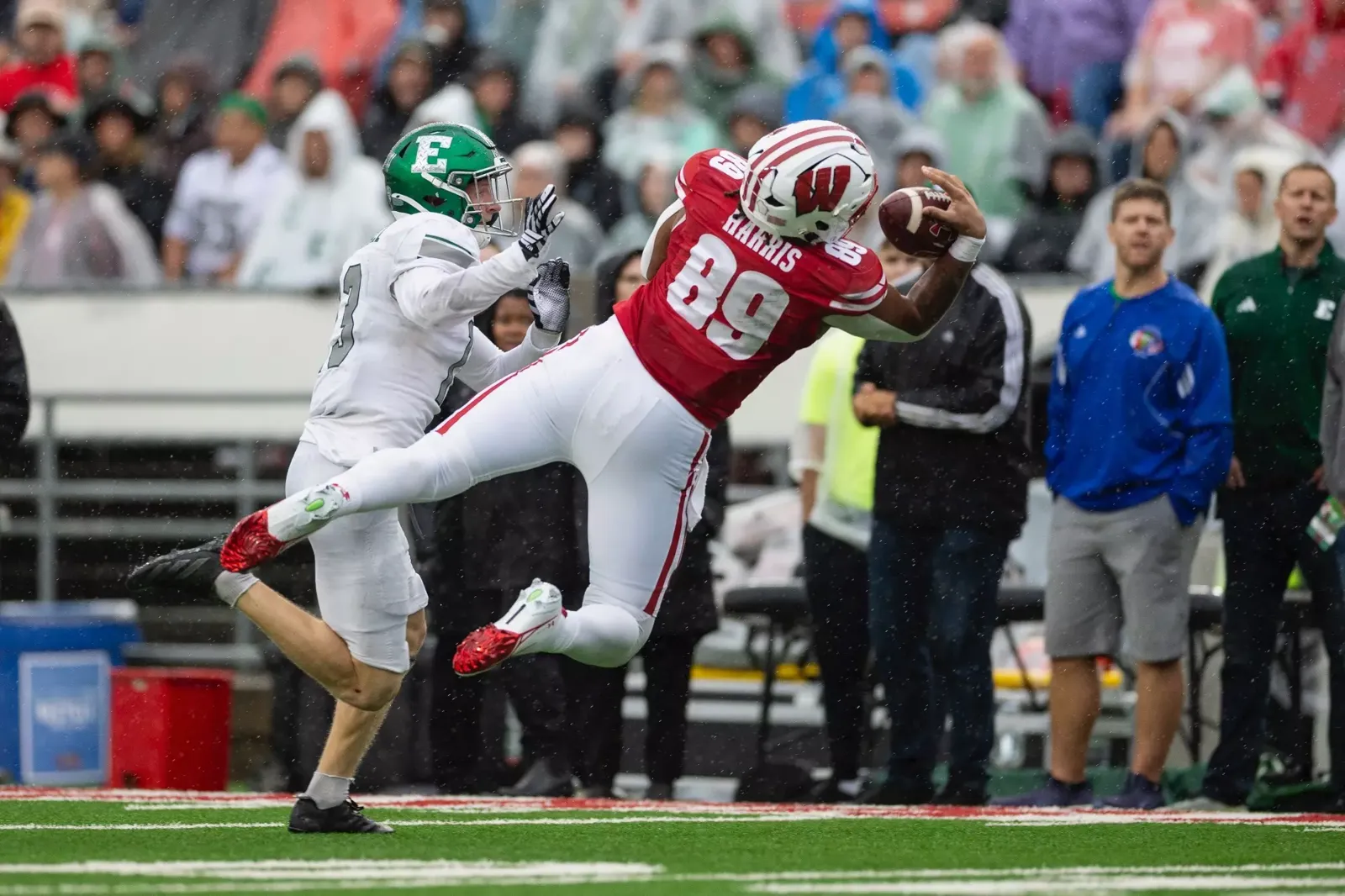
Joseph’s four-yard touchdown run gave the Badgers a 10–7 lead. His 75-yard touchdown pass to Chris Brooks Jr. extended it. Darrion Dupree added a ten-yard rushing score after a defensive takeaway, and Henry’s touchdown helped send Wisconsin into halftime ahead 31–7. A difficult opening had become an afternoon with several workable offensive answers.
Henry deserves particular appreciation. Fourteen catches require more than being available once. A receiver must keep giving his quarterback a useful destination and finish the ball when it arrives. The record is enjoyable because it measures repeated work, not one favorable bounce that became an especially flattering statistic.
The other units joined in
Mason Posa intercepted a pass, Matt Jung added another, and Wisconsin repeatedly turned defensive opportunity into points. That matters because a takeaway is a beginning, not a scoreboard entry. The offense still has to use the possession it has been given.
After halftime, Sebastian Cheeks forced a fumble on a sack, and Cooper Catalano returned the recovery for a touchdown. The defense had supplied a complete scoring sequence rather than merely asking the offense to come back out and negotiate the remaining distance.
The final play brought another contribution: Eric Fletcher Jr. blocked a field-goal attempt, and Donovan Dunmore returned it 55 yards for a touchdown. Wisconsin’s special teams have been an active part of the season’s story. Here they provided the final punctuation to a win already controlled elsewhere.
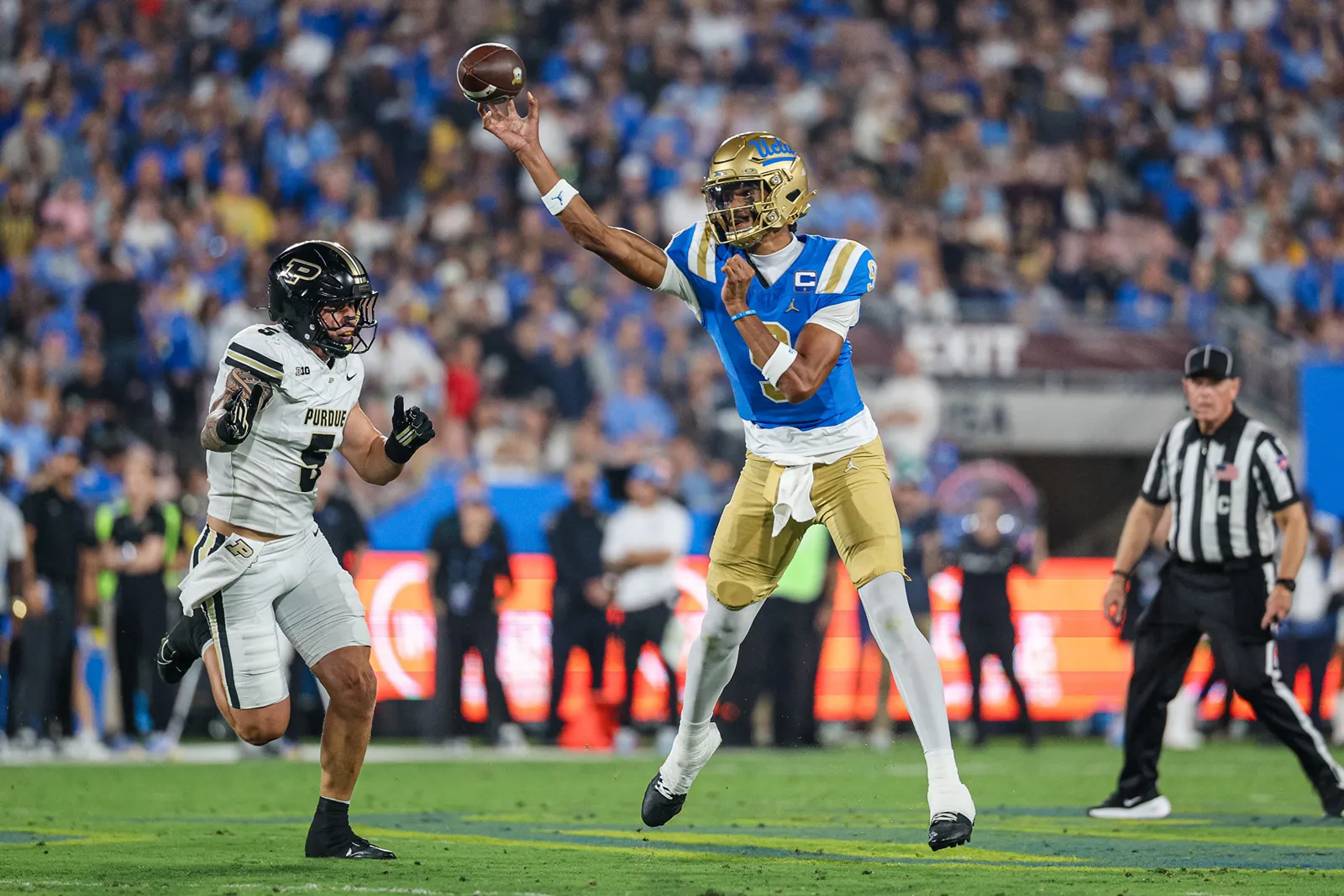
A 54–10 result does not mean every early mistake has stopped mattering. It does establish that Wisconsin responded, produced through multiple units, and finished with a much clearer offensive performance. Penn State next Saturday will offer a different standard of resistance. The Badgers have given themselves useful evidence to bring into that preparation.
UCLA produced enough offense for several conversations
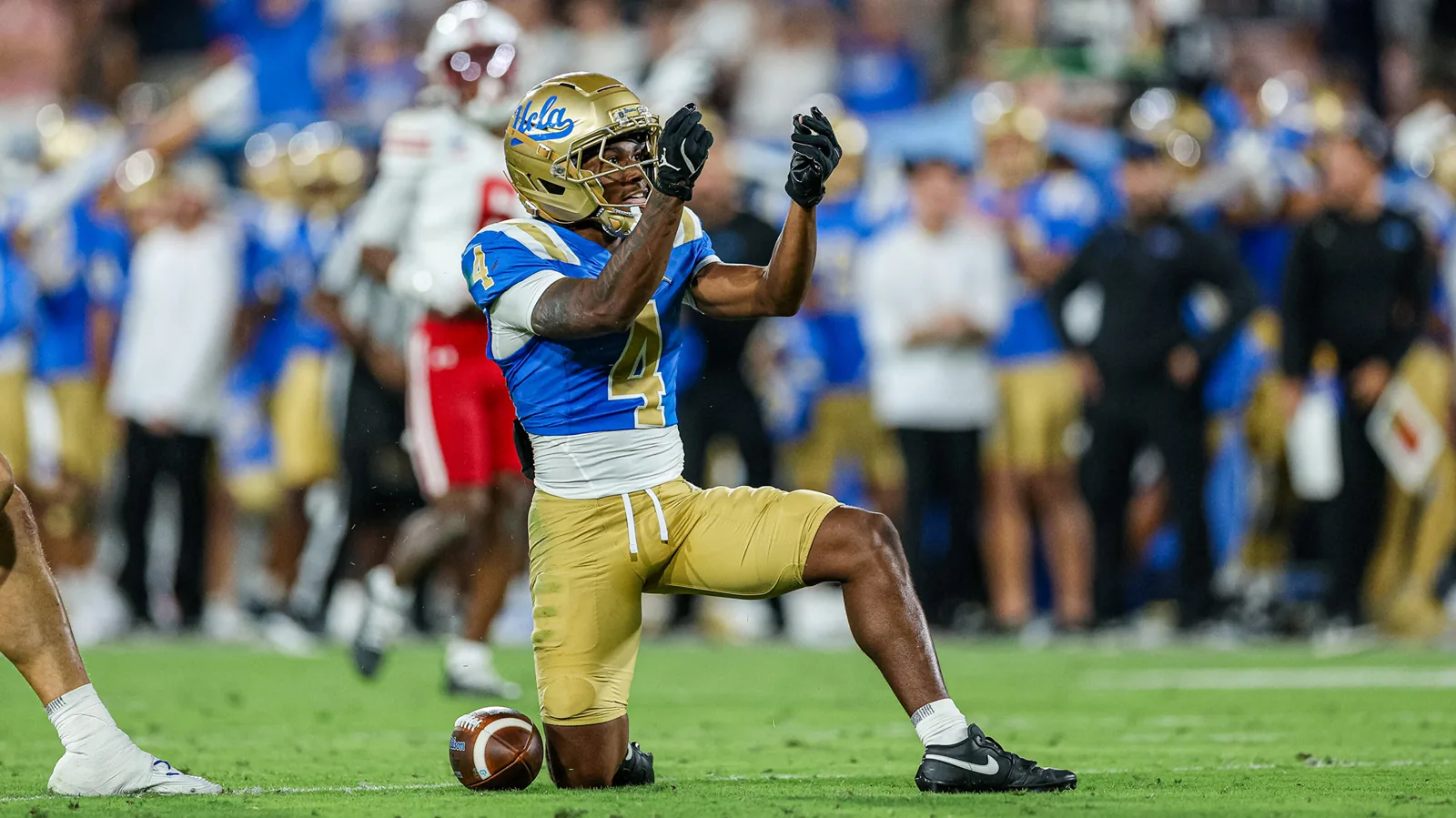
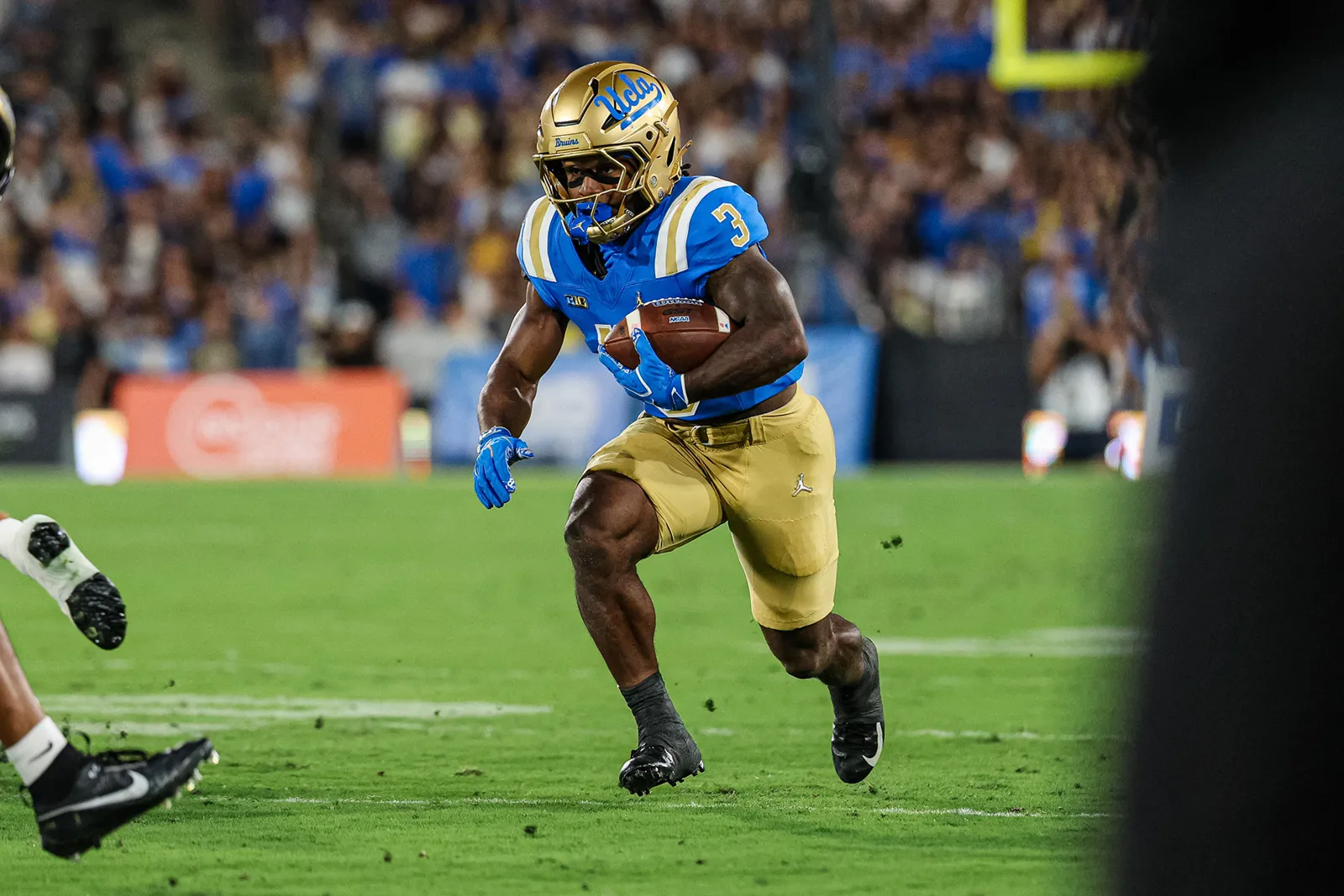
The Bruins piled up 645 yards, including 369 rushing yards. Knight ran for 177 yards and two touchdowns. Iamaleava completed nineteen of thirty-one passes for 276 yards and three touchdowns without an interception. Morgan caught two touchdown passes, continuing the useful connection we wanted to see before kickoff.
Those numbers describe an offense capable of changing a possession in several ways. Purdue had to account for the running backs and still defend throws that could become significant gains. When the Bruins executed, the visitors could not consistently remove enough options to make the next call difficult.
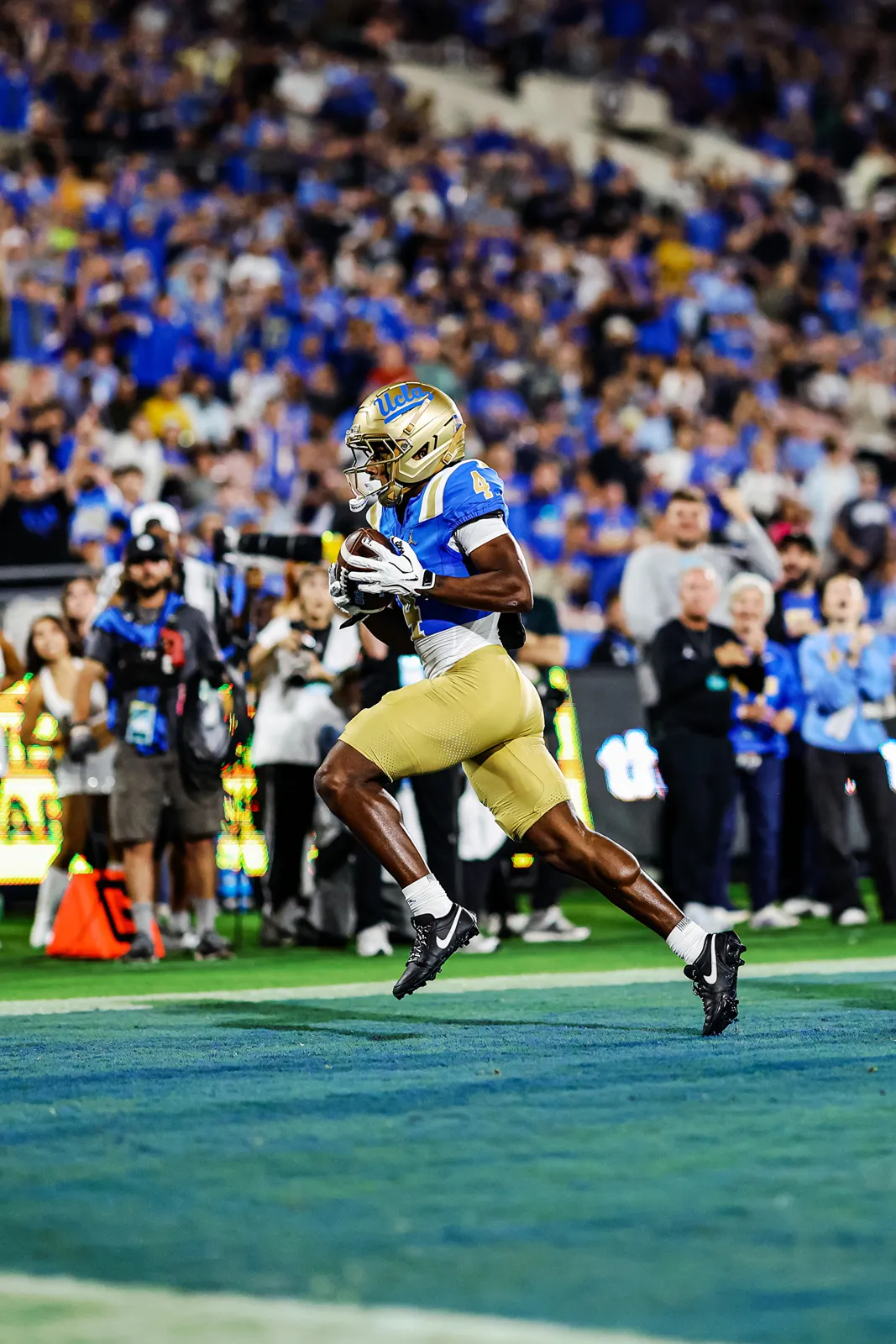
UCLA’s first touchdown came on a twenty-yard pass from Iamaleava to Morgan. Purdue answered in one play, with Ryan Browne’s short throw to Xavier Townsend becoming a 75-yard touchdown. That sequence explained the evening’s central complication rather efficiently: the Bruins could create points, and the Boilermakers could keep requiring more of them.
The useful offensive response continued. Landon Ellis caught the six-yard touchdown pass that made the score 52–38 in the fourth quarter. UCLA had enough production to protect the win. It would be unfair to make that achievement disappear simply because another part of the team has corrections to make.
Winning does not erase the defensive questions
Browne passed for 378 yards and three touchdowns. Townsend and Asaad Waseem combined for 311 receiving yards. Purdue earned that production, and UCLA needs to examine the coverage and tackling that allowed individual opportunities to become large gains.
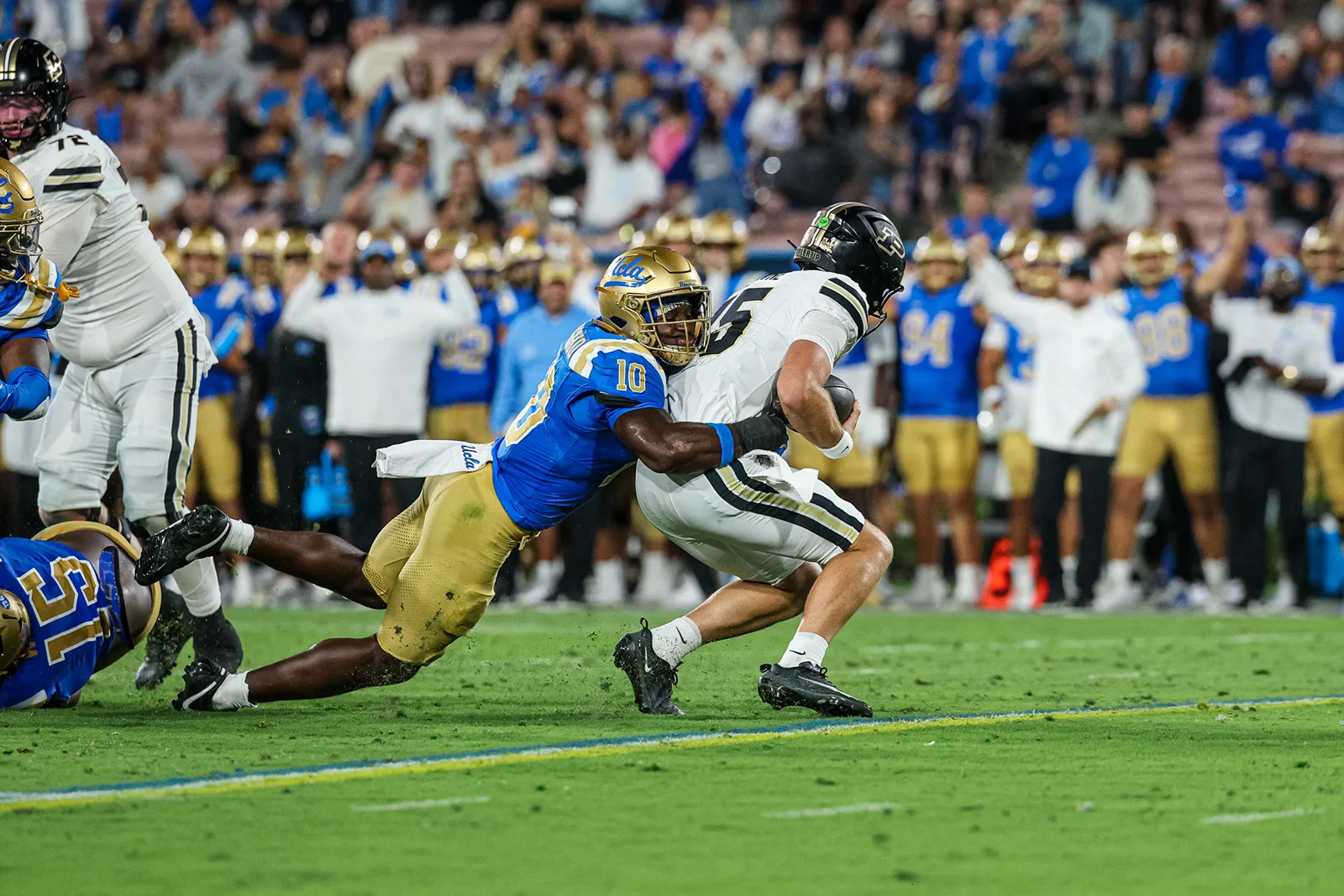
Omosigho supplied twelve tackles, two sacks, and two forced fumbles. Rodrick Pleasant added an interception. There was useful defensive work inside the difficult total, and that is precisely why the review should remain specific. A unit can create disruptive plays while still allowing too many successful answers between them.
The Bruins should leave this result encouraged by their offensive range and dissatisfied with the amount of scoring required. Wisconsin should leave its result encouraged by the passing connection and reminded that an early turnover remains an avoidable complication. Both are constructive responses to a Saturday with two wins.
Next comes road football: UCLA at Maryland, Wisconsin at Penn State. The home performances have given both teams something to build on. The assignment is to carry the reliable work with them rather than pack only the highlights. Go Bruins. On, Wisconsin. Fifty-plus points are an excellent contribution to a weekend; asking for fewer defensive emergencies remains a reasonable follow-up.